Modern boat navigation systems represent a sophisticated network of interconnected electronics that require precision installation, proper integration, and expert configuration. For South Florida yacht owners navigating the challenging waters from Stuart to the Bahamas, a professionally installed navigation system isn’t just convenience—it’s a critical safety investment that can mean the difference between confident offshore passages and potentially dangerous situations.
The marine electronics landscape has evolved dramatically with NMEA 2000 integration, high-definition radar systems, and networked multifunction displays that communicate seamlessly. However, this complexity means that improper installation can result in system failures, navigation errors, or complete electronics blackouts when you need them most.
Understanding Modern Marine Navigation System Architecture
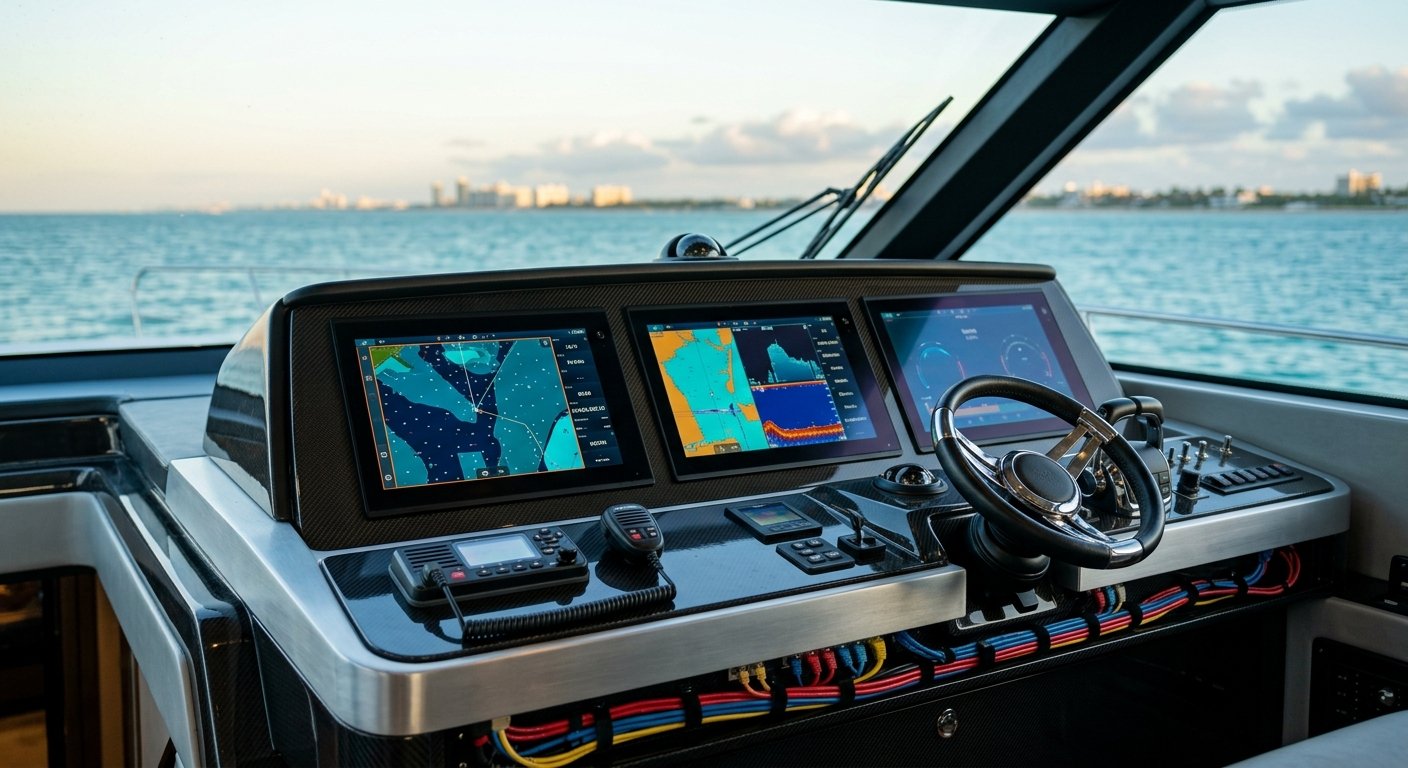
Today’s boat navigation systems function as integrated networks rather than standalone units. A complete installation typically includes multifunction displays, GPS antennas, radar systems, autopilot components, AIS transceivers, depth sounders, and various sensors—all communicating through NMEA 2000 or NMEA OneNet backbone systems.
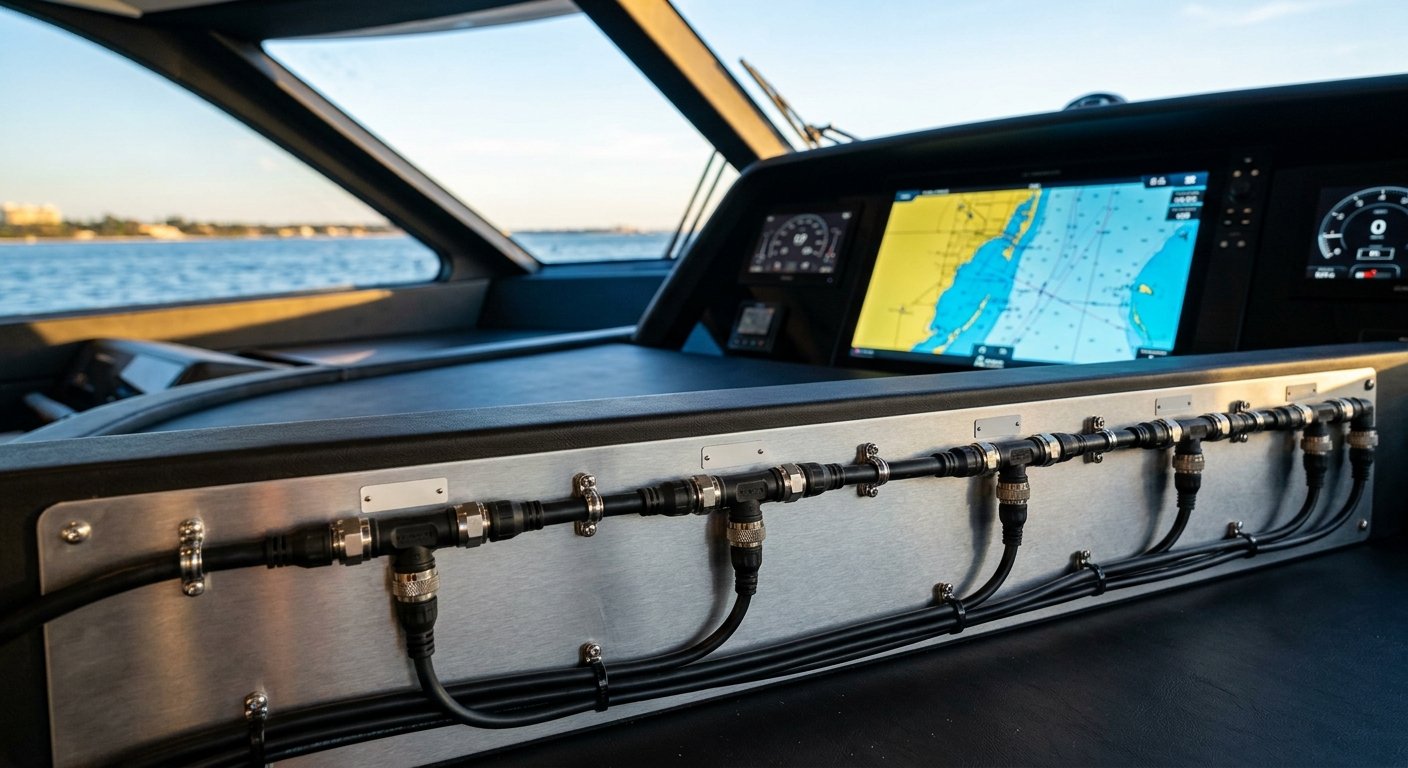
The foundation of any reliable marine navigation system installation starts with proper network architecture. NMEA 2000 networks require specific cabling, termination resistors at both ends of the backbone, and adherence to maximum spur length requirements. A single improperly terminated connection can cause intermittent failures across the entire network, creating troubleshooting nightmares offshore.
Chartplotter selection depends on your specific boating needs. South Florida yacht owners making regular Bahamas crossings require different capabilities than those staying within the Intracoastal Waterway. Offshore vessels need high-resolution radar with target tracking, detailed bathymetric charts, and satellite weather integration. Coastal cruisers benefit from detailed inland waterway charts and integration with docking systems.
Critical Components in Integrated Systems
GPS antenna placement significantly impacts navigation accuracy. Marine GPS installation requires unobstructed sky view, separation from VHF antennas to prevent interference, and mounting locations that minimize shadow areas from towers or hardtops. For vessels with carbon fiber components, external GPS antennas become essential since carbon fiber blocks satellite signals.
Radar systems require careful consideration of mounting height, scanner weight, and cable runs. Open array radar provides superior target discrimination for offshore navigation, while dome radar offers reliability in harsh conditions with less windage. Both require dedicated power supplies and shielded cable runs to prevent interference with other electronics.
Autopilot integration connects to heading sensors, rudder feedback mechanisms, and navigation displays, creating a closed-loop system that maintains course automatically. Proper autopilot commissioning includes compass calibration, rudder gain adjustments, and sea trial verification—steps that require technical expertise and NMEA certification knowledge.
South Florida Marine Environment Considerations
Saltwater corrosion represents the primary enemy of marine electronics. Every connection point, every wire termination, and every mounting bracket faces constant assault from salt spray and humidity. Professional yacht navigation installation South Florida specialists understand that marine-grade doesn’t just mean water-resistant—it means components and installation techniques specifically designed to survive harsh saltwater environments.
All marine electronics should meet minimum IPX6 or IPX7 ratings for water ingress protection. However, the IP rating only addresses the unit itself. Installation quality determines long-term reliability. Every cable penetration requires proper sealant, strain relief, and drip loops to prevent water migration into electronic components.
Heat management becomes critical in South Florida’s climate. Electronics generate significant heat during operation, and enclosed helm areas can exceed 140 degrees Fahrenheit during summer months. Proper ventilation, heat-resistant mounting, and consideration of component placement ensures reliable operation even during peak summer days running offshore to the Bahamas.
Hurricane Preparation and System Protection
South Florida yacht owners face annual hurricane threats that require specific electronics protection strategies. Removable displays should be documented with photographs showing cable connections, then removed and stored during hurricane season if the vessel remains in the water. Fixed installations benefit from surge protection on power and data lines, though the best protection remains complete power disconnection at the battery switches.
Lightning strikes cause catastrophic damage to boat electronics Fort Lauderdale to Stuart. While no installation can guarantee lightning protection, proper grounding systems, isolated NMEA 2000 networks with optical isolators at critical junctions, and surge suppression devices reduce damage potential. ABYC standards provide specific guidance on marine electrical grounding that professional installers follow.
Integration Challenges and Solutions
Mixed-brand electronics integration creates significant challenges. While NMEA 2000 provides standardized communication protocols, manufacturers implement features differently. Garmin, Raymarine, Furuno, and Simrad systems each have proprietary features that work best within their ecosystems. Cross-brand integration works for basic data sharing, but advanced features like radar overlay, autopilot integration, and system configuration require careful planning.
Legacy system upgrades present unique challenges. Boats with existing NMEA 0183 instruments can integrate with modern NMEA 2000 networks through gateway devices, but this creates additional failure points and complexity. Complete system replacement often provides better long-term reliability than attempting to bridge multiple technology generations.
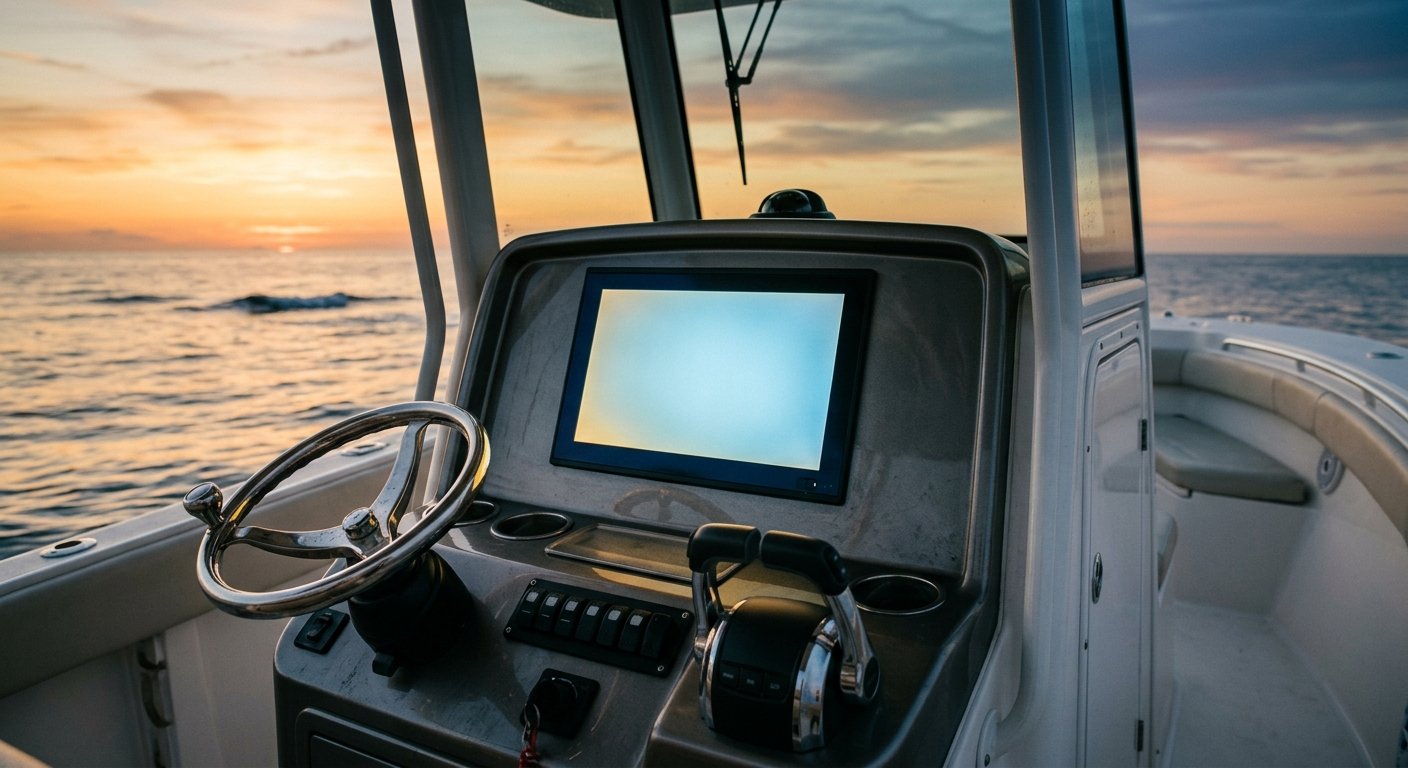
Touchscreen multifunction displays require different mounting considerations than traditional button-operated units. Vibration isolation becomes critical to prevent screen calibration drift and internal component damage. Helm positions must provide proper viewing angles in bright sunlight while remaining accessible from the operating position.
Power System Requirements
Marine navigation system installation requires dedicated electrical circuits with appropriate wire gauge and circuit protection. A typical integrated system with dual 16-inch displays, radar, autopilot, and supporting instruments draws 15-20 amps during full operation. Many boat owners underestimate power requirements, leading to voltage drops that cause system resets or unreliable operation.
Proper marine electrical installation follows ABYC E-11 standards for AC and DC electrical systems. Wire sizing must account for voltage drop over cable runs, which can be substantial on larger yachts. Every circuit requires appropriate overcurrent protection sized to protect the wire, not just the device.
Battery management systems integration allows navigation displays to monitor house bank status, solar charging, and generator operation. This integration provides critical information for extended cruising, particularly for vessels making Bahamas passages where electrical system reliability becomes essential.
Professional Installation vs. DIY Approaches
The complexity of modern integrated chartplotter systems has exceeded the capabilities of typical DIY installation. NMEA 2000 networks require specific knowledge of network topology, device addressing, and troubleshooting procedures. Improper installations create intermittent failures that appear randomly, making diagnosis difficult without proper diagnostic equipment and training.
Factory-trained technicians bring manufacturer-specific knowledge about firmware updates, feature activation, and system optimization that independent installers may lack. Major electronics manufacturers provide certification programs that cover installation standards, commissioning procedures, and advanced troubleshooting—knowledge that directly impacts system reliability.
Warranty considerations also favor professional installation. Many manufacturers require professional installation for warranty coverage on complex systems like radar and autopilot. Improper DIY installation voids warranties and can cause damage to expensive components.
Commissioning and Sea Trial Verification
Proper system commissioning extends beyond physical installation. Navigation systems require compass calibration through swing procedures, autopilot sea trials with gain adjustments, and radar verification against known targets. These procedures require specific environmental conditions and technical expertise.
South Florida waters provide excellent commissioning environments. The St. Lucie Inlet offers exposure to ocean swells for autopilot testing, while the Intracoastal Waterway provides calm water for initial system configuration. Offshore areas near the Gulf Stream allow radar testing against commercial traffic and weather phenomena.
Documentation of system configuration, network layouts, and installation details provides critical information for future troubleshooting and upgrades. Professional installers create system diagrams showing NMEA 2000 network topology, device addresses, and cable routing—information that proves invaluable when diagnosing problems or adding components.
Maintenance and Long-Term Reliability
Marine electronics Stuart FL conditions require regular maintenance beyond basic cleaning. Connector inspection, corrosion prevention, and firmware updates maintain system reliability. Many navigation system failures result from corroded connections rather than component failures.
Preventive maintenance includes annual inspection of all cable connections, application of dielectric grease to exposed connectors, and verification of mounting hardware. Touchscreen displays benefit from UV protection films that prevent screen degradation while maintaining touch sensitivity.
Software updates provide bug fixes, chart updates, and new features. However, updates require careful planning since firmware incompatibilities between networked devices can cause system failures. Professional technicians verify compatibility before applying updates and maintain backup configurations.
Common Installation Problems and Prevention
Water intrusion through cable penetrations ranks as the most common installation problem. Every hole through a deck, bulkhead, or console creates a potential leak path. Professional installations use proper cable glands, butyl tape, and marine sealants appropriate for the substrate material.
Inadequate wire sizing causes voltage drops that manifest as intermittent system resets, dim displays, or complete failures under load. Marine-grade tinned copper wire resists corrosion better than automotive wire, and proper crimping tools create reliable connections that survive marine environments.
Poor cable routing exposes wiring to chafe points, heat sources, and interference from high-current cables. Professional installations separate power cables from data cables, provide adequate strain relief, and protect cables from sharp edges and moving components.
Frequently Asked Questions
How long does professional boat navigation system installation take?
Complete integrated navigation system installation typically requires 3-5 days for a mid-sized yacht, depending on system complexity and vessel configuration. This includes physical installation, network configuration, commissioning, and sea trials. Larger vessels with extensive integration may require several weeks.
Can I mix different brands in my marine navigation system?
Basic NMEA 2000 data sharing works across brands, but advanced features like radar overlay, autopilot integration, and sonar sharing typically require matching brands. For optimal reliability and functionality, staying within one manufacturer’s ecosystem provides the best results.
What’s the difference between NMEA 0183 and NMEA 2000?
NMEA 0183 uses point-to-point serial connections with limited data capacity, while NMEA 2000 employs a network backbone allowing multiple devices to communicate bidirectionally with much higher data throughput. Modern installations use NMEA 2000 for superior integration capabilities.
How often should marine navigation systems be updated?
Chart updates should occur at least annually, as navigational hazards and waterway conditions change. Firmware updates should be applied as released by manufacturers, though coordination across networked devices prevents compatibility issues. Professional technicians manage update processes to prevent problems.
Do I need professional installation for chart plotter upgrades?
While simple display replacements may seem straightforward, proper integration with existing NMEA 2000 networks, radar systems, and autopilot components requires technical knowledge. Professional installation ensures full functionality and prevents expensive mistakes that could damage existing equipment.
Expert Installation Delivers Peace of Mind
Navigation system reliability directly impacts safety on the water. South Florida yacht owners depend on their electronics when navigating the St. Lucie Inlet during incoming swells, tracking afternoon thunderstorms offshore, or making overnight Bahamas passages. Professionally installed systems deliver the reliability these conditions demand.
Marine Electronics Integrated provides factory-trained, NMEA-certified installation services for boat owners throughout South Florida. From initial system design through commissioning and ongoing support, expert installation ensures your navigation electronics perform flawlessly when you need them most.
Contact Marine Electronics Integrated at (772) 634-6055 to discuss your boat navigation system installation needs. Visit the Stuart facility at 7892 SW Jack James Dr, Stuart, FL, 34997 to explore the latest marine electronics and speak with certified technicians about creating an integrated navigation system that meets your specific requirements.