Your radar goes dark ten miles offshore, halfway between the St. Lucie Inlet and the Bahamas. There’s a squall building to the southwest, visibility is dropping, and your screen shows nothing but a blank display. This isn’t a hypothetical—it’s the kind of situation that reminds South Florida boaters why properly maintained, professionally serviced radar systems aren’t optional equipment. They’re a lifeline.
Marine radar failures rarely announce themselves at the dock. They surface when you need the system most—in reduced visibility, during a Gulf Stream crossing, or running inlets after dark. Understanding the most common radar problems, what causes them, and when to call a professional can make the difference between a minor inconvenience and a dangerous situation.
Why Marine Radar Fails: The Core Culprits
Radar systems on South Florida vessels face a demanding environment. Salt air, vibration, UV exposure, and the electrical complexity of modern NMEA 2000 networks all create unique stress on marine electronics. Most radar failures fall into a handful of recognizable categories.
Scanner (Radome or Open Array) Problems
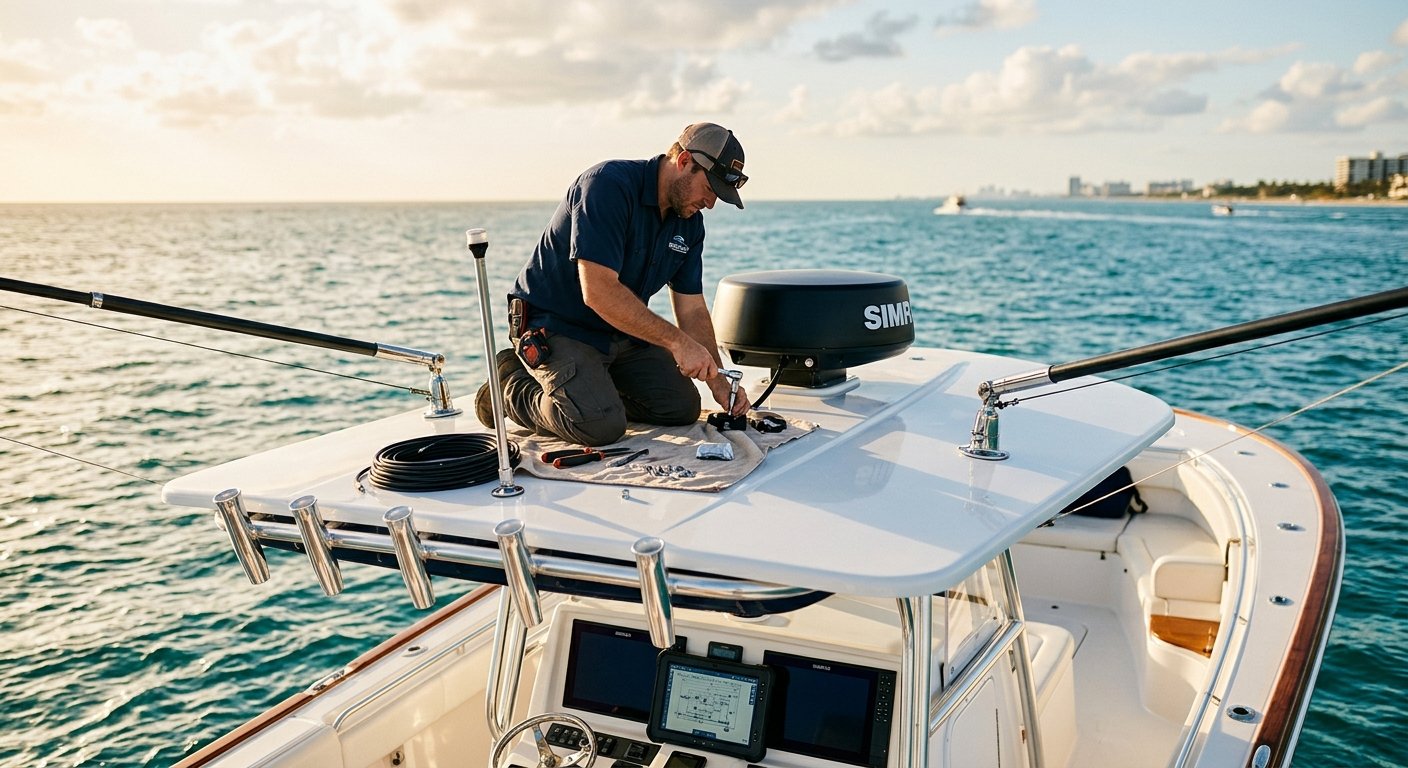
The scanner is the rotating heart of your radar system, and it takes constant punishment. On vessels running regularly from Stuart to Fort Lauderdale or heading offshore to the Bahamas, scanners accumulate salt deposits, UV damage to dome housings, and mechanical wear on rotation motors over time.
Common scanner issues include:
- Failed rotation motor: The scanner stops turning, producing a fixed, sweeping line rather than a full picture—or no image at all.
- Magnetron degradation: The magnetron is the component that generates radar pulses. As it ages, transmission power drops, target returns weaken, and short-range detection suffers. A magnetron that worked fine two seasons ago may now fail to detect a vessel at three miles.
- Water intrusion into the radome: Salt air is relentless. Compromised seals allow moisture into the scanner housing, corroding internal components and degrading performance. Open-array radars with exposed connectors are particularly vulnerable.
- Cable and connector corrosion: The coaxial cable and power connections running from the scanner to the display are common failure points. Even a small amount of corrosion at a connector can introduce enough resistance to degrade radar performance significantly.
Display and Processing Unit Failures
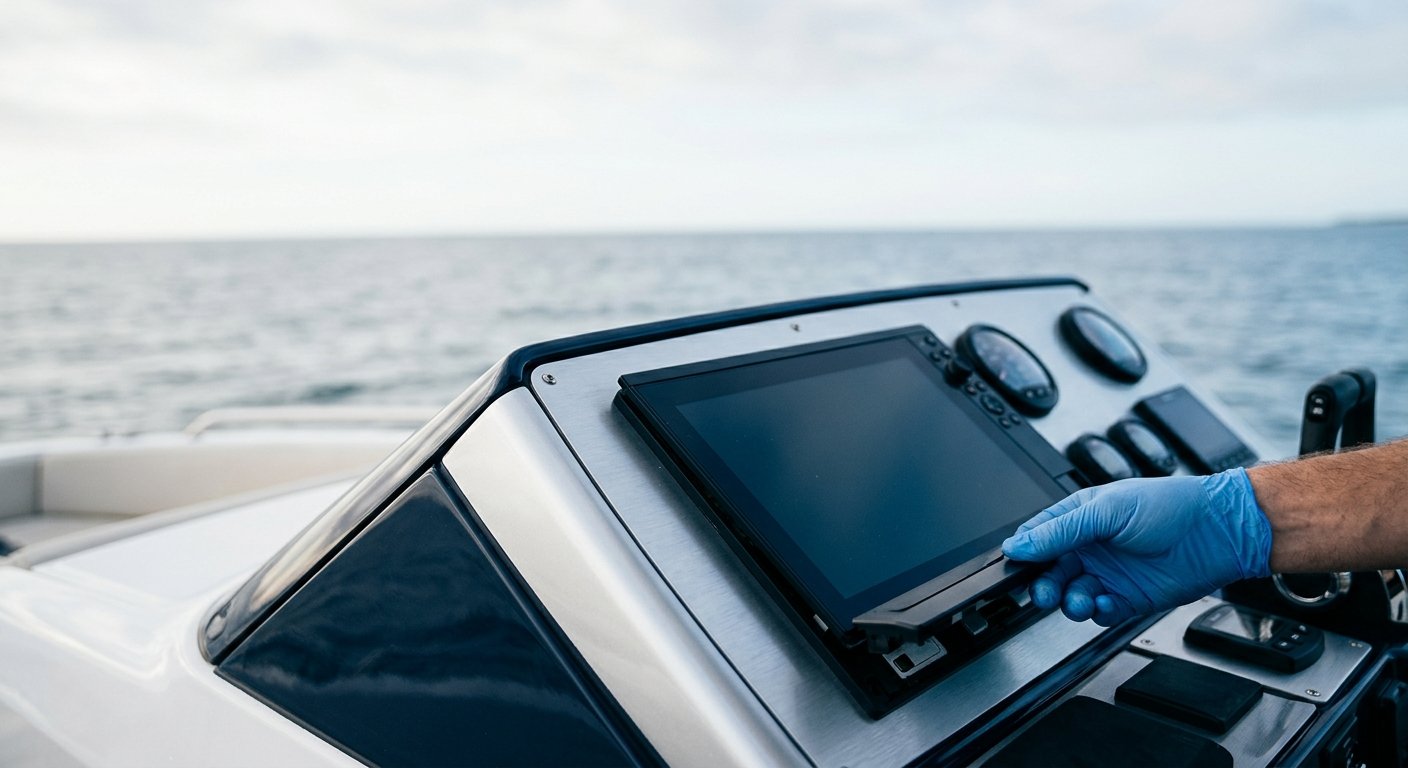
Modern multifunction displays (MFDs) that handle radar processing are sophisticated computers. They’re subject to software glitches, overheating, power supply irregularities, and touchscreen failures.
Symptoms include distorted radar imagery, screens that freeze during boot sequences, radar that initializes but fails to acquire targets, and displays that show radar data incorrectly scaled or overlaid on charts. These issues often masquerade as scanner problems—which is why professional marine electronics troubleshooting involves systematic diagnosis rather than part replacement by assumption.
Power and Grounding Issues
Inadequate or fluctuating power is one of the most underdiagnosed causes of radar malfunction. Radar systems—particularly high-powered open arrays on sportfishing yachts and larger cruisers—require stable, correctly rated power delivery. Voltage drops, corroded battery terminals, undersized wiring, and poor grounding will all compromise radar performance and can cause intermittent failures that are frustratingly difficult to reproduce at the dock.
According to the U.S. Coast Guard Navigation Center, proper maintenance of navigation equipment—including radar—is a fundamental element of vessel safety and operator responsibility. Electrical issues that compromise navigation tools create real risk for crews and other vessels.
NMEA 2000 Network Integration Problems
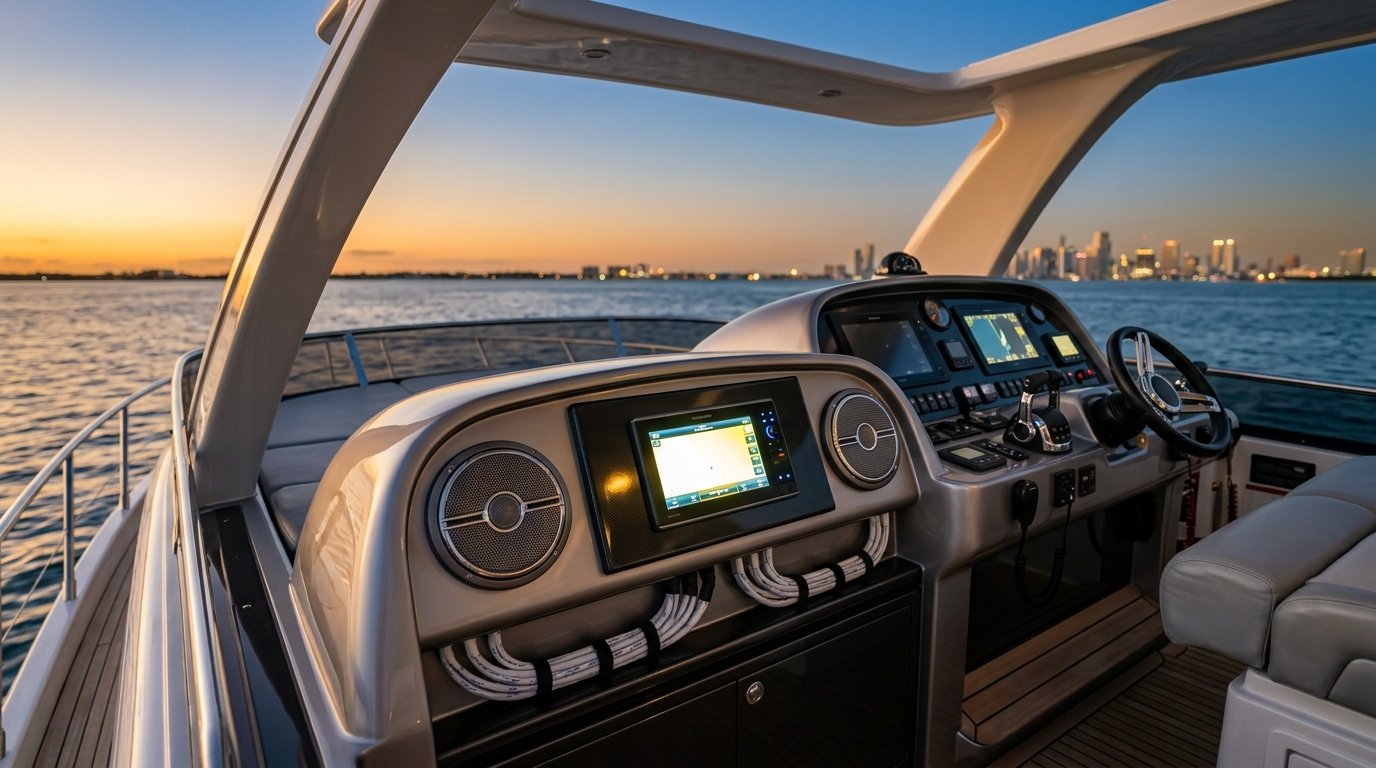
Most modern radar systems don’t operate in isolation. They share data with GPS/chartplotters, AIS transponders, autopilots, and depth sounders through NMEA 2000 networks. A network conflict, a failed T-connector, an overloaded backbone, or a device with incorrect network addressing can disrupt radar data sharing across multiple instruments simultaneously.
What looks like a radar failure may actually be a network topology problem. Identifying the true source requires diagnostic tools and familiarity with how NMEA 2000 networks are designed and how devices communicate across them—exactly the kind of expertise that separates a certified marine electronics technician from a general electrician.
Radar Performance Problems vs. Complete Failures
Not every radar problem results in a blank screen. Degraded performance is often more insidious because boat owners may not realize the system is compromised until it matters most.
Watch for these performance warning signs:
- Poor target discrimination at short range (under two miles)
- Excessive sea clutter that can’t be tuned out with gain adjustments
- Inconsistent target returns—vessels appearing and disappearing without logical explanation
- Slow scanner initialization taking longer than normal after startup
- Radar overlay on charts that doesn’t align accurately with GPS position
- Unusually high transmit noise or interference affecting other onboard electronics
The Royal Yachting Association, one of the world’s leading recreational boating safety organizations, emphasizes that radar operators should understand their system’s normal performance characteristics so they can recognize degradation early—before it creates navigational hazard.
Professional Marine Radar Troubleshooting: What It Actually Involves
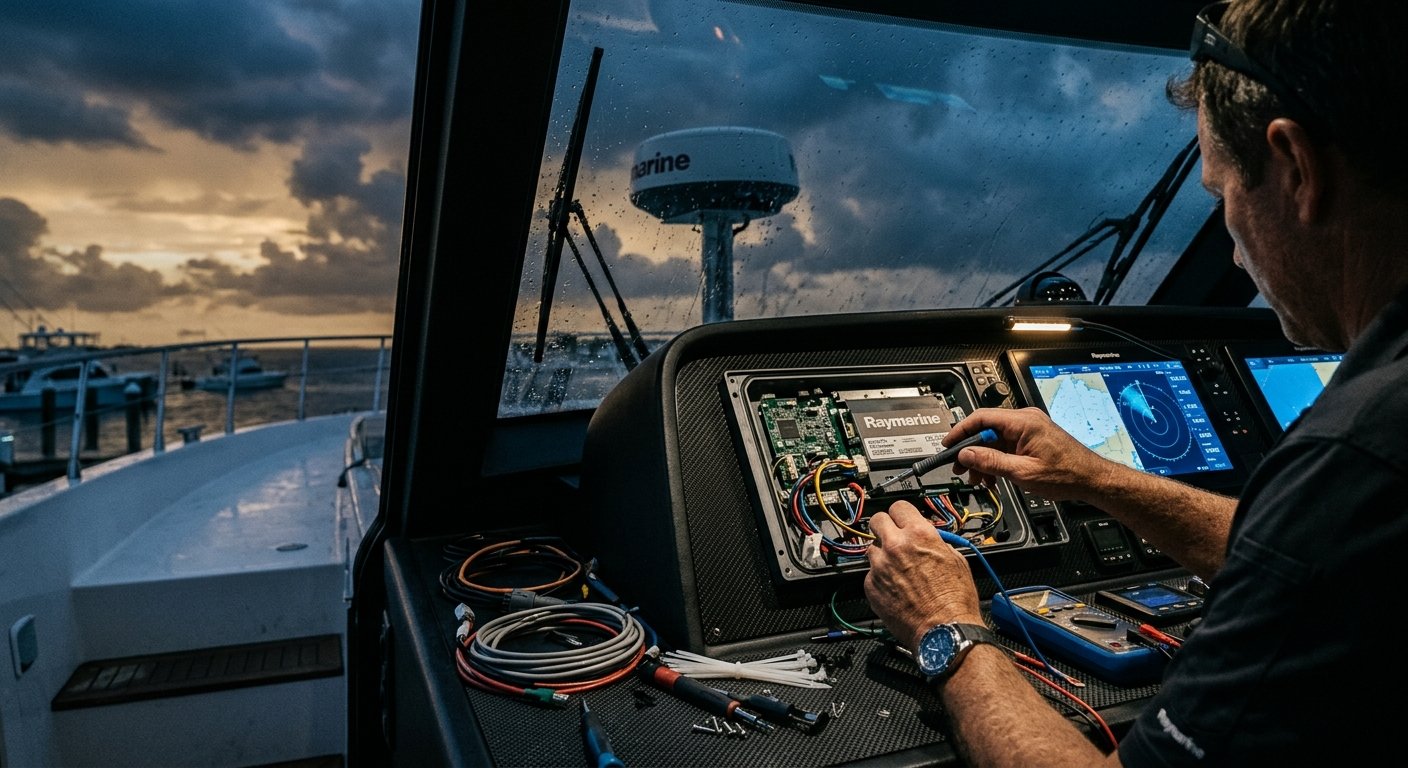
Effective radar repair begins with systematic diagnosis, not guesswork. When MEI’s NMEA-certified technicians evaluate a radar system, the process typically includes:
Power and Ground Verification
Measuring actual voltage at the radar under load, checking for voltage drop across cable runs, verifying ground continuity, and inspecting all connection points for corrosion or resistance.
Scanner Performance Testing
Confirming scanner rotation speed and consistency, checking transmission output, and evaluating cable continuity from scanner to display. A radar cable that reads fine on a simple continuity check may still show unacceptable signal loss at operating frequencies—testing must be done at appropriate frequencies to be meaningful.
Software and Firmware Review
Many modern radar issues are software-related. Factory-trained technicians verify that radar firmware and connected MFD software are current and compatible. Version mismatches between radar software and chartplotter operating systems are a frequently overlooked cause of integration failures.
Network Diagnostic Analysis
Using professional NMEA 2000 diagnostic tools to evaluate network traffic, identify device conflicts, verify termination resistance, and confirm proper backbone configuration. This step is critical on vessels where radar integrates with AIS, autopilot, and sonar systems.
Sea Trial Evaluation
Many radar problems only manifest at sea—with the engine running, the vessel moving, and electrical loads changing. A proper evaluation often requires an underway test to reproduce real operating conditions and confirm the repair has resolved the underlying issue.
When Repair Makes Sense vs. Replacement
Not every radar system is worth repairing. A magnetron replacement on a quality open-array system with solid electronics otherwise makes clear economic and practical sense. But a decade-old radome with a failing motor, a corroded cable, and an aging display may be better replaced than repeatedly repaired—particularly given the safety implications of unreliable navigation equipment for offshore passages.
MEI takes a consultative approach to this decision. Our factory-trained technicians evaluate the full system condition, explain the realistic costs of repair versus replacement, and help boat owners make informed decisions that protect both their safety and their investment. We provide professional marine electronics installation when a new system is the right path forward.
The right answer depends on the vessel’s use profile. A center console used primarily for nearshore fishing out of Jupiter Inlet has different navigation redundancy needs than a 60-foot sportfisher making regular Gulf Stream crossings to the Bahamas. Understanding that context shapes every repair recommendation.
Preventive Maintenance: Extending Radar System Life
Most radar failures are preventable with regular attention. South Florida’s salt environment accelerates corrosion at every connection point. Annual inspection and maintenance should include:
- Flushing scanner and mount hardware with fresh water and inspecting seals
- Inspecting coaxial cable connectors for corrosion and re-sealing as needed
- Verifying power connections at the radar, fuse block, and battery
- Confirming scanner rotation and timing performance
- Updating firmware on the radar and connected MFDs
- Documenting baseline system performance as a reference point for future comparison
According to NMEA standards documentation, proper installation and maintenance practices are foundational to reliable marine electronics performance—especially in high-salinity coastal environments where South Florida vessels operate daily.
Frequently Asked Questions
How do I know if my radar scanner or my display is the problem?
Diagnosing which component has failed requires professional testing equipment. However, a blank screen that still powers on suggests a scanner or cable issue, while a display that shows distorted or frozen imagery often points to processing or software problems. A certified technician can isolate the failure point definitively without expensive trial-and-error replacement.
How long does marine radar repair typically take?
Simple repairs—connector replacement, cable repair, or software updates—are often completed same-day or within a day or two. Component replacements like magnetrons may require parts lead times of several days to a week. Complex integration issues on larger vessels with multiple networked systems may take longer to diagnose and resolve properly.
Can I use radar while it’s performing poorly?
Operating a degraded radar system for offshore passages creates real risk. A radar that produces unreliable target returns may provide false confidence—worse in some scenarios than having no radar at all. A compromised system should be repaired or replaced before offshore use, and navigation plans should include appropriate redundancy in the meantime.
Does radar repair require removing the scanner from the vessel?
Not always. Many diagnostics and some repairs can be completed with the scanner in place. However, certain repairs—particularly internal component replacement or cable connector work at the scanner base—do require removing the unit. Our technicians work to minimize vessel disruption wherever possible.
How often should radar systems be professionally inspected?
For vessels in active South Florida use, an annual professional inspection is recommended. Vessels used heavily offshore or making Bahamas crossings benefit from inspection before each season and after significant weather events.
Schedule a Professional Radar Evaluation
Radar problems don’t get better on their own—and they don’t choose convenient moments to fail completely. Whether your system has gone dark, is performing inconsistently, or simply hasn’t been serviced in several years, MEI’s licensed, insured, NMEA-certified technicians are equipped to diagnose and resolve the issue correctly.
We serve boat and yacht owners throughout South Florida, from Stuart and Hobe Sound to Jupiter, West Palm Beach, Palm Beach, and Fort Lauderdale. Contact Marine Electronics Installers at (772) 634-6055 or visit us at 7892 SW Jack James Dr, Stuart, FL 34997 to schedule a radar inspection or system evaluation. Don’t wait until you need it most to find out it doesn’t work.