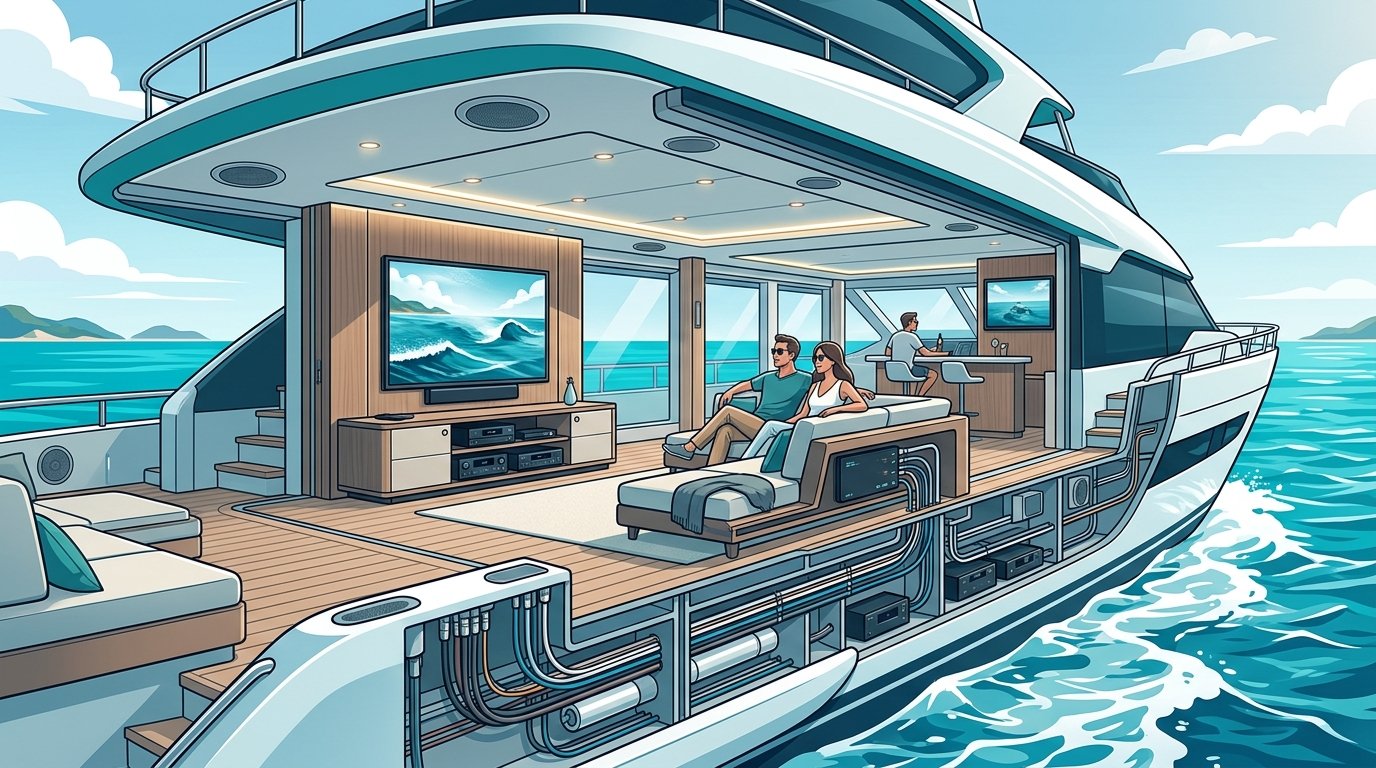
A 55-inch TV mounted to a salon bulkhead. A six-zone audio system pumping crystal-clear sound from the cockpit to the flybridge. Subwoofers that stay dry through a Bahamas crossing. Yacht entertainment systems have evolved dramatically, but the installation standards separating a truly reliable setup from a costly failure remain the same—and they’re unforgiving in saltwater environments.
For South Florida boaters running from Stuart to Fort Lauderdale, the stakes are higher than most. Gulf Stream crossings, offshore fishing trips departing through St. Lucie Inlet, and extended cruises to the Bahamas expose electronics to conditions that would rapidly destroy consumer-grade components or improperly installed marine gear. This guide walks through what a professional yacht entertainment system actually requires—and why the details matter.
Why Marine AV Installation Differs from Home Theater
The most common—and expensive—mistake boat owners make is assuming that a high-end home audio or TV brand will perform acceptably aboard a vessel. The saltwater environment creates a unique combination of threats that consumer electronics simply aren’t engineered to handle.
Constant vibration from engines and waves degrades solder joints and connector reliability over time. Salt-laden air accelerates corrosion on any exposed metal component. UV radiation in South Florida is among the most intense in North America, degrading plastics, adhesives, and display coatings within months if the wrong products are used. Then there’s moisture intrusion—not just rain, but condensation, spray, and humidity levels that keep electronics perpetually damp.
Marine-rated components are engineered around these realities. IP (Ingress Protection) ratings tell you exactly how much protection a component offers against water and dust. An IPX5-rated marine stereo head unit can withstand water jets from any direction. IPX7-rated speakers tolerate temporary immersion. These aren’t marketing claims—they’re standardized ratings defined by the International Electrotechnical Commission that guide responsible equipment selection.
For any component mounted in an exposed cockpit, flybridge, or helm station on a South Florida vessel, understanding these ratings isn’t optional—it’s the foundation of a reliable boat audio system.
Choosing the Right Components for Your Vessel
Marine Stereo Head Units and Amplifiers
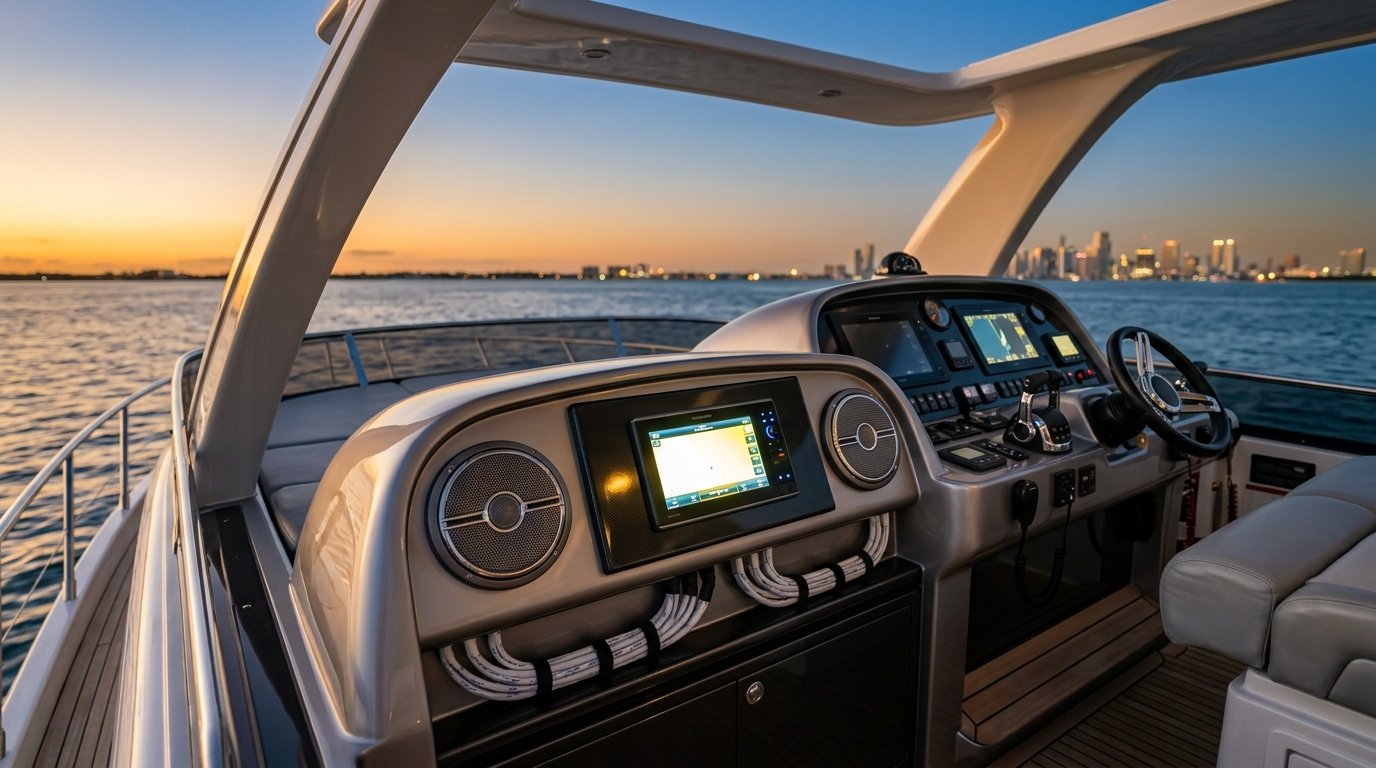
A quality marine stereo installation begins with a head unit designed for the helm environment. Marine head units typically feature sealed, conformal-coated circuit boards, UV-stabilized faceplates, and sealed button assemblies that resist water intrusion. Brands with strong marine track records publish detailed IP ratings and testing documentation—a specification you should always request before purchasing.
Amplifiers present a different challenge. They generate heat, require ventilation, yet can’t be exposed to direct spray or flooding. Professional installers identify dedicated compartments with adequate airflow, route wiring away from fuel lines and bilge areas, and ensure amplifiers are mounted on marine-grade vibration-dampening hardware. The American Boat and Yacht Council (ABYC) publishes electrical standards specifically governing amplifier installation and circuit protection requirements—standards that factory-trained technicians follow on every installation.
Marine Speakers: Zone Planning for Larger Vessels
On vessels from 35 feet upward, a single-zone audio system rarely satisfies. Professional marine AV installation on South Florida cruisers typically involves multi-zone planning: separate audio zones for the cockpit, salon, flybridge, and staterooms, each independently controlled. This allows the cockpit crew to monitor VHF radio traffic without being drowned out by salon entertainment, and lets guests in the staterooms enjoy music at reasonable volumes while the helm station maintains navigational focus.
Speaker placement matters as much as speaker quality. Cockpit and flybridge speakers require genuine outdoor marine ratings—not just splash resistance, but UV-stabilized polypropylene cones, rubber surrounds rather than foam (which deteriorates rapidly in saltwater environments), and stainless or aluminum hardware throughout. Titanium tweeter components outperform conventional materials in corrosion resistance for exposed installations.
Our boat speakers installation service covers zone planning, speaker selection, and proper marine-grade wiring for vessels throughout the Stuart to Fort Lauderdale corridor.
Boat TV Installation: What Offshore Conditions Demand
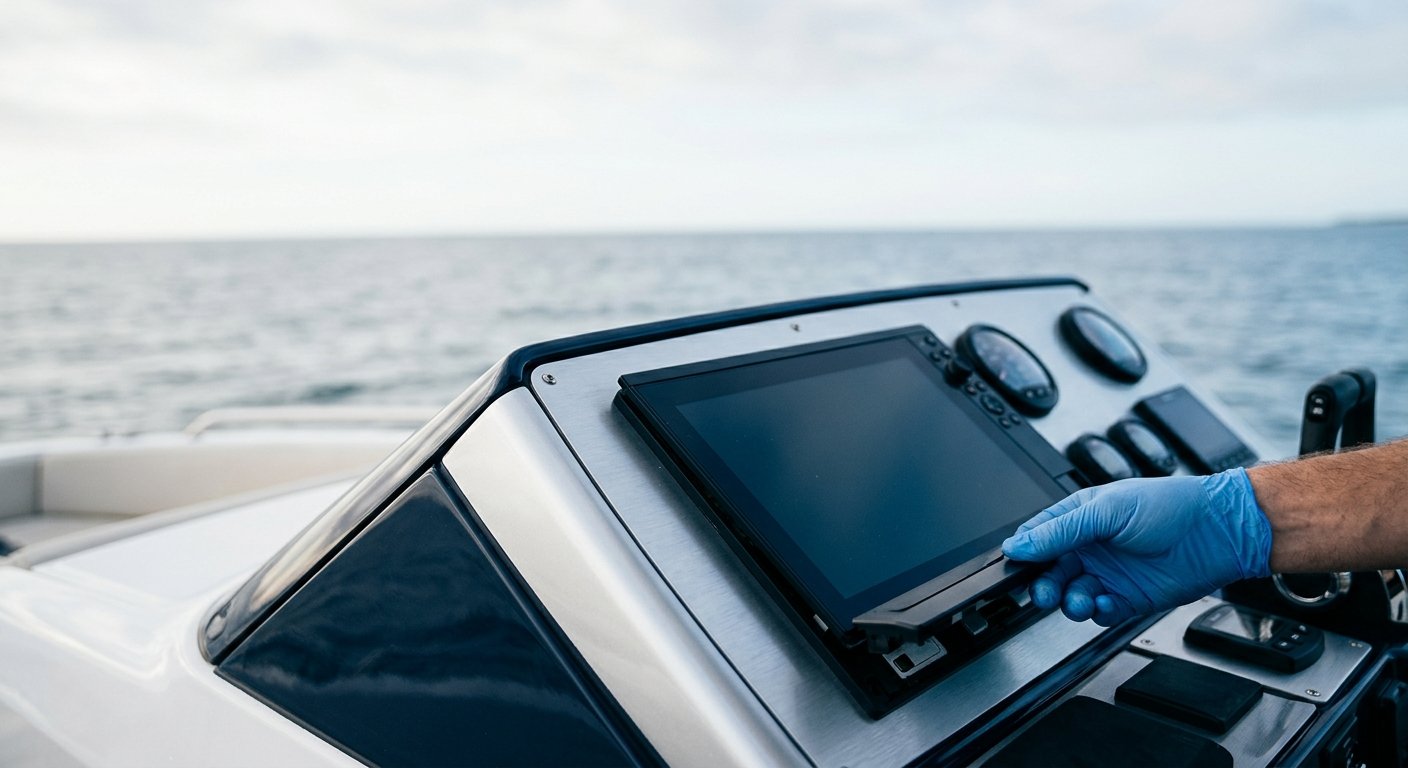
Marine television installation requires several decisions that simply don’t exist in residential AV work. Display brightness is the first practical concern—direct Florida sunlight renders most indoor TVs invisible. Marine displays are rated in nits (a measure of brightness); a quality outdoor marine display typically delivers 1,000 nits or higher compared to 250-400 nits for standard indoor panels.
Anti-reflective coatings and tempered safety glass are standard on quality marine displays. On a vessel running offshore, an untempered glass panel becomes a safety hazard in rough conditions. The physical mounting system matters equally: motorized mounts that allow a display to be stowed in rough weather, swivel mounts with marine-grade locking mechanisms, and tilt systems that compensate for sun angle all contribute to both usability and longevity.
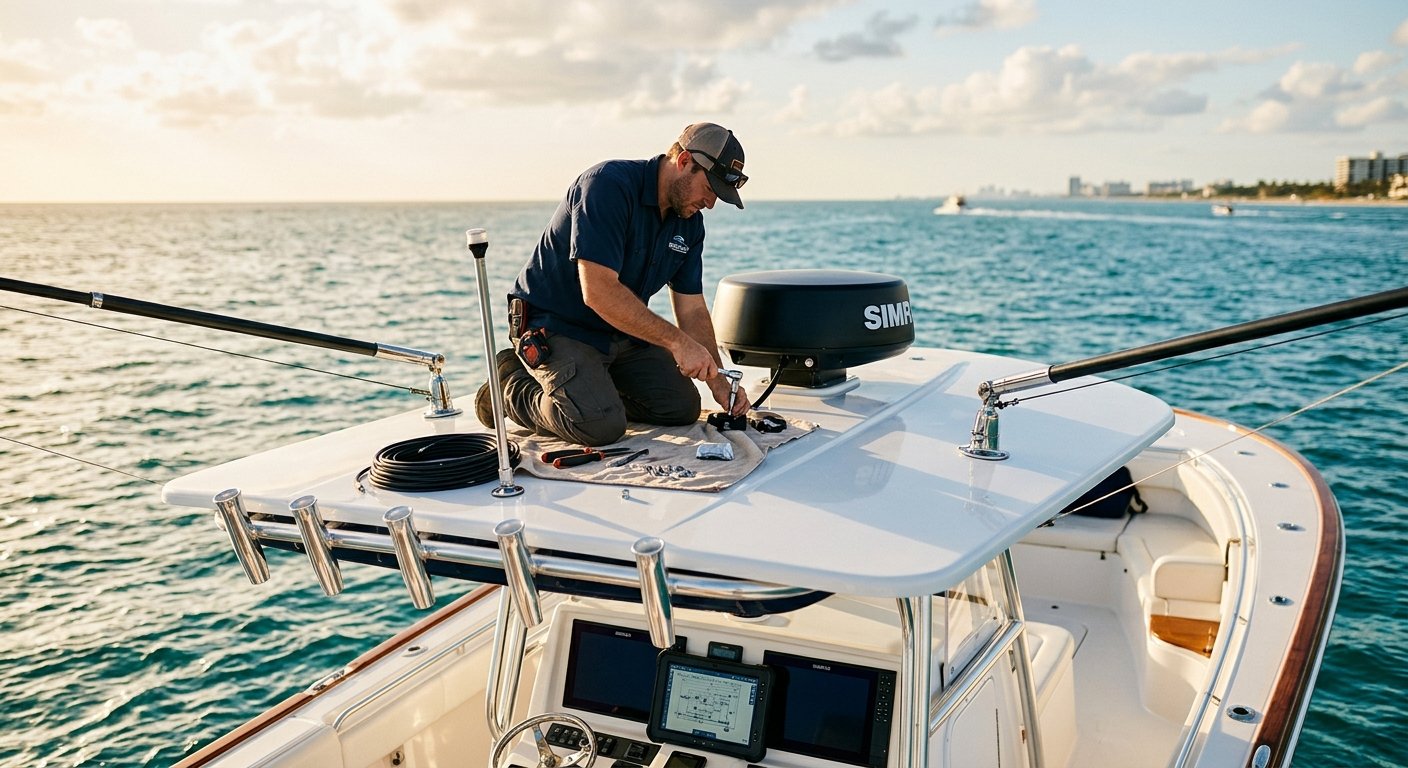
Antenna and signal source decisions also differ offshore. Many South Florida cruisers use satellite antenna systems for television reception, which allows uninterrupted programming on extended Bahamas crossings. Stabilized marine satellite domes maintain signal lock through vessel motion—a feature that separates dedicated marine systems from residential satellite dish adaptations.
Wiring runs for boat TV installation involve significant cable management challenges. HDMI cables, coaxial antenna runs, power wiring, and control cables must all be routed through bulkheads and conduit in ways that prevent moisture intrusion at penetration points, minimize electromagnetic interference with navigation electronics, and remain serviceable for future maintenance.
NMEA 2000 Integration and System-Wide Thinking
Modern yacht entertainment systems don’t exist in isolation. On a properly integrated vessel, audio zones can be controlled through multifunction display (MFD) interfaces. Dockside power status can automatically manage entertainment system power draw. Anchor watch alarms can interrupt audio to deliver audible warnings through salon speakers.
This level of integration runs through the vessel’s NMEA 2000 network—the backbone communications protocol that connects navigation, monitoring, and increasingly, entertainment systems aboard contemporary boats and yachts. NMEA 2000 certification matters here: devices that carry this certification have been tested for interoperability and communication protocol compliance, reducing the risk of conflicts between systems sharing the same network backbone.
As NMEA-certified installation specialists, MEI approaches every yacht entertainment system as part of the vessel’s broader electronics architecture—not as an isolated add-on. This perspective prevents the common problem of entertainment systems that interfere with navigation electronics or create unexpected network conflicts. Learn more about comprehensive electronics integration through our marine electronics installation services.
Installation Quality: The Details That Determine Longevity
The visible components of a yacht entertainment system—speakers, displays, head units—represent only part of what determines long-term reliability. The hidden work is where installations succeed or fail in South Florida’s demanding marine environment.
Marine-grade tinned copper wiring is non-negotiable in saltwater environments. Untinned copper wiring oxidizes rapidly, increasing resistance and generating heat at connections—a leading cause of both equipment failure and electrical fires aboard vessels. Every connection should use marine-grade heat-shrink solder connectors rather than standard wire nuts or twist connections. Penetration points through bulkheads require proper grommets and sealant to prevent moisture migration.
Circuit protection placement, wire gauge selection for actual current loads, and proper grounding to prevent galvanic corrosion on underwater metals are all part of a professional marine AV installation that protects the vessel as a whole—not just the entertainment components themselves.
Given South Florida’s active hurricane season, installation decisions should also consider storm preparedness. Equipment that can be quickly disconnected, displays that can be stowed, and systems designed with documented shutdown procedures all contribute to protecting a substantial investment when a named storm threatens the area.
Our boat LED lights installation service complements entertainment system work—proper lighting integration enhances the onboard ambiance that a quality audio and video system creates.
Frequently Asked Questions
What makes marine speakers different from outdoor home audio speakers?
Marine speakers are specifically engineered for saltwater environments, UV exposure, and the vibration patterns of a running vessel. They use materials like polypropylene cones, rubber surrounds, and stainless or aluminum hardware that resist corrosion and UV degradation. Standard outdoor home speakers typically lack the IP ratings and material specifications needed to survive extended saltwater exposure, even if they handle rain adequately in a residential setting.
How many audio zones does a typical yacht need?
Zone requirements depend on vessel size and usage patterns. Most vessels over 35 feet benefit from at least three zones: cockpit/bridge, salon, and staterooms. Larger cruisers and sportfish boats often add dedicated helm station speakers (integrated with navigation alerts), bow area speakers, and separate master stateroom controls. A professional consultation evaluates your vessel layout and how you actually use the boat before recommending a zone configuration.
Can a marine TV system receive programming on a Bahamas crossing?
Yes, with the right equipment. Stabilized satellite antenna systems are designed to maintain signal lock through vessel motion and are the standard solution for offshore television reception. Streaming services via satellite or cellular-based marine internet systems are also increasingly popular options, though offshore cellular coverage has geographic limitations depending on how far from Florida you’re cruising.
What should I ask an installer before committing to a marine AV project?
Ask about NMEA certification, factory training credentials, and whether they follow ABYC electrical standards. Request IP rating documentation for any components they propose. Ask how they handle penetration points, wire routing, and grounding. A qualified installer should welcome these questions and provide clear, detailed answers—they reflect the kind of technical diligence that protects your vessel.
How does entertainment system installation affect my vessel’s navigation electronics?
Poorly planned installations can create interference issues with VHF radio, radar, and GPS systems if audio amplifiers or display systems are not properly shielded, grounded, and positioned. Professional installers evaluate the entire electronics architecture and route entertainment wiring to minimize electromagnetic interference, ensuring navigation and safety systems continue to perform reliably.
Ready to Upgrade Your Vessel’s Entertainment System?
A properly designed and installed yacht entertainment system enhances every hour aboard—from sunset anchorages in the Bahamas to dockside evenings at Stuart’s Roosevelt Bridge waterfront. Done right, it’s a lasting investment that adds genuine value to your vessel and your time on the water.
Marine Electronics Installers brings NMEA-certified expertise and factory-trained technicians to every project, serving boat and yacht owners from Stuart to Fort Lauderdale. Our consultative approach means you get a system designed around your vessel, your cruising patterns, and your expectations—not a generic package.
Contact MEI at (772) 634-6055 or visit us at 7892 SW Jack James Dr, Stuart, FL 34997 to schedule a consultation for your yacht entertainment system project.