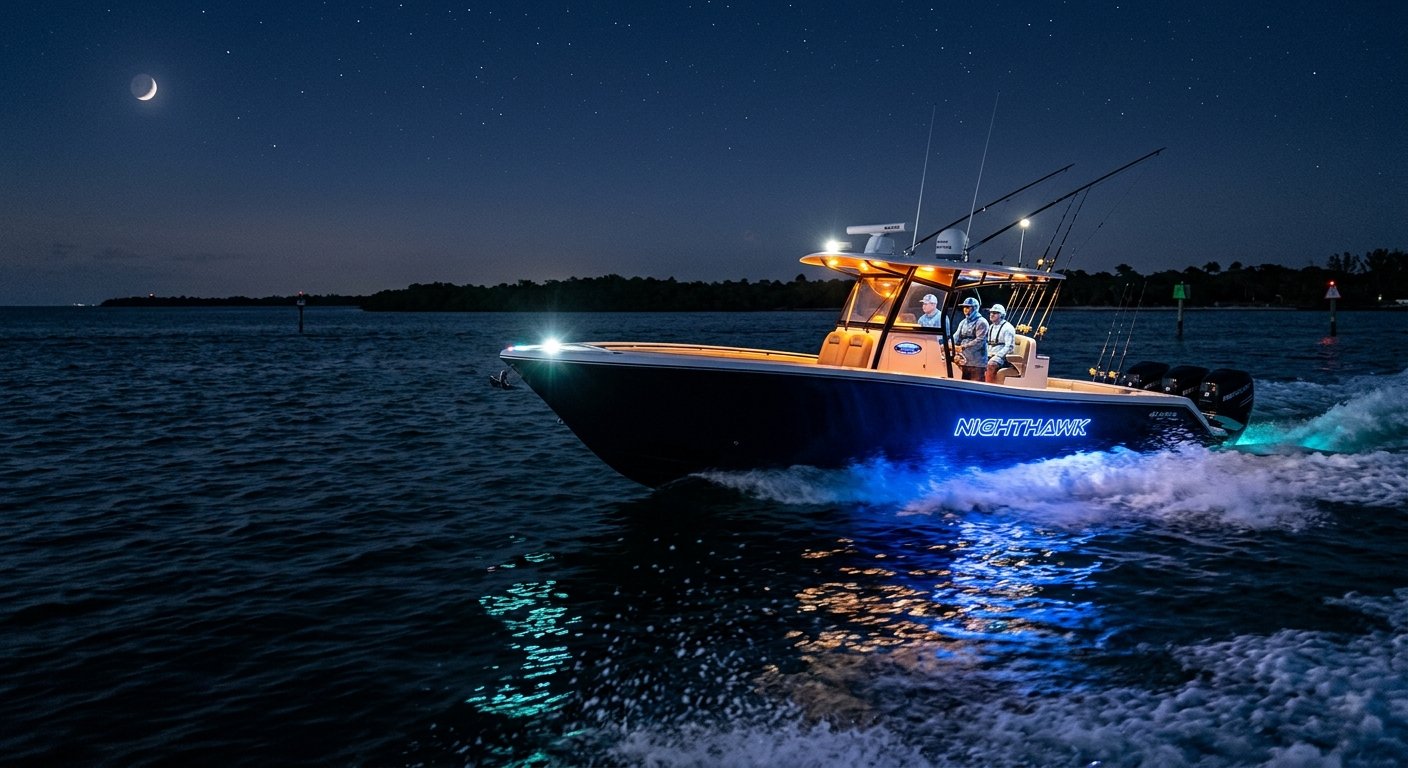
Picture this: it’s 4:30 a.m. off St. Lucie Inlet, and you’re running offshore for a wahoo bite. The cockpit lighting is dim, the helm instruments are glaring into your eyes, and the deck is a hazard in the dark. Or you’re returning from a Bahamas crossing at dusk, and the underwater lights that were supposed to make docking easier haven’t worked since last season. These aren’t edge cases—they’re everyday realities for South Florida boaters who haven’t invested in a properly designed and installed marine LED lighting system.
Marine LED lighting has evolved far beyond decorative accent strips. Today’s systems integrate navigation lighting compliance, functional deck lighting, underwater LED lights, and interior yacht lighting into a cohesive setup that genuinely improves safety, extends your time on the water, and protects your investment. But only when it’s done right.
Why Marine LED Lighting Is a Safety Investment, Not Just an Upgrade
According to the U.S. Coast Guard Recreational Boating Statistics, a significant percentage of accidents occur in low-light or nighttime conditions—and inadequate lighting is a contributing factor in many of those incidents. Proper navigation and deck lighting isn’t optional; it’s a safety obligation and a legal requirement under federal regulations.
For South Florida boaters—especially those running from Jupiter Inlet to the Bahamas Bank or navigating the busy Intracoastal Waterway between Stuart and Fort Lauderdale—reliable lighting systems make the difference between a safe passage and a dangerous situation. The waters here demand it. Night fishing trips offshore, pre-dawn departures, and late afternoon returns through heavy boat traffic all require lighting systems that perform consistently.
Marine-grade LED fixtures are built to a different standard than residential or automotive LEDs. They’re rated for constant salt air exposure, vibration, and water immersion. Look for IP67 or IP68 ratings on fixtures intended for deck or underwater use—these ratings define protection against dust ingress and sustained water immersion. A fixture rated IP67 can withstand being submerged to one meter for 30 minutes, while IP68-rated lights are designed for continuous submersion, making the latter the correct specification for underwater LED lights on your boat’s hull.
Understanding the Types of Marine LED Lighting
Navigation Lighting
Navigation lights are federally mandated under 33 CFR Part 83 (COLREGS) for vessels operating between sunset and sunrise or in restricted visibility. LED navigation lights have largely replaced incandescent versions because they draw far less power, last longer, and produce more consistent output. However, replacement or upgrade must meet the arc and intensity standards specified in the regulations. An improperly installed port or starboard light—even an LED one—creates both a legal liability and a collision risk.
Underwater LED Lights for Boats
Underwater LED lights are among the most popular upgrades on South Florida vessels, from 25-foot center consoles to large sportfishers and mega yachts. The appeal is obvious: they look stunning at dock, improve visibility in dark marinas, and can attract bait fish near the hull when anchored offshore.
What’s less obvious is how much variation exists in quality, mounting methods, and electrical requirements. Proper through-hull installation requires seacock considerations, appropriate marine sealant, and correct gauge wiring to handle the amperage draw—especially when running multiple underwater LED light pods. A short circuit in an underwater lighting circuit isn’t just an inconvenience; in the presence of fuel vapors, it’s a genuine safety hazard.
Deck and Cockpit Lighting
Boat deck lighting serves a functional purpose that many owners underestimate until they’re fighting a fish at night or rigging tackle before dawn. Cockpit LED lighting should illuminate work surfaces evenly without destroying night vision. Recessed LED lights with red-mode options allow anglers and navigators to maintain dark adaptation while still seeing clearly—a feature increasingly standard on well-designed sportfishing vessels running offshore from Palm Beach and Martin County.
Marine LED Light Bars
Marine LED light bars have become a go-to solution for offshore fishermen who need powerful forward lighting during night runs. The key considerations are mounting location (to minimize obstruction and vibration stress), beam angle (spot versus flood versus combo), and waterproofing rating. Light bars installed on T-tops, hardtops, or radar arches must be properly secured and wired with circuit protection to prevent damage if the circuit is overloaded or shorted.
Yacht Interior Lighting
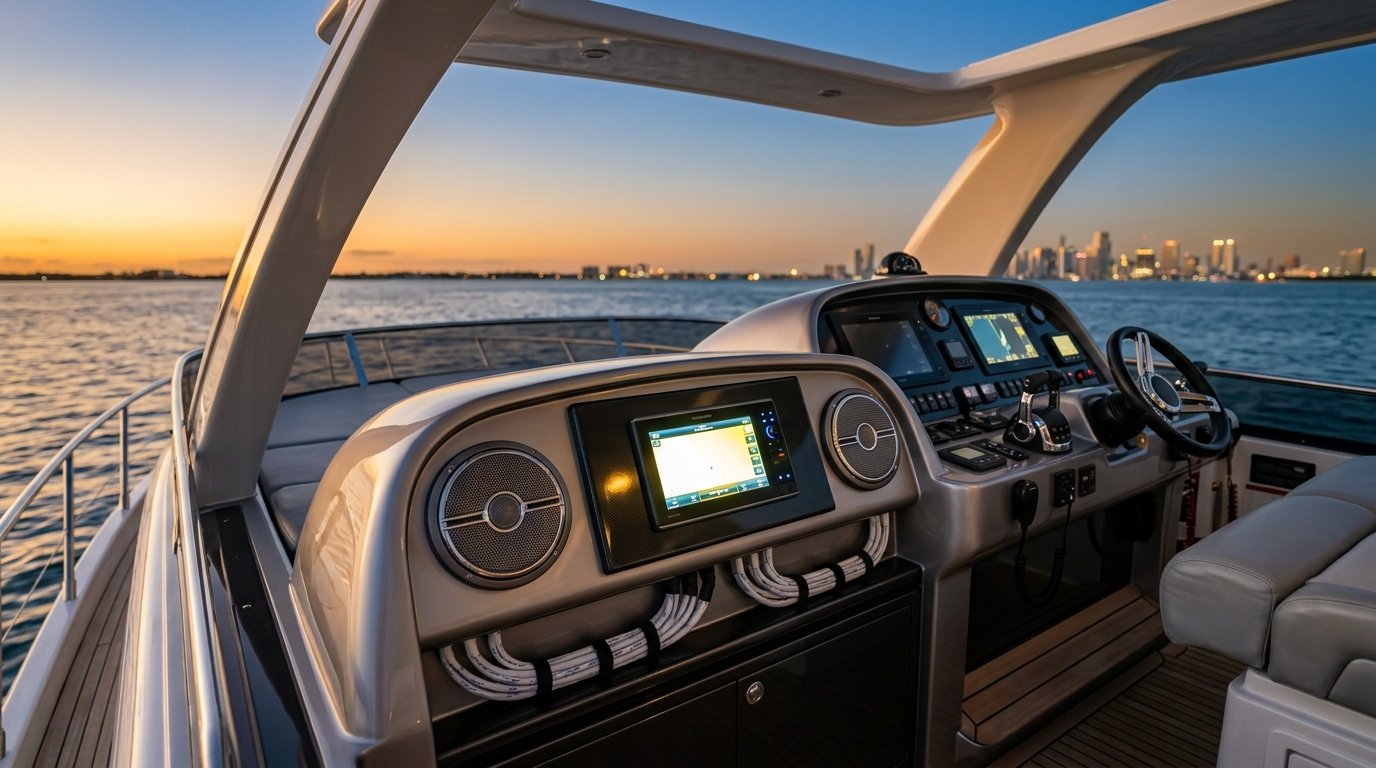
Yacht interior lighting on larger vessels spans from salon ambient lighting and galley task lighting to cabin reading lights and head compartment fixtures. Modern LED systems can be integrated with smart controls and dimming systems, allowing different zones to be managed independently. On mega yachts and large cruisers frequently seen at marinas from Stuart to Fort Lauderdale, interior lighting design can be quite sophisticated—but the underlying wiring and circuit protection requirements are the same: marine-grade components, proper fusing, and compliance with ABYC electrical standards.
Why Professional Installation Matters for Marine LED Systems
The marine electrical environment is uniquely hostile. Salt air accelerates corrosion at every connection point. Vibration loosens terminals over time. Bilge moisture finds its way into poorly sealed fixtures. And unlike automotive or residential wiring, boats don’t have a ground path through the hull—improper grounding in a marine DC system creates galvanic corrosion that can silently destroy underwater metal components over months.
This is why the National Marine Electronics Association (NMEA) and the American Boat and Yacht Council (ABYC) both publish standards specifically for marine electrical systems, and why NMEA-certified installation specialists approach lighting work with the same rigor they apply to chartplotter or radar installations. Every connection needs proper tinned marine wire, heat-shrink adhesive connectors, and a logical fusing strategy.
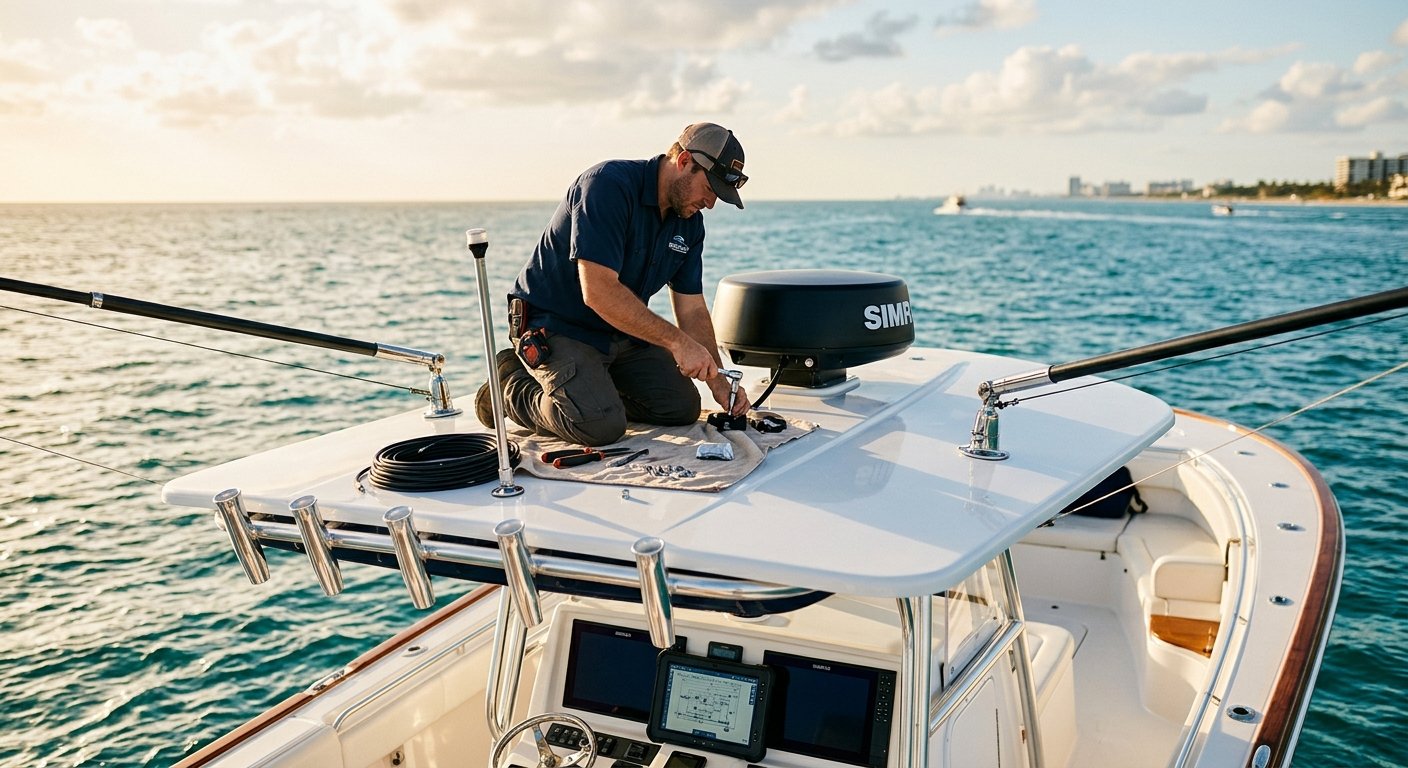
When MEI’s factory-trained technicians design a boat lighting system, they’re not just swapping fixtures—they’re evaluating your existing electrical panel capacity, routing wiring to avoid chafe points, selecting fixtures with appropriate IP ratings for each location, and ensuring the entire system is documented so future troubleshooting is straightforward. This is part of the same consultative approach that guides our broader marine electronics installation services.
Integration With Other Onboard Systems
Advanced lighting systems on modern vessels often integrate with NMEA 2000 networks or dedicated lighting control systems that allow helm-side management of every light zone on the boat. A well-integrated yacht lighting system means your navigation lights, deck lighting, and underwater LEDs can be confirmed on or off from the helm—reducing the chance of leaving navigation lights running at the dock and draining your batteries overnight.
On vessels that also carry security cameras, integration between the camera system and lighting zones adds another layer of safety—exterior cameras work far better when deck and dock lighting is adequate. Learn more about how lighting complements marine security cameras in a well-designed vessel security setup.
Hurricane Preparation Considerations
South Florida boaters understand that hurricane season demands preparation. Exterior lighting fixtures on exposed locations—bow lights, stern lights, hardtop-mounted light bars—should be assessed each season for mounting integrity, seal condition, and corrosion at wire entry points. Fixtures that have developed water intrusion often fail electrically before they fail visually, meaning they may appear intact while the internal LED driver has already been compromised. Pre-season electrical inspections that include lighting systems are a sound practice for any vessel kept in Martin County or Palm Beach County waters year-round.
Frequently Asked Questions
What is the best type of underwater LED light for a saltwater boat?
For saltwater vessels in South Florida, look for underwater LED lights with IP68 ratings, bronze or high-grade stainless steel housings, and marine-grade wire leads. Through-hull-mounted pods generally provide better visibility than surface-mount options. Blue and white color temperatures are most common; blue tends to attract more baitfish in offshore conditions.
Can I install a marine LED light bar myself?
While light bars are often marketed as DIY products, improper installation can compromise waterproofing, create vibration-related wire chafe, and introduce electrical issues into your boat’s DC system. Professional installation ensures correct circuit protection, proper mounting, and wiring that won’t degrade in the marine environment—protecting both your safety and your warranty.
Do LED navigation lights meet COLREGS requirements?
Many do, but not all LED navigation lights are certified to meet the arc coverage and intensity requirements under 33 CFR Part 83. When upgrading navigation lights, it’s important to verify the fixture is USCG-compliant and that it’s installed at the correct position and height on the vessel. An NMEA-certified installer can confirm compliance during installation.
How do I prevent corrosion at marine LED lighting connections?
Use tinned marine-grade wire (not standard automotive or residential wire), adhesive-lined heat-shrink connectors at all terminations, and dielectric grease on any exposed connection points. Fixtures should be mounted with marine sealant at all hull penetrations. Annual inspection of connections in high-moisture areas—bilge, transom, and underwater locations—is recommended.
How much does professional marine LED lighting installation cost?
Costs vary significantly based on vessel size, number of fixtures, system complexity, and whether new wiring runs are needed. A simple navigation light upgrade on a center console is a straightforward job, while a full yacht lighting system with integrated controls and multiple underwater lights is a multi-day project. The best approach is a vessel assessment and detailed quote before committing to a scope of work.
Schedule Your Marine LED Lighting Consultation
Whether you’re adding underwater LED lights to a 30-foot center console in Jupiter, designing a full yacht lighting system for a sportfisher running offshore from Palm Beach, or upgrading navigation lights on a vessel kept at a Stuart marina, proper installation is what separates a system that performs reliably from one that fails when you need it most.
Marine Electronics Installers (MEI) serves boat and yacht owners from Stuart to Fort Lauderdale, including Palm Beach, West Palm Beach, Jupiter, and Hobe Sound. Our NMEA-certified technicians bring the same technical standards to marine LED lighting as they do to every electronics installation on your vessel.
Contact MEI at (772) 634-6055 or visit us at 7892 SW Jack James Dr, Stuart, FL 34997 to schedule a consultation and get an accurate assessment of what your vessel needs.