NMEA 2000 is the right choice for any modern, multi-device marine electronics system. It transmits data at 250 kbps—roughly 50 times faster than NMEA 0183—and lets every networked device both send and receive simultaneously on one backbone. Boats with legacy instruments can run both standards via a bridge converter, but the NMEA 2000 backbone should anchor any properly integrated system.
- NMEA 0183 is a one-talker, multiple-listener serial standard; NMEA 2000 is a true many-to-many network where every device shares data simultaneously.
- NMEA 2000 operates at 250 kbps versus NMEA 0183’s maximum of 38,400 baud—orders of magnitude faster.
- Many vessels in the 35-to-60-foot range need both: a NMEA 2000 backbone with a converter bridging legacy NMEA 0183 instruments.
- Improperly bridged networks can produce GPS position conflicts and autopilot instability—conditions dangerous 40 miles offshore.
- Proper termination, backbone sizing, clean power, and marine-grade cable are all required for a reliable NMEA 2000 installation.
Both are industry-standard communication protocols developed by the National Marine Electronics Association to allow marine electronics to share data. But they are fundamentally different technologies, and choosing the right one—or managing both—has a direct impact on safety, reliability, and the performance of your boat’s navigation systems. Here’s what every South Florida boat owner needs to know.
What Is NMEA 0183?
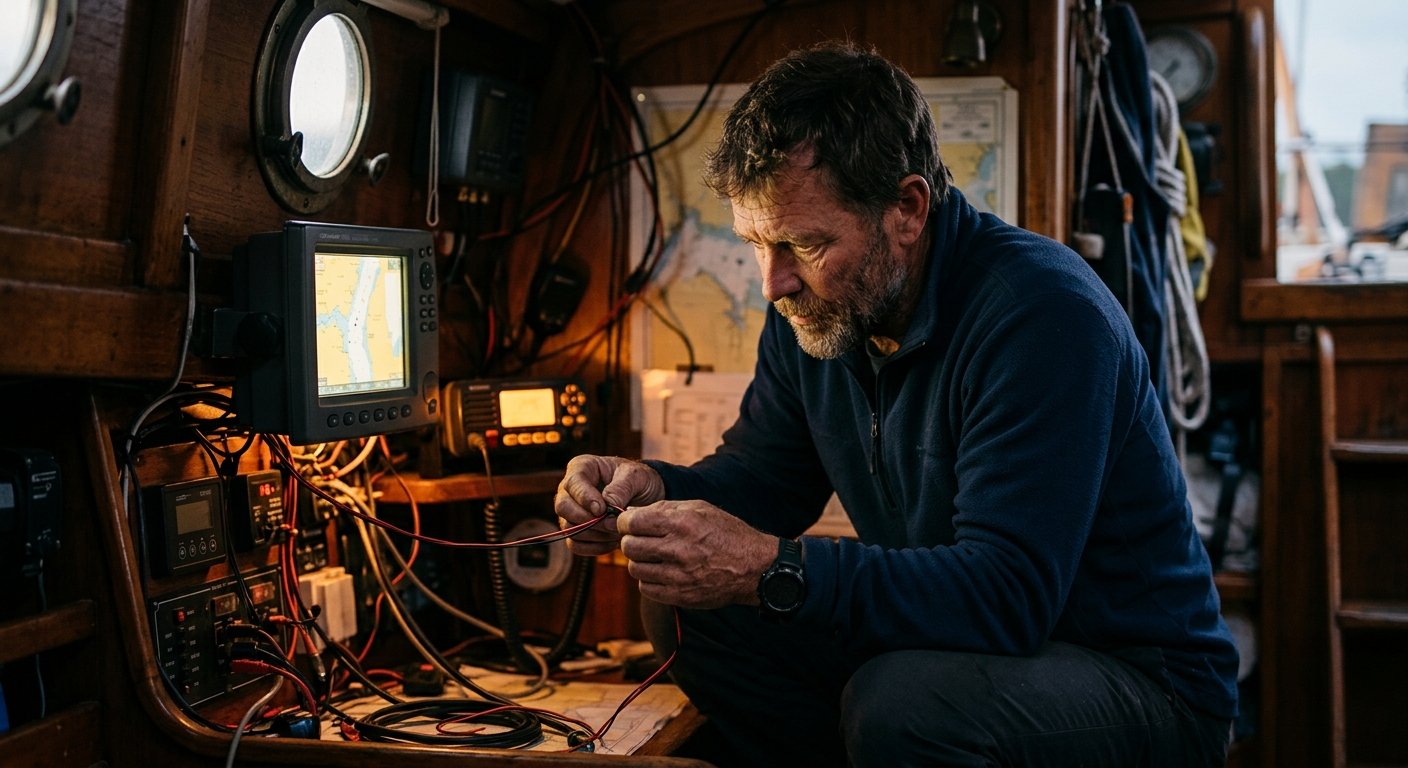
NMEA 0183 is the older of the two protocols, introduced in the early 1980s and still found on countless vessels today. It’s a serial communication standard that allows one device to “talk” to one or more listeners through a simple two-wire connection. Your marine GPS installation sends a position string, and connected instruments receive it.
The key limitation is that NMEA 0183 is a one-talker, multiple-listener system. Each device can only transmit on a single dedicated output wire. If you want multiple devices to send data to each other, you need multiple dedicated wire runs—which gets complicated fast on a 45-foot sportfish with eight or nine electronics components.
Data transmission speed is another constraint. NMEA 0183 operates at 4,800 baud (or 38,400 baud in the faster “high speed” version), which is adequate for basic GPS sentences but struggles to keep pace with modern chartplotters, radar systems, and AIS transponders sharing complex data sets in real time.
When NMEA 0183 Still Makes Sense
- Older vessels with legacy instruments not yet worth replacing
- Single-instrument connections where one talker feeds one listener
- Interfacing specific legacy devices to a modern NMEA 2000 backbone via a converter
- Simple setups on smaller vessels with limited electronics
What Is NMEA 2000?
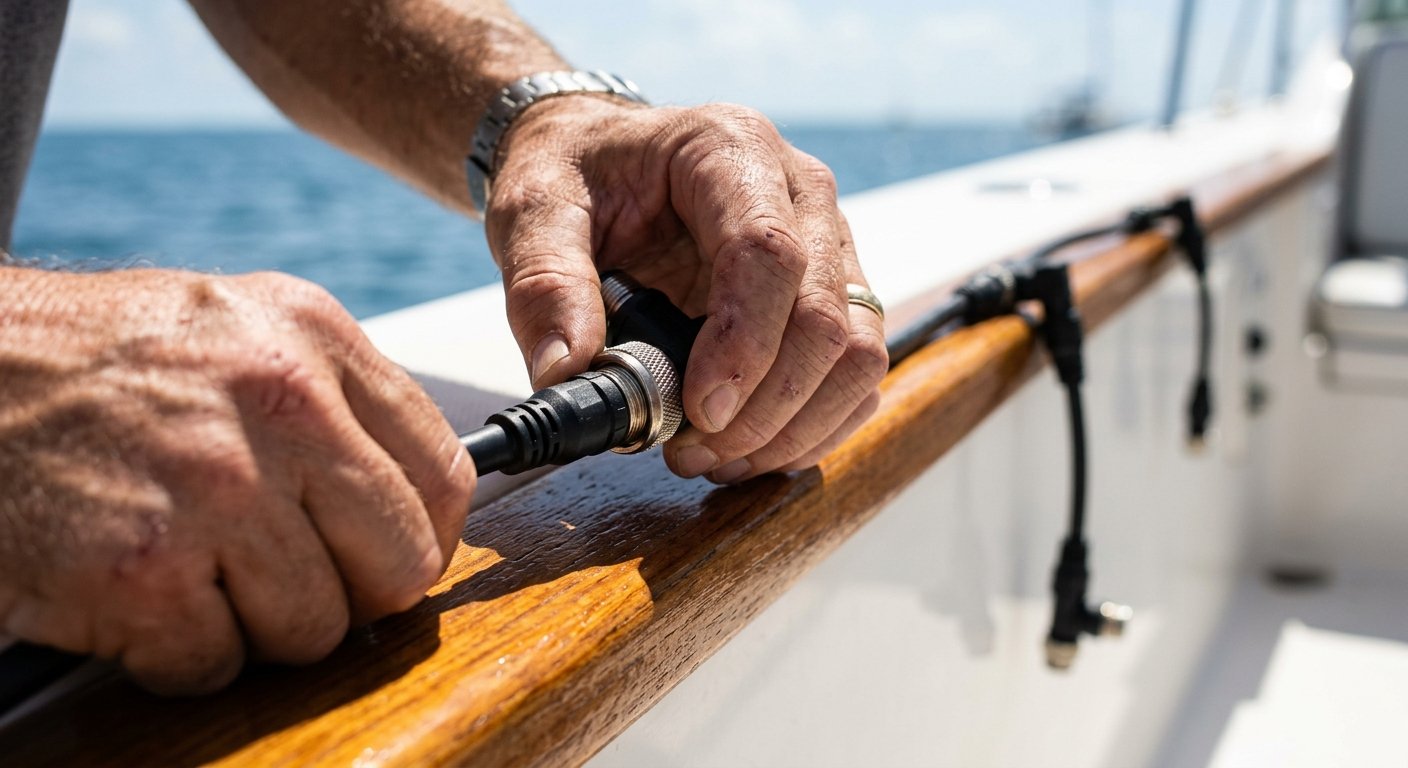
NMEA 2000 (often abbreviated N2K) is the modern networking standard, introduced in 2001 and now the backbone of virtually every properly integrated marine electronics system. Rather than point-to-point wiring, NMEA 2000 uses a true network architecture—a single backbone cable with drop connectors where every device plugs in and both sends and receives data simultaneously.
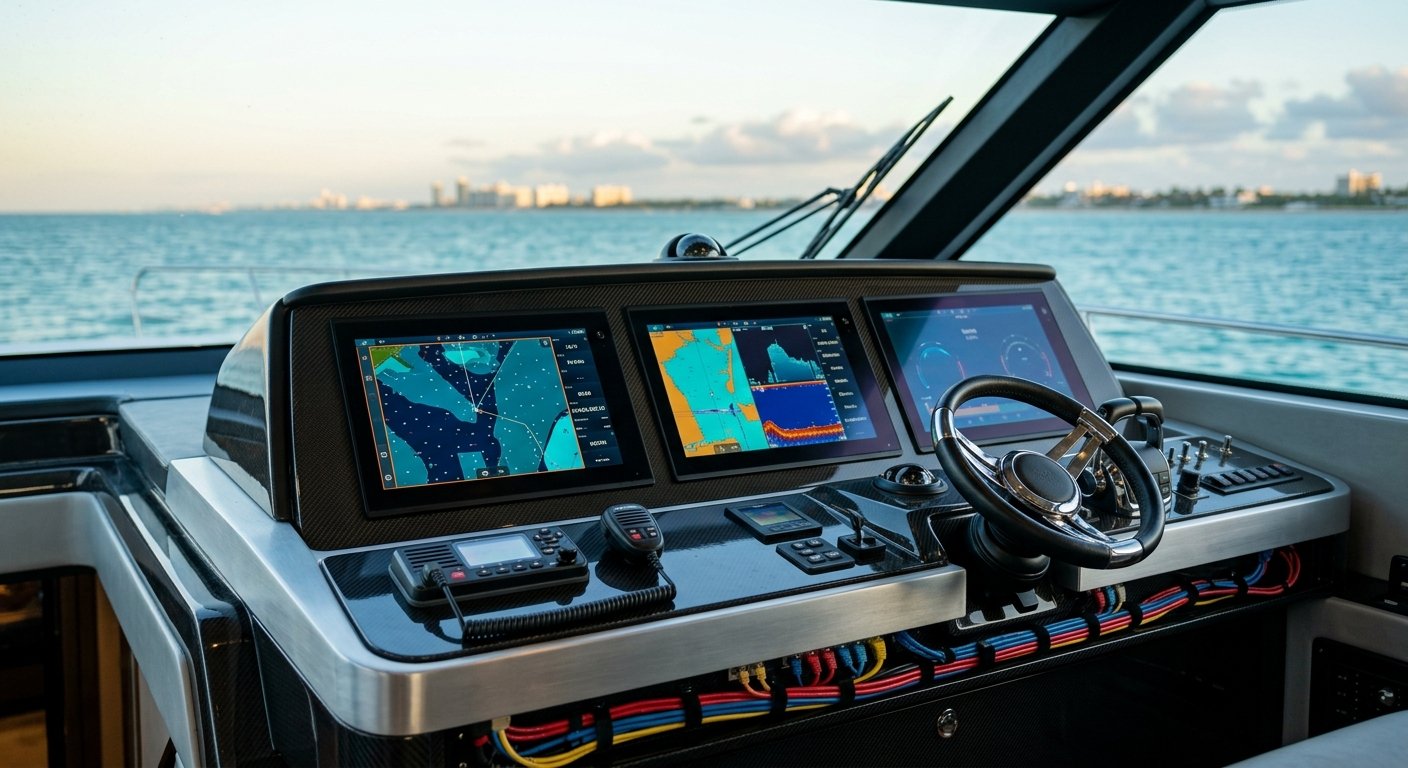
Think of it like a conversation at a table rather than a chain of telephone messages. Every device on the network can access all available data from any other device. Your chartplotter, autopilot, VHF radio, AIS transponder, engine interface, digital switching system, and depth sounder all communicate on one backbone. The result is seamless integration, real-time data sharing, and dramatically simplified wiring.
NMEA 2000 transmits at 250 kilobits per second—orders of magnitude faster than NMEA 0183—and uses standardized Parameter Group Numbers (PGNs) to ensure devices from different manufacturers speak the same language. The NMEA 2000 certification program ensures interoperability between certified products.
Why NMEA 2000 Matters for South Florida Boating
For offshore fishing out of Stuart or making a Bahamas crossing from Fort Lauderdale, a fully integrated NMEA 2000 network is more than a convenience—it’s a safety asset. Here’s why:
- Redundant GPS sources: If your primary chartplotter fails offshore, your autopilot and VHF can still access position data from a secondary GPS antenna on the same network.
- Autopilot integration: Autopilots using NMEA 2000 receive real-time heading, speed, wind, and GPS data simultaneously, enabling precise course corrections through Gulf Stream conditions.
- Engine monitoring: Most modern Yamaha, Mercury, and Volvo Penta engines communicate via NMEA 2000 gateways, putting RPM, fuel flow, temperature, and oil pressure on your chartplotter screen.
- AIS performance: AIS transponders on NMEA 2000 share vessel position and traffic data across all displays simultaneously without any additional wiring.
A properly designed and installed NMEA 2000 backbone means every instrument has the data it needs, when it needs it, without ambiguity.
The Key Differences at a Glance
Understanding the practical differences helps clarify which system your boat needs—or whether a hybrid approach is appropriate.
| Criterion | NMEA 0183 | NMEA 2000 |
|---|---|---|
| Architecture | Point-to-point serial | Single backbone network |
| Data sharing | One talker, multiple listeners | Many-to-many, all devices |
| Speed | Up to 38,400 baud | 250 kbps (~50× faster) |
| Wiring complexity | Individual runs between each device pair | One backbone, drop cables per device |
| Scalability | New device often means new wire run | Plug into nearest drop point |
| Troubleshooting | Trace individual wire pairs | Requires proper diagnostic tools and training |
Do You Need Both?
On many boats—particularly vessels in the 35-to-60-foot range common throughout Palm Beach County and Martin County marinas—the answer is yes. Older instruments like certain sonar systems, weather fax receivers, or legacy autopilots may only communicate via NMEA 0183. Converters and bridge devices can translate between the two protocols, allowing legacy equipment to participate in a modern NMEA 2000 network.
Improperly bridged networks can produce data conflicts, position errors, or autopilot instability—conditions you absolutely do not want to discover 40 miles offshore near the Gulf Stream. Data priorities must be set correctly so the two networks don’t generate conflicting GPS position or heading information.
This is precisely where NMEA-certified installation expertise becomes critical. A factory-trained technician knows how to design hybrid networks that maintain data integrity across both standards. As part of comprehensive boat electronics service, MEI regularly audits existing network configurations, identifies NMEA conflicts, and redesigns wiring to eliminate redundancy and data errors.
Planning a New Installation or Upgrade
If you’re outfitting a new center console or upgrading a sportfish or cruiser, the decision is straightforward: build your system on a properly engineered NMEA 2000 backbone from the start. Retrofit situations require more careful planning.
Size the backbone correctly
NMEA 2000 backbones have physical and electrical load limits. Proper planning from the outset prevents network instability as you add devices over time.
Terminate both ends
Every NMEA 2000 backbone must be properly terminated at both ends—a commonly overlooked step that causes intermittent network failures.
Provide clean, fused power
The network requires clean, properly fused 12V power supplied at the correct point on the backbone.
Use marine-grade cable
Marine-grade NMEA 2000 cables with appropriate IP ratings matter in saltwater environments. Consumer-grade alternatives compromise long-term reliability.
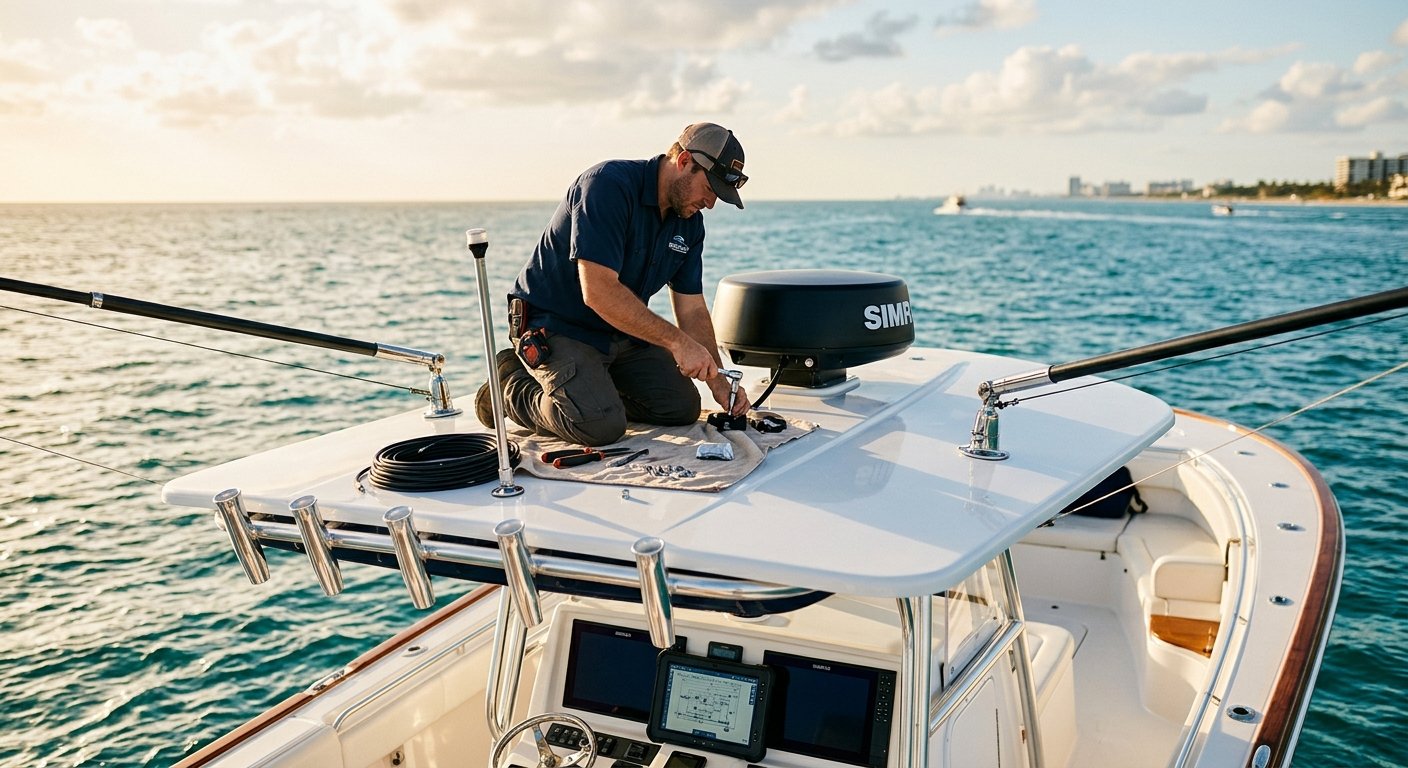
Marine GPS installation on a NMEA 2000 network also determines how GPS data reaches every other system on the boat—chartplotters, autopilot, AIS, and DSC-capable VHF radio. Getting this right is foundational to everything else working correctly.
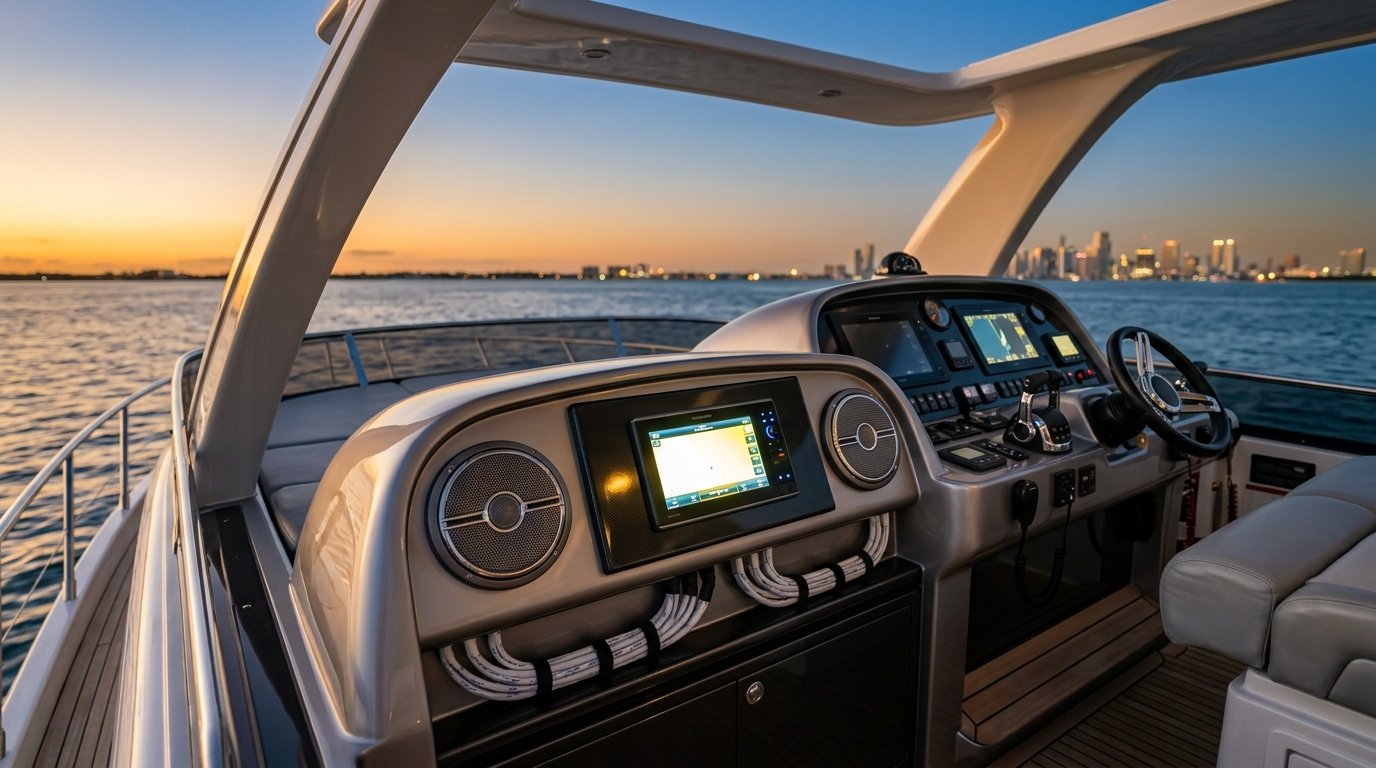
On larger yachts with multiple helm stations and flybridge displays, plan for multiple backbone segments with proper bridging between them. High-bandwidth radar and sonar data may also require a parallel Ethernet-based network—such as Garmin’s OneHelm or Furuno’s NavNet—running alongside the NMEA 2000 backbone.
Frequently Asked Questions
Can I add NMEA 2000 devices to a boat that currently runs NMEA 0183?
Yes. A properly designed hybrid installation uses a NMEA 0183-to-NMEA 2000 converter or bridge device to translate data between the two protocols. The key is ensuring data priorities are set correctly so the two networks don’t produce conflicting information—particularly for GPS position and heading data that feeds navigation and autopilot systems.
Is NMEA 2000 compatible across different electronics brands?
NMEA 2000 is an open standard, and certified devices from different manufacturers—Garmin, Furuno, Simrad, Raymarine, Navionics, and others—are designed to interoperate. However, some proprietary data (like Garmin’s Fantom radar feeds or Simrad’s StructureScan) may require manufacturer-specific networking in addition to the NMEA 2000 backbone. A factory-trained technician can map out which data flows on which network to avoid confusion.
How do I know if my current electronics have a network problem?
Common symptoms include devices showing different GPS positions, autopilot receiving intermittent or no heading data, AIS targets not appearing across all displays, or engine data disappearing from the chartplotter. These issues often indicate wiring errors, termination problems, or address conflicts on the network. A proper electronics service diagnostic can identify the root cause.
Does yacht electronics installation on a larger vessel require a different approach?
Yes. On larger yachts with multiple helm stations, flybridge displays, and extensive electronics suites, NMEA 2000 backbone design becomes more complex. Multiple backbone segments, proper bridging between them, and careful power distribution are all required. Mega yacht installations may also incorporate Ethernet-based networks like Garmin’s OneHelm or Furuno’s NavNet alongside NMEA 2000 for high-bandwidth radar and sonar data.
What does an NMEA-certified installer bring to this process?
NMEA certification demonstrates tested knowledge of both NMEA 0183 and NMEA 2000 standards, proper network design principles, and installation best practices. The U.S. Coast Guard emphasizes that properly functioning navigation electronics are fundamental to maritime safety. A certified installer ensures your system is designed, installed, and documented correctly—protecting both your investment and your safety offshore.
Getting Your Network Right
Whether you’re running a 28-foot center console out of the St. Lucie Inlet for tournament fishing or crossing to the Bahamas on a 58-foot Viking, your electronics network is the nervous system of your vessel. A properly designed and installed NMEA 2000 backbone—or a thoughtfully integrated hybrid system—means every instrument has the data it needs, when it needs it, without ambiguity.
At Marine Electronics Installers, our NMEA-certified technicians work with boat owners throughout Stuart, Jupiter, Palm Beach, West Palm Beach, and Fort Lauderdale to design and install marine electronics systems built for real South Florida offshore conditions. From marine GPS installation to full yacht electronics installation, we take a consultative approach that starts with understanding how you use your boat and ends with a system that works flawlessly when it matters most.
Schedule a Network Consultation
Our NMEA-certified technicians serve Stuart, Jupiter, Palm Beach, West Palm Beach, and Fort Lauderdale—visit us at 7892 SW Jack James Dr, Stuart, FL 34997 or reach out today.

About Marine Electronics Installers
Marine Electronics Installers (MEI) provides professional marine electronics installation and service for boat and yacht owners throughout South Florida, from Stuart to Fort Lauderdale. Specializing in NMEA-certified installations for vessels ranging from 25-foot center consoles to mega yachts, MEI combines factory training and technical expertise with deep knowledge of South Florida boating conditions—including offshore fishing, Bahamas crossings, and hurricane preparation. The company takes a consultative, educational approach that emphasizes safety, reliability, and proper installation techniques to protect substantial vessel investments. Visit marineelectronicinstallers.com →