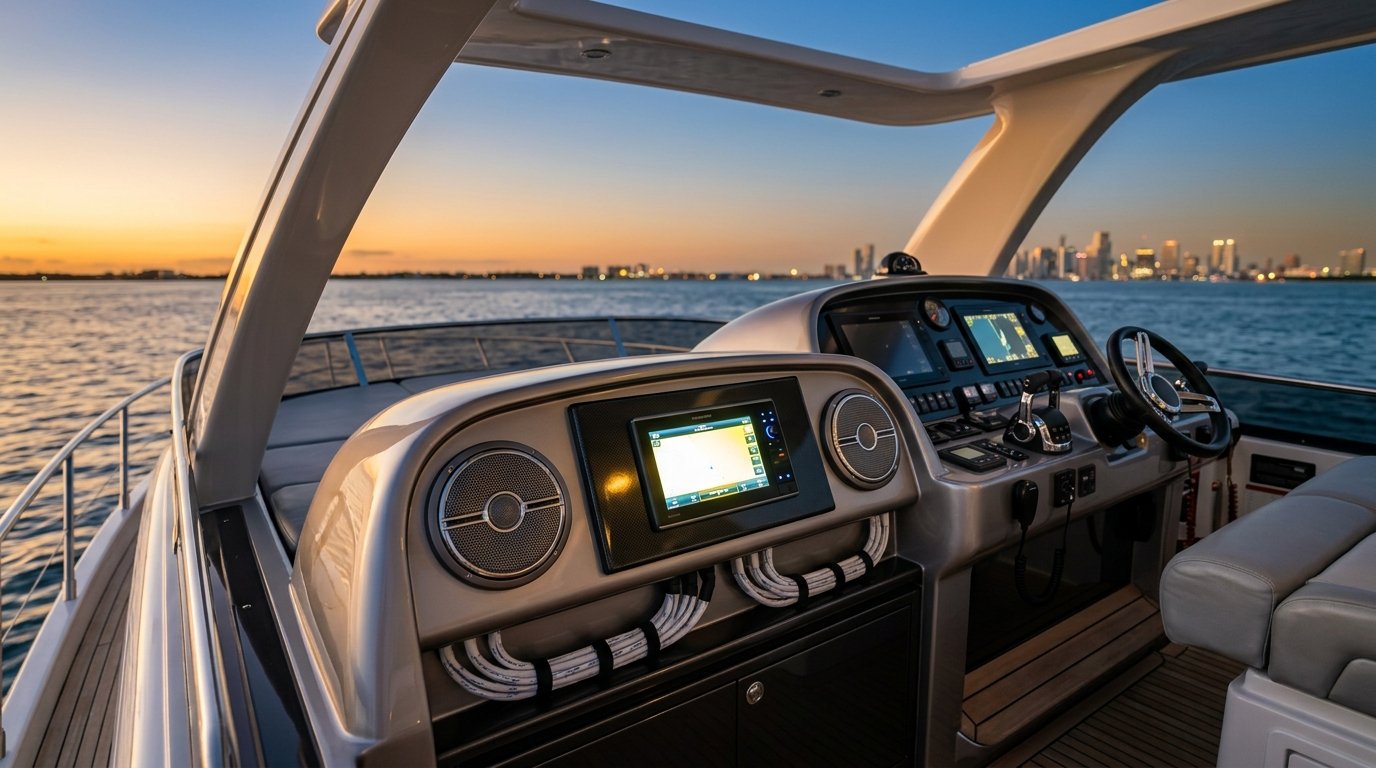
A properly designed yacht sound system delivers clear, powerful audio across all zones of your vessel—cockpit, salon, flybridge, and bow—using marine-grade components built to withstand saltwater, UV exposure, and vibration. The right system integrates seamlessly with your NMEA 2000 network, protects against corrosion, and scales from a simple two-zone setup on a center console to a multi-room entertainment suite on a mega yacht.
- Marine audio components require IP-rated enclosures and marine-grade materials—consumer-grade equipment corrodes rapidly in saltwater environments.
- A zoned audio system lets you independently control sound in the cockpit, salon, flybridge, and cabin without running separate head units.
- Amplifier sizing, speaker placement, and proper wiring are the three most common failure points in DIY or under-specified installations.
- NMEA 2000 network integration allows your audio system to interact with navigation displays, reducing clutter and improving functionality.
- Professional marine stereo installation by NMEA-certified specialists protects both your investment and your warranty.
Why Marine Audio Is Different from Home or Car Audio
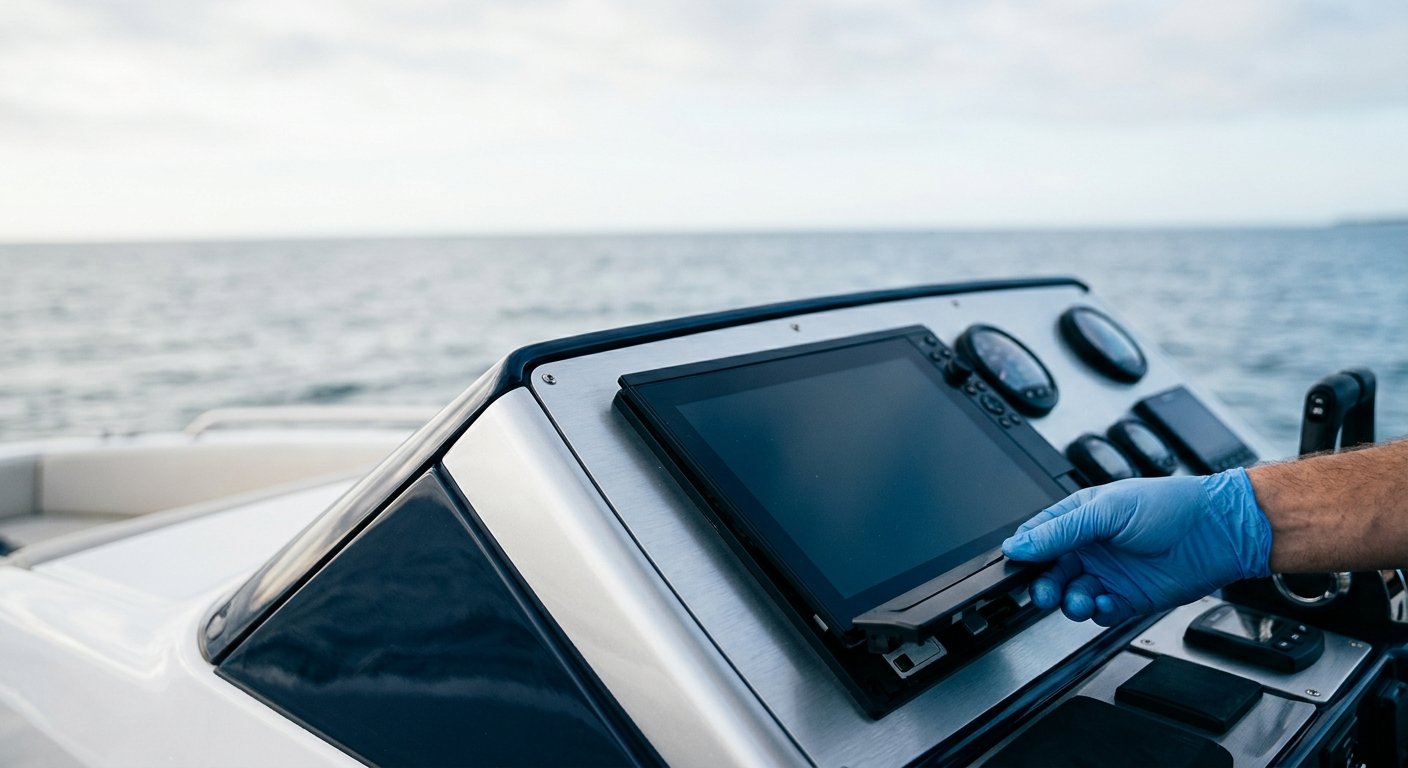
The single biggest mistake boat owners make when upgrading their audio is treating it like a car stereo project. A boat is one of the harshest electronic environments on earth: constant UV radiation, salt-laden air, spray, heat cycles, and vibration combine to destroy components that were never designed for marine use. A consumer amplifier mounted under a helm seat in Fort Lauderdale will typically show corrosion on its terminals within one season. A marine-rated amplifier with conformal-coated circuit boards, UV-stabilized housing, and sealed connectors is engineered to survive that environment.
The National Marine Electronics Association sets the standards that define how marine electronics—including audio systems—should communicate and integrate with one another on a vessel. Choosing components that comply with these standards, and having them installed by NMEA-certified specialists, ensures your system works as a cohesive unit rather than a collection of mismatched parts.
Mounting non-marine-rated speakers or amplifiers on a vessel can void manufacturer warranties on both the audio equipment and, in some cases, related electronics. Always verify IP ratings and marine certifications before purchasing components for any boat audio system.
Understanding IP Ratings and Marine-Grade Specifications
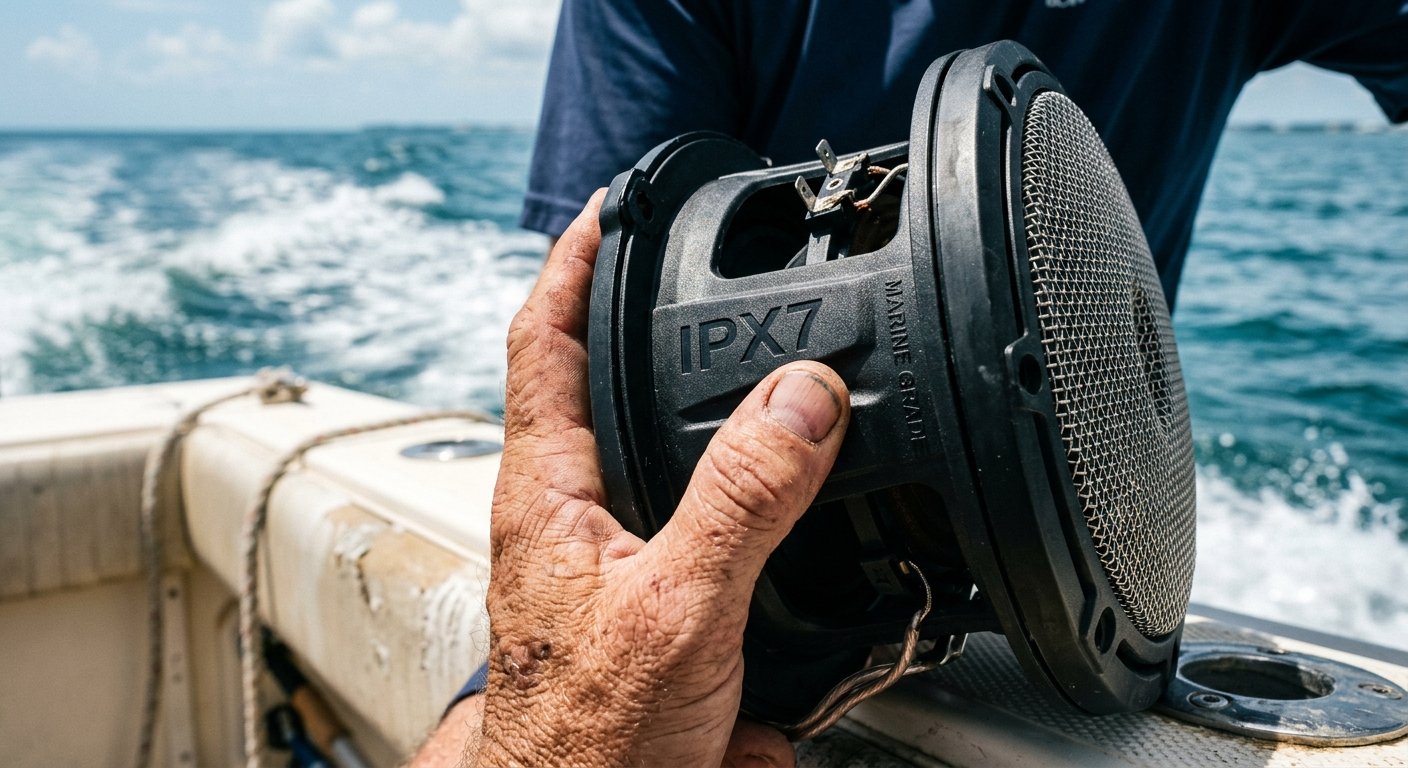
When evaluating waterproof marine electronics for audio applications, the IP (Ingress Protection) rating is your baseline spec. Speakers and head units mounted in exposed cockpit or flybridge locations should carry at minimum an IPX5 rating, meaning they resist water jets from any direction. Components in areas subject to spray or occasional submersion—bow speakers on a center console running offshore out of Jupiter or Stuart—should be rated IPX6 or higher.
Beyond water resistance, look for UV-stabilized cones and surrounds on speakers, stainless steel or UV-resistant polymer grilles, and tin-plated or gold-plated terminals to resist oxidation. These aren’t marketing details—they determine whether your speakers look and sound good after three years of South Florida sun and salt.
| Specification | Minimum (Protected Locations) | Recommended (Exposed Locations) |
|---|---|---|
| Water resistance rating | IPX5 | IPX6 or IPX7 |
| Speaker cone material | Polypropylene | UV-stabilized titanium or composite |
| Grille material | Powder-coated aluminum | 316 stainless steel or marine polymer |
| Amplifier circuit board | Sealed enclosure | Conformal-coated, sealed enclosure |
| Wiring connectors | Tin-plated marine wire | Gold-plated, heat-shrink adhesive connectors |
Designing a Zoned Yacht Entertainment System
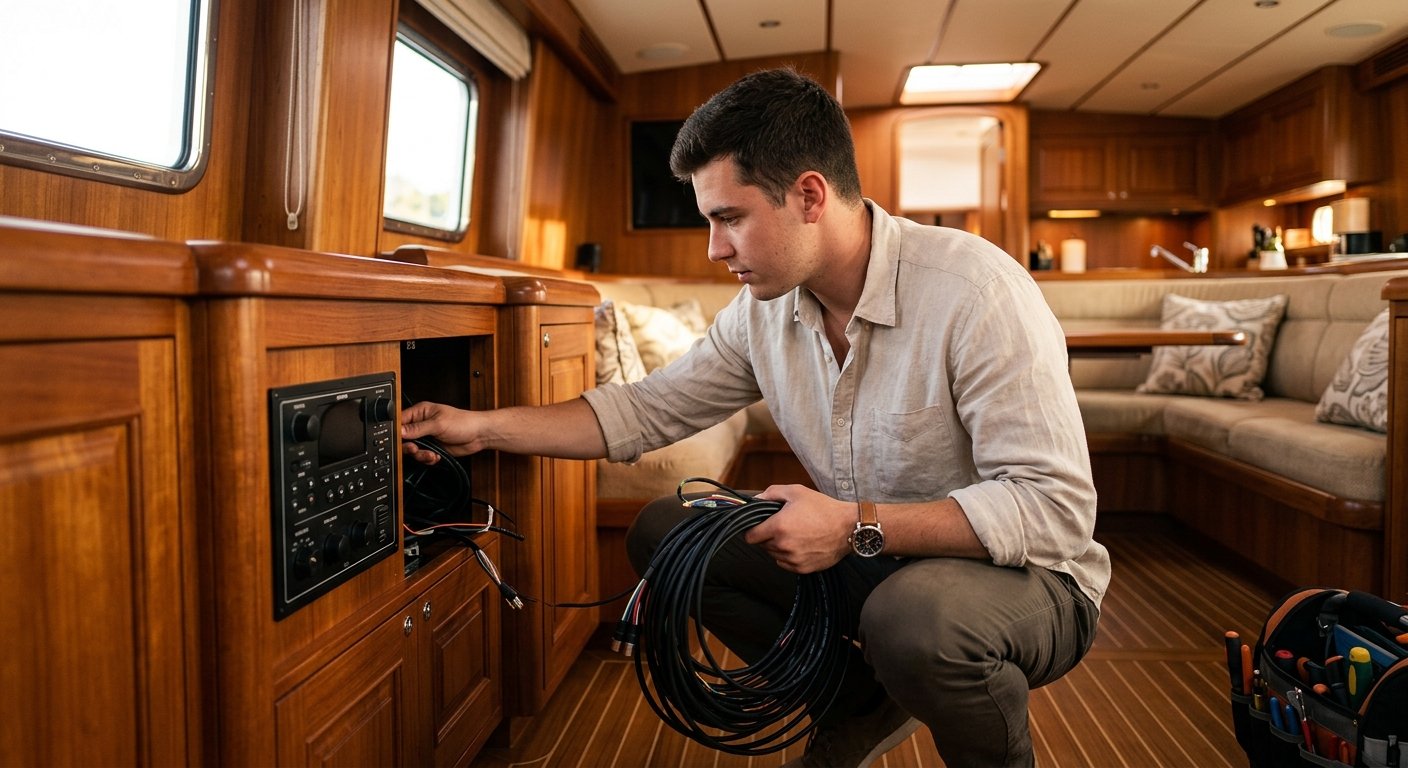
On vessels over 35 feet, a single-zone boat audio system quickly becomes a compromise. The captain at the flybridge wants music at one volume while guests in the cockpit want something different, and anyone in the salon shouldn’t have to compete with engine noise to hear their playlist. A properly engineered yacht entertainment system addresses this with independent amplification and source routing for each zone.
A typical multi-zone setup on a 50-foot sportfisher might include a primary head unit at the helm, a second controller at the flybridge, Bluetooth and satellite radio inputs, and independently amplified zones feeding the cockpit, flybridge, salon, and cabin. Each zone has its own volume control and can play the same source or a different one simultaneously. This is the architecture that separates a genuine yacht sound system from simply adding more speakers.
A properly zoned audio system doesn’t just add speakers—it creates independent acoustic environments that serve every part of the vessel simultaneously.
Amplifier Sizing: The Most Under-Specified Component
Marine amplifier installation is where most budget builds go wrong. Undersized amplifiers distort at high volume, which is actually more damaging to speakers than clean power at higher wattage. The correct approach is to match amplifier RMS power to speaker RMS ratings with approximately 10–20% headroom. For a four-zone system on a 50-foot vessel, a configuration with one amplifier per zone—or a multi-channel unit with sufficient current capacity—will outperform a single overworked amplifier running all zones simultaneously.
Proper marine amplifier installation also means attention to heat dissipation. Amplifiers mounted in poorly ventilated lockers fail prematurely regardless of their marine rating. Factory-trained technicians know where heat builds up on specific vessel layouts and route components accordingly.
When planning amplifier locations, check the manufacturer’s minimum clearance requirements for ventilation before finalizing placement. On many production boats, the default locker locations suggested in sales literature are not thermally adequate for high-output amplifiers.
Speaker Placement for Offshore and Coastal Conditions
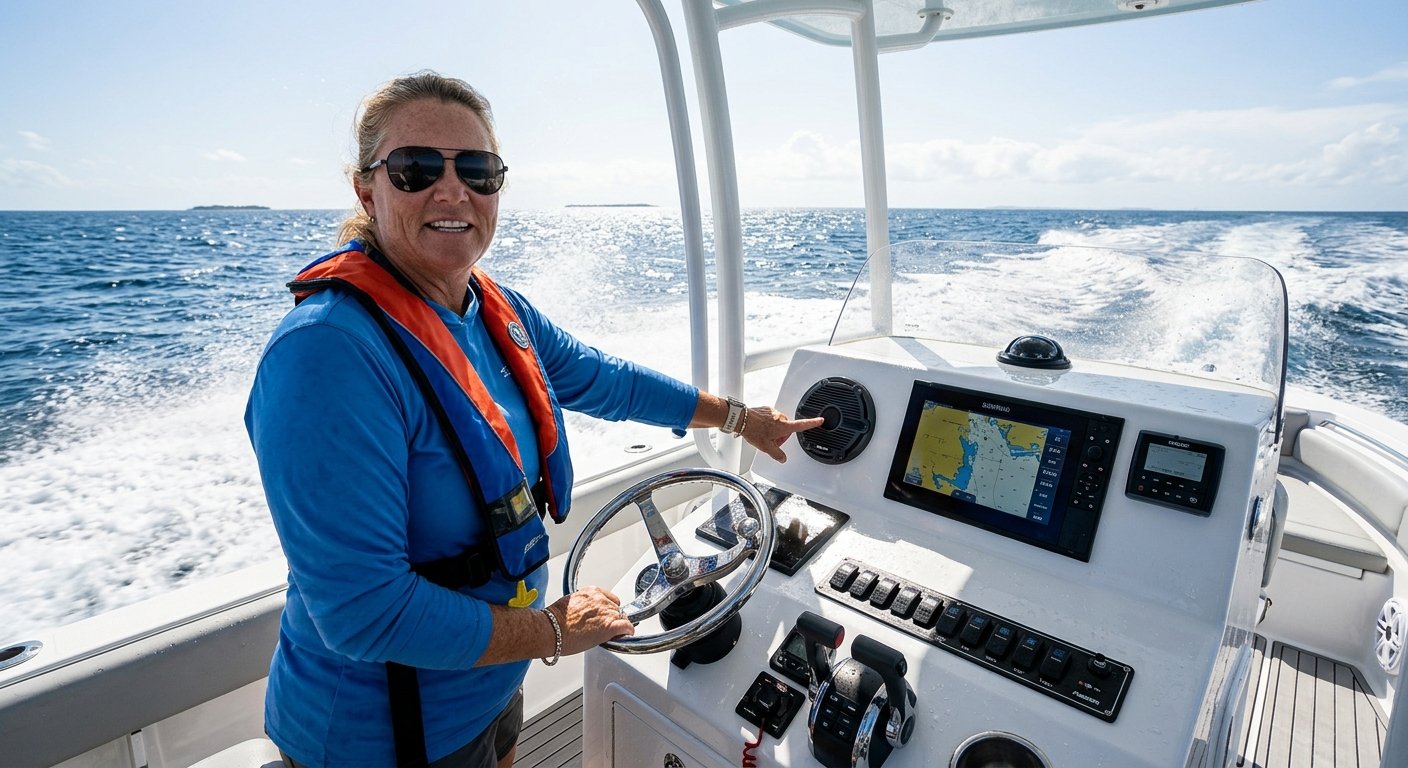
South Florida boating presents specific acoustic challenges. Running offshore from the St. Lucie Inlet or crossing to the Bahamas means engine noise, wind, and wave sounds that can easily overwhelm underpowered or poorly placed speakers. On center consoles, forward-facing tower speakers or coaxials mounted high on the hardtop outperform any below-gunwale placement because they project sound over ambient noise rather than into it.
For salon installations, proper marine speakers installation includes acoustic isolation to prevent vibration transfer to cabinetry—a detail that matters both for sound quality and for preventing cabinet damage over time. On trawlers and motoryachts cruising between Stuart and Fort Lauderdale on the ICW, lower engine noise levels make subwoofer integration more practical and rewarding, while open-water sportfishers typically benefit more from high-efficiency speakers that perform at moderate amplifier output.
Integration with NMEA 2000 Networks and Helm Electronics
Modern marine entertainment systems can integrate directly with your vessel’s NMEA 2000 network, allowing navigation displays from manufacturers like Garmin, Simrad, and Raymarine to control audio sources, zone volumes, and even display track information on chartplotter screens. This reduces helm clutter, eliminates redundant controls, and creates a unified electronics experience across your vessel.
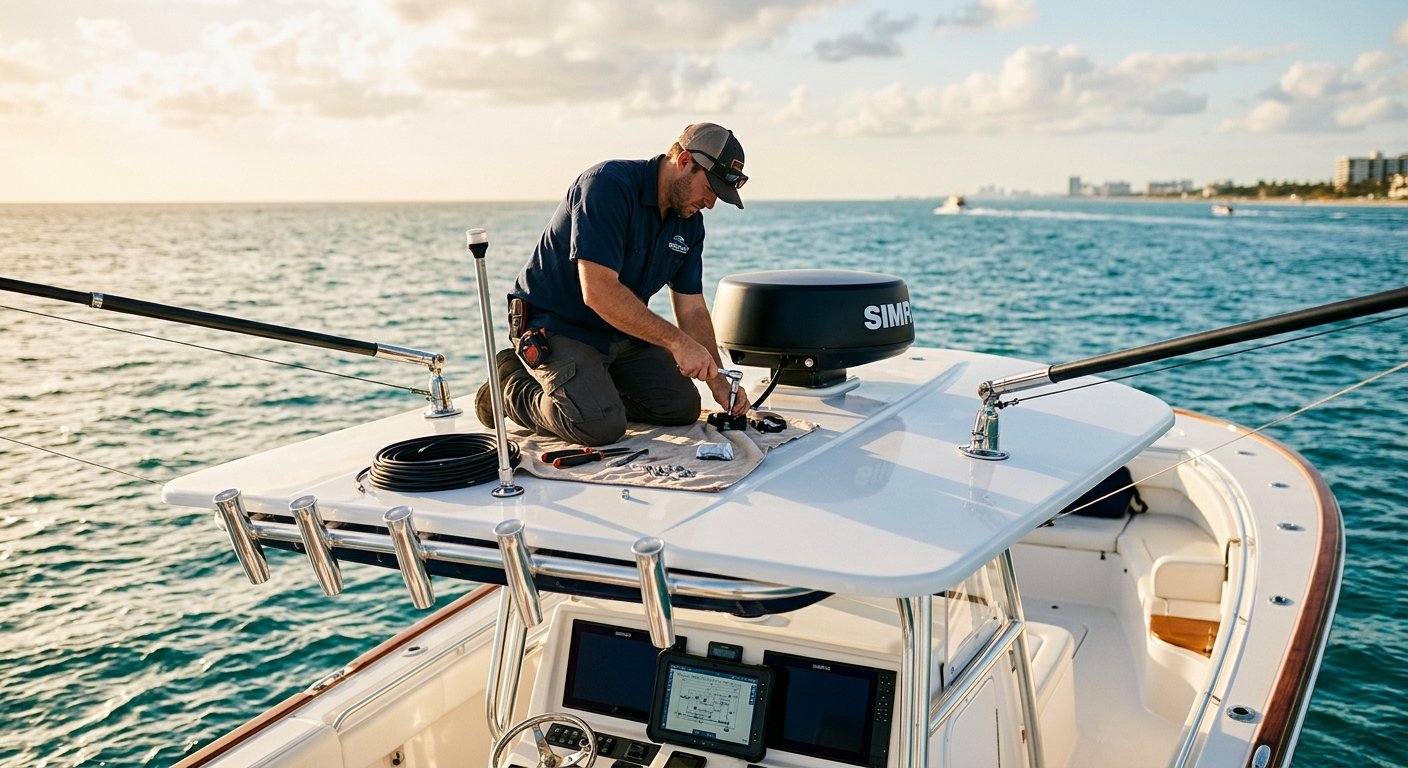
Our marine electronics installation services are designed around this integrated approach—ensuring that your audio system doesn’t exist as a standalone add-on but as a properly networked component of your vessel’s overall electronics architecture. Proper cable routing, network termination, and backbone design are as important to audio performance as the components themselves.
If vessel security is also a priority, integrating audio system controls with your marine security camera setup can provide a unified monitoring and entertainment interface at the helm—a configuration increasingly common on larger yachts in the West Palm Beach and Palm Beach marina communities.
The Professional Installation Advantage
DIY marine audio installation is tempting given the cost of professional service, but the hidden costs are significant. Improper wire gauge sizing creates resistance that reduces output and creates fire risk. Incorrect grounding introduces alternator whine and can cause corrosion at other electrical connection points throughout the vessel. Poor cable runs that aren’t protected from chafe or moisture ingress fail unpredictably—often far offshore.
MEI’s NMEA-certified installation specialists and factory-trained technicians approach every marine stereo installation with a documented plan covering component placement, wiring diagrams, load calculations, and integration points with existing systems. Every installation is licensed and insured, protecting you as the vessel owner. For boat owners making substantial investments in vessels and electronics, the peace of mind that comes from a properly executed installation is not a luxury—it’s the baseline expectation.
The boat speakers installation process at MEI includes a site survey of your vessel’s existing electrical system, discussion of your usage patterns and priorities, component recommendations from marine-grade product lines, and installation with full documentation for future reference or warranty service.
Vessel Assessment
Evaluate existing electrical capacity, speaker locations, amplifier mounting options, and integration points with helm electronics.
System Design
Specify components, zone architecture, wiring plan, and NMEA 2000 integration based on your vessel and usage requirements.
Professional Installation
NMEA-certified technicians execute the installation with proper wire sizing, routing, grounding, and thermal management.
System Commissioning
Test all zones, verify integration with existing electronics, tune amplifier gains, and walk through operation with the vessel owner.
Frequently Asked Questions
What makes a speaker truly marine-grade versus weather-resistant?
Marine-grade speakers are engineered for continuous saltwater exposure, not just occasional splashes. Look for UV-stabilized cones, stainless steel or UV-resistant polymer grilles, sealed back enclosures, and tin or gold-plated terminals. Weather-resistant speakers—often sold at big-box retailers—may handle rain but will corrode in salt air within one to two seasons. The electrochemical process of saltwater corrosion accelerates rapidly on untreated metals, making material specifications critical.
How many amplifier channels do I need for a typical yacht entertainment system?
A practical rule is one amplifier channel per speaker pair per zone, plus a dedicated mono channel if you’re running a subwoofer. A four-zone system with a subwoofer typically requires at minimum a 9-channel solution, either through multiple amplifiers or a single high-channel marine unit. Your installer will calculate this based on speaker impedance, run length, and ambient thermal conditions at the amplifier mounting location.
Can I integrate my boat’s audio system with my Garmin or Simrad chartplotter?
Yes—many current marine head units from Fusion, JL Audio Marine, and similar brands support NMEA 2000 network integration, allowing control from compatible Garmin, Simrad, Raymarine, and Lowrance multifunction displays. This integration requires proper network configuration and compatible hardware on both sides. An NMEA-certified installer can verify compatibility before purchase and configure the network correctly during installation.
Is professional marine stereo installation worth the cost compared to DIY?
For vessels operating offshore or in saltwater environments, professional installation protects your equipment warranty, ensures proper electrical safety compliance, and prevents the grounding and corrosion issues that cause premature failure. Improper wiring is also a documented source of onboard fire risk. The U.S. Coast Guard’s electrical safety guidance underscores that marine electrical systems require careful attention to standards not applicable to automotive or residential work.
What should I tell my installer before a marine audio system upgrade?
Come prepared with your vessel’s make, model, and length; your primary use (offshore fishing, cruising, entertaining at the dock); which zones matter most to you; and any existing electronics you want to integrate with the system. If you have a generator or inverter, mention it—power availability affects component selection significantly. The more context your installer has, the more accurately they can design a system that matches how you actually use your boat.
Ready to Upgrade Your Vessel’s Sound System?
MEI’s NMEA-certified specialists and factory-trained technicians serve boat and yacht owners from Stuart to Fort Lauderdale—contact us to schedule a consultation at our Stuart location and get a system designed for the way you boat.

About Marine Electronics Installers
Marine Electronics Installers (MEI) provides professional marine electronics installation and service for boat and yacht owners throughout South Florida, from Stuart to Fort Lauderdale. Specializing in NMEA-certified installations for vessels ranging from 25-foot center consoles to mega yachts, MEI combines factory training and technical expertise with deep knowledge of South Florida boating conditions—including offshore fishing, Bahamas crossings, and hurricane preparation. The company takes a consultative, educational approach that emphasizes safety, reliability, and proper installation techniques to protect substantial vessel investments. Visit marineelectronicinstallers.com →