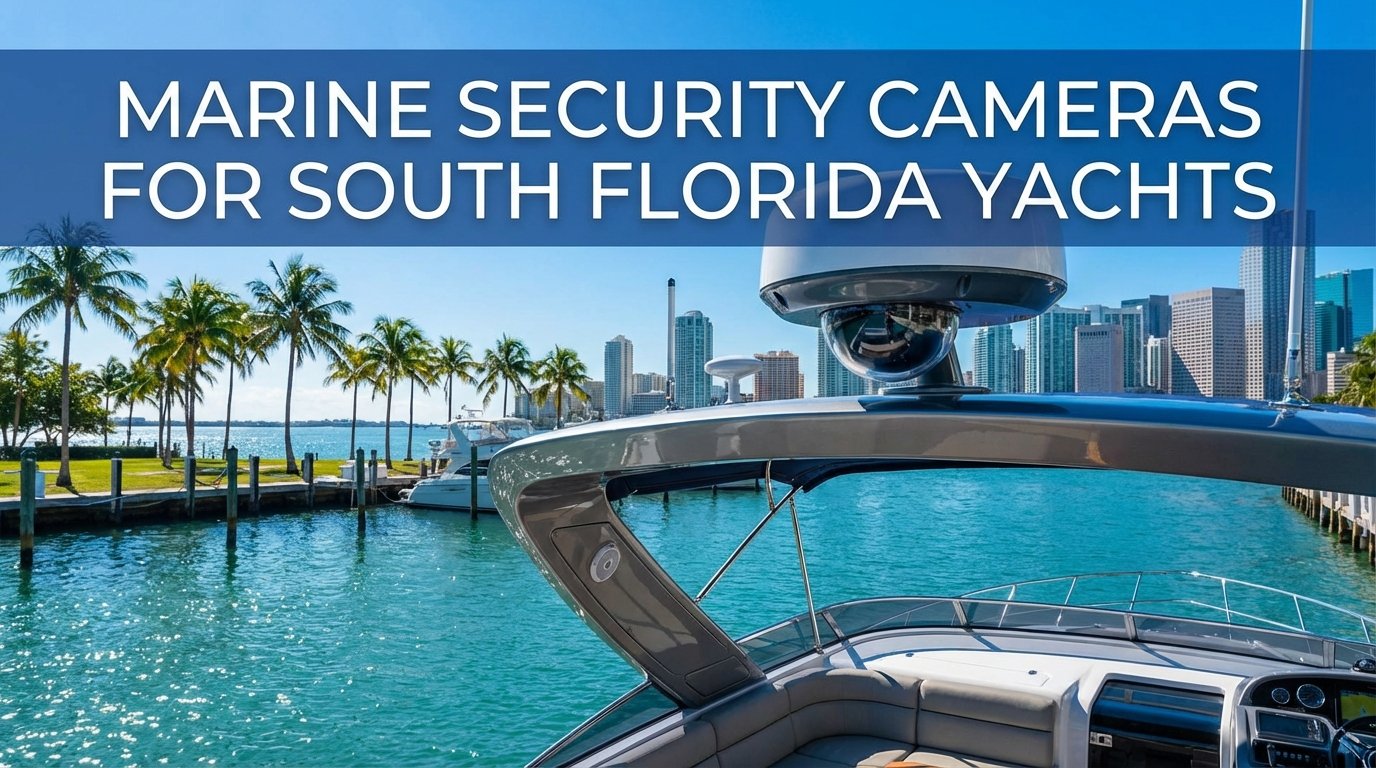
A 42-foot Tiara disappeared from a Fort Pierce marina last year, later recovered in the Bahamas after authorities tracked it through surveillance footage from a neighboring vessel. The owner’s own boat had no camera system. This scenario repeats across South Florida marinas with unfortunate regularity—boats vandalized, equipment stolen, or vessels tampered with, all while owners remain unaware until significant damage occurs. Modern marine security cameras have evolved from grainy, unreliable footage to crystal-clear surveillance systems that withstand the brutal saltwater environment while providing real-time monitoring from anywhere in the world.
Why Yacht Security Systems Matter in South Florida Waters
South Florida’s boating environment creates unique security challenges. Stuart to Fort Lauderdale marinas host billions of dollars in vessels, making them attractive targets. Unlike home security, marine surveillance must combat constant salt spray, tropical humidity, temperature fluctuations from 50°F winter mornings to 95°F summer afternoons, and hurricane-force conditions. Your boat surveillance system isn’t just watching for intruders—it documents accidents during docking, monitors systems while you’re offshore, and provides evidence for insurance claims.
The economics justify the investment. A quality marine camera system costs $2,000-$8,000 installed, while replacing stolen electronics, repairing vandalism, or fighting an insurance claim without evidence costs substantially more. Beyond theft prevention, these systems provide operational benefits: checking dock lines remotely during storms, verifying all crew returned before leaving anchorage, and documenting fishing catches with timestamp verification for tournament entries.
Marine-Grade Specifications That Actually Matter
Consumer-grade security cameras fail rapidly in the marine environment. The difference between a $150 home camera and a $600 marine security camera isn’t markup—it’s engineering for survival. Understanding these specifications helps you evaluate systems properly.
IP Ratings and Waterproof Capabilities
IP (Ingress Protection) ratings indicate environmental resistance. For marine applications, IP67 represents the absolute minimum—protected against temporary submersion. However, South Florida boats need IP68 or IP69K ratings for continuous exposure to spray and washdowns. The difference becomes apparent when mounting cameras near T-tops, on tuna towers, or anywhere spray reaches during offshore runs to the Gulf Stream or Bahamas crossings.
True waterproof security cameras marine-rated use stainless steel housings (316-grade minimum), sealed cable connections with marine-grade heat shrink, and conformal coating on internal electronics. Look for systems specifically listing “marine” or “maritime” certification rather than generic “outdoor” ratings designed for homes.
Power Requirements and Integration
Marine camera systems typically operate on 12V or 24V DC power, matching your vessel’s electrical system. Quality installations integrate with your existing NMEA 2000 network, allowing camera feeds to display on multifunction displays (MFDs) like Garmin, Raymarine, Furuno, or Simrad units already at your helm.
Power consumption matters for boats without constant shore power. A four-camera system drawing 2-3 amps continuously depletes batteries quickly at anchor. Professional installations include power management—cameras activating on motion detection or scheduled recording rather than continuous operation, preserving battery capacity for essential systems.
Camera Types and Optimal Placement
Effective boat surveillance systems use multiple camera types strategically positioned. No single camera type handles all scenarios on a yacht.
Fixed Dome Cameras
Low-profile dome cameras mount flush to hardtops, cabin tops, or transoms, providing weather resistance and vandal-proof housings. They’re ideal for monitoring cockpits, swim platforms, and helm stations. Quality marine domes offer 120-180° viewing angles, eliminating blind spots in confined spaces. For boats trailered or kept at marinas, dome cameras positioned to view access points document anyone approaching your vessel.
PTZ (Pan-Tilt-Zoom) Cameras
Pan-tilt-zoom cameras provide remote control to track activity across larger areas. On yachts over 50 feet, a single PTZ camera on the flybridge monitors the entire dock, surrounding boats, and approaches. The zoom capability reads registration numbers on approaching vessels or identifies individuals at distance—critical for security documentation. However, PTZ cameras require more power and regular maintenance to keep motors functioning in salt air.
Thermal and Night Vision
For serious offshore work or Bahamas cruising, thermal cameras detect heat signatures in complete darkness without visible light that disturbs crew. They identify persons-in-water during man-overboard situations, spot other vessels running without lights, and provide navigation assistance in challenging conditions. While expensive ($3,000-$10,000 per camera), thermal systems provide safety capabilities beyond security.
Recording, Storage, and Remote Access
Camera quality means nothing without reliable recording. Marine applications face unique storage challenges—limited space, constant motion, power constraints, and harsh environmental conditions.
NVR Systems Versus Cloud Storage
Network Video Recorders (NVRs) store footage locally on marine-grade solid-state drives (SSDs) or ruggedized hard drives. SSDs withstand shock and vibration better, critical for offshore vessels pounding through seas. A quality marine NVR uses shock-mounting, thermal management, and protected housing, typically installed in a climate-controlled space like the helm or cabin.
Cloud storage uploads footage via cellular or satellite connections, providing off-site backup if the boat is stolen or equipment damaged. However, uploading high-definition video offshore strains data plans. Hybrid systems record locally with automatic cloud backup when connected to marina WiFi—providing redundancy without constant data consumption.
Remote Monitoring Capabilities
Modern yacht security systems allow smartphone access from anywhere. Check your boat from home during storms, verify systems before launching, or monitor while traveling. Quality systems provide real-time alerts—motion detection triggers notifications with video clips, allowing immediate response to potential security issues.
For boats kept at Stuart marinas and traveled to the Bahamas, cellular coverage determines remote access reliability. Systems should include local recording regardless of connectivity, syncing footage when signal returns.
Integration With Existing Marine Electronics
Professional marine camera system installations integrate seamlessly with your vessel’s existing electronics network. This integration provides operational advantages beyond standalone security systems.
NMEA 2000 compatibility allows camera feeds on your existing MFDs. View stern cameras while docking, check engine room cameras from the helm, or monitor live wells during tournaments—all on screens you already use for navigation and fishfinding. This integration requires proper network configuration, IP addressing, and bandwidth management to prevent conflicts with essential navigation systems.
Proper installations also integrate with your VHF radio, AIS, and navigation systems. Advanced setups overlay AIS targets on camera views, identify vessels in frame, and create comprehensive situational awareness—particularly valuable in crowded anchorages or during complicated inlet navigation like St. Lucie Inlet during outgoing tide.
Installation Considerations for Reliability
Marine electronics installations separate professionals from amateurs. Waterproof cameras fail when improperly installed—cable penetrations without sealant, inadequate wire gauge causing voltage drop, or poor routing exposing connections to spray.
Cable Routing and Protection
Cable runs must avoid heat sources, moving parts, and areas subject to abrasion. Proper installations use marine-grade cable with UV-resistant jacketing, secured every 18 inches with appropriate fasteners. Penetrations through decks or cabin structures require proper sealant and backing plates—not simply drilling holes and pushing cables through. Each connection point represents potential water intrusion requiring heat-shrink tubing, dielectric grease, and inspection ports for future maintenance.
Power Distribution and Circuit Protection
Marine camera systems need dedicated, properly sized circuit breakers and fusing. Installations should include power conditioning to protect sensitive camera electronics from voltage spikes common with alternator charging, generator starts, or shore power fluctuations. Undersized wire gauge causes voltage drop, reducing camera performance or creating complete failure.
Hurricane and Storm Preparation
South Florida boat owners face annual hurricane threats. Your security system becomes documentation of storm damage for insurance claims while simultaneously being at risk during severe weather.
Fixed installations should withstand Category 3 conditions when properly mounted. However, PTZ cameras with moving parts may require removal and storage. Before storm season, verify all camera housings remain sealed, cable connections show no corrosion, and mounting hardware maintains integrity. Document your vessel’s condition on camera before evacuating—this footage becomes invaluable for insurance purposes.
Cloud backup proves essential during hurricanes. If your boat suffers damage or theft during the storm chaos, locally stored footage may be lost. Systems with automatic cloud backup ensure documentation survives even if the vessel doesn’t.
Maintenance Requirements for Longevity
Marine security cameras require regular maintenance despite weatherproof ratings. Salt accumulation reduces image clarity and eventually corrodes seals. Quarterly maintenance should include:
- Freshwater rinse of all camera housings and lenses
- Inspection of cable connections for corrosion or damage
- Verification of mounting hardware tightness
- Testing of remote access and recording functionality
- Cleaning of camera lenses with appropriate non-abrasive solutions
- Checking NVR storage capacity and footage integrity
Annual professional inspections should include thermal imaging of connections to identify resistance from corrosion, penetration inspection for water intrusion, and system updates to ensure latest security patches and firmware.
Legal and Privacy Considerations
Marine surveillance systems must respect privacy laws even in maritime settings. Cameras positioned to view neighboring boats at marinas should avoid capturing detailed activities aboard other vessels. Audio recording faces stricter regulations than video—Florida requires two-party consent for audio recordings in many situations.
Proper signage indicating video surveillance protects you legally while deterring potential thieves. However, your cameras document incidents beyond your vessel—capturing accidents, environmental violations, or criminal activity nearby. Understanding proper evidence preservation and chain-of-custody procedures ensures your footage remains admissible if needed for legal proceedings.
Cost Analysis and System Sizing
Marine security camera system costs vary dramatically based on vessel size, camera quantity and quality, and integration complexity. A basic four-camera system for a 30-foot center console with simple recording runs $2,500-$4,000 installed. Mid-sized sportfish yachts (45-60 feet) typically need 6-8 cameras with NMEA 2000 integration, running $5,000-$8,000. Larger yachts requiring PTZ cameras, thermal systems, and sophisticated integration can exceed $15,000.
Compare these costs against a single insurance claim. Stolen electronics, tower-mounted gear, or outboard engines cost tens of thousands to replace, plus increased premiums. Documented security footage often prevents claim denials and accelerates resolution.
Choosing Professional Installation
DIY marine electronics installation rarely matches professional results, particularly for systems requiring network integration, proper waterproofing, and code compliance. NMEA-certified technicians understand marine electrical standards, proper cable specifications, and integration requirements that prevent system conflicts.
Professional installation includes proper design—camera placement optimizing coverage while minimizing blind spots, wire routing protecting cables from damage, and power distribution preventing overloads. Quality installers provide documentation of all components, connection points, and system configuration—essential for future maintenance and troubleshooting.
Frequently Asked Questions
How long do marine security cameras typically last in saltwater environments?
Quality marine-grade cameras with proper installation and maintenance last 7-10 years in South Florida saltwater conditions. Consumer-grade cameras marketed as “waterproof” typically fail within 18-24 months due to seal degradation and corrosion. Annual maintenance and proper initial installation significantly extend lifespan.
Can I view my boat cameras while offshore or in the Bahamas?
Yes, with appropriate cellular or satellite connectivity. Within 20 miles of South Florida coast, cellular coverage allows smartphone access. For extended Bahamas cruising, satellite systems like Iridium provide connectivity anywhere, though bandwidth limitations affect video quality. Many owners use cellular in coastal waters with satellite backup for offshore passages.
What resolution cameras do I need for security purposes?
Minimum 1080p (2MP) resolution provides adequate detail for general surveillance and identification at close range. For reading vessel registration numbers or identifying individuals at distance, 4MP or 4K cameras offer superior detail. However, higher resolution requires more storage space and bandwidth for remote viewing.
Will security cameras drain my boat batteries at anchor?
Properly configured systems use minimal power. Four cameras with motion-activated recording consume 1-2 amp-hours daily. Continuous recording increases consumption to 48-72 amp-hours daily—significant for extended anchoring without generator use. Professional installations include power management optimizing security coverage while preserving battery capacity.
Protect Your Investment With Professional Marine Surveillance
Your vessel represents significant financial and emotional investment. Modern marine security cameras protect that investment while providing operational benefits beyond theft prevention. However, the harsh South Florida environment demands proper equipment selection, professional installation, and regular maintenance.
Marine Electronics & Innovations specializes in complete yacht security system design and installation for Stuart-area boats and yachts. Our NMEA-certified technicians understand South Florida boating conditions and provide reliable, properly integrated solutions tailored to your specific vessel and usage patterns. Contact us at (772) 634-6055 or visit our Stuart facility at 7892 SW Jack James Dr, Stuart, FL, 34997 to discuss comprehensive marine camera system solutions that provide years of reliable protection for your vessel.