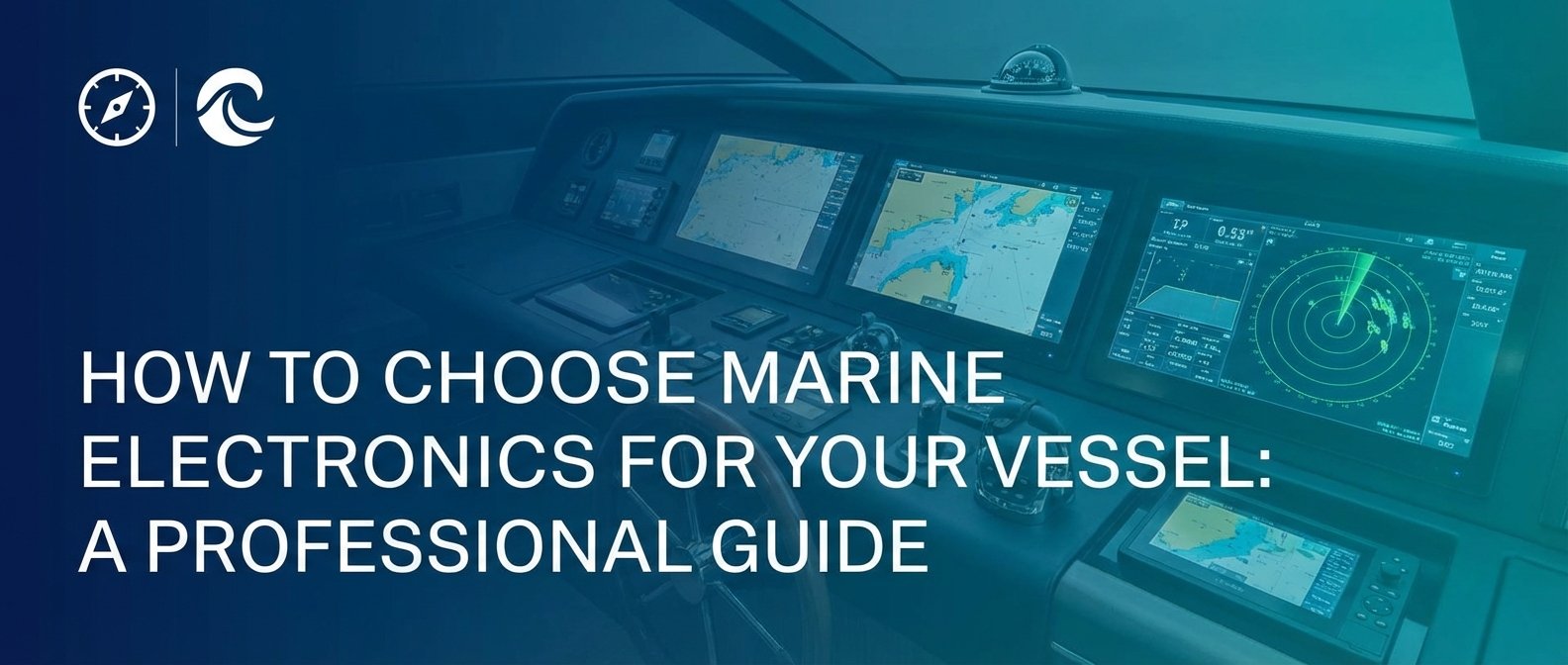
The global marine electronics market exceeded $7.2 billion in 2025, yet surveys show nearly 40% of boat owners remain uncertain about their electronic system choices. This uncertainty isn’t surprising—selecting the right marine electronics requires balancing technological capability, integration compatibility, budget constraints, and vessel-specific requirements. The wrong choices can compromise safety, waste thousands of dollars, and create frustration on the water.
Proper marine electronics selection starts with understanding your vessel’s purpose, your boating patterns, and the environmental challenges you’ll face. For South Florida boaters running offshore to the Bahamas or fishing the Gulf Stream, these decisions carry significant weight. Your electronics aren’t luxury items—they’re safety equipment that must perform flawlessly when conditions deteriorate.
Understanding Your Boating Profile
Before evaluating specific equipment, define how you actually use your vessel. A center console making frequent Bahamas crossings requires fundamentally different electronics than a yacht cruising the Intracoastal Waterway between Stuart and Fort Lauderdale.
Operational Considerations
Your typical boating activities directly impact marine electronics selection. Offshore anglers navigating to specific bottom structure need precision GPS with detailed bathymetric charts and reliable radar for weather avoidance. Cruisers prioritize comfortable autopilot systems, comprehensive navigation displays, and entertainment integration. Tournament fishermen require specialized fish-finding technology with high-resolution sonar capabilities.
Distance from shore matters significantly. Boats venturing beyond VHF radio range need satellite communication systems. Those crossing to Bimini or the Abacos should have redundant navigation systems—if your primary chartplotter fails 60 miles offshore, a backup GPS unit becomes invaluable. Single-engine vessels benefit from more comprehensive engine monitoring than twin-engine boats with built-in redundancy.
Weather exposure influences equipment specifications. Vessels kept on open moorings near St. Lucie Inlet face harsher conditions than boats in covered slips. This affects required IP (Ingress Protection) ratings and corrosion resistance specifications for exposed electronics.
Core Marine Electronics Categories
Modern vessels typically integrate five primary electronic systems. Understanding each category helps prioritize your investment and ensure compatibility.
Navigation and Chartplotting Systems
Your chartplotter serves as the command center for vessel electronics. Modern multifunction displays (MFDs) integrate GPS navigation, radar, sonar, engine data, and system monitoring on unified screens. Screen size matters—larger displays (12 to 16 inches) provide better visibility in bright sunlight and allow split-screen functionality for monitoring multiple data sources simultaneously.
Resolution quality affects usability. High-definition displays with 1920×1080 resolution or better remain readable in harsh lighting conditions common to South Florida waters. Touch-screen responsiveness degrades with water exposure, so hybrid systems offering both touch and traditional button controls provide operational advantages.
Chart compatibility represents a critical consideration. Ensure your chosen system supports detailed charts for your cruising grounds. Navionics, C-MAP, and Garmin cartography each offer different coverage strengths. For Bahamas cruising, Explorer charts provide superior shallow-water detail that standard cartography lacks.
Radar Systems
Radar technology has evolved dramatically with solid-state systems largely replacing traditional magnetron units. Solid-state radars offer instant-on capability, consume less power, and require minimal maintenance—significant advantages for vessels without generator systems or those running on battery power while drift-fishing.
Range requirements vary by vessel use. Coastal cruisers rarely need detection beyond 24 miles, while offshore boats benefit from 48-mile or greater range for early weather system identification. Beam sharpening and target separation capabilities matter more than raw range for navigation in crowded areas like the Roosevelt Bridge or Port Everglades inlet.
Doppler radar adds velocity data, distinguishing stationary targets from moving vessels and weather systems. This technology helps identify squall movement—crucial information when deciding whether to run ahead of weather or find shelter.
Communication Equipment
VHF radio remains mandatory safety equipment. Modern VHF systems with DSC (Digital Selective Calling) capability automatically transmit your GPS position when activating the distress button—potentially life-saving functionality that requires proper MMSI registration.
Fixed-mount VHF units outperform handhelds significantly. The combination of higher transmission power (25 watts versus 5-6 watts), superior antenna placement, and better receiver sensitivity extends communication range from approximately 5 miles to 15-20 miles in typical conditions.
Satellite communication supplements VHF for offshore operations. Devices range from basic emergency beacons (EPIRBs and PLBs) to sophisticated satellite phone and data systems. Mid-range options like Iridium GO! provide email and weather data access at reasonable subscription costs for boats making regular offshore runs.
Fishfinding and Sonar Technology
Sonar systems vary from basic depth sounders to sophisticated multibeam systems displaying three-dimensional bottom structure and fish locations. CHIRP (Compressed High-Intensity Radiated Pulse) technology has become the standard, offering superior target separation and depth performance compared to traditional single-frequency sonar.
Frequency selection impacts performance characteristics. Higher frequencies (200 kHz) provide better resolution in shallow water, ideal for inshore fishing around mangrove islands and grass flats. Lower frequencies (50 kHz) penetrate deeper water with wider coverage—advantageous for offshore bottom fishing in 200-400 feet.
Side-scanning and down-scanning sonar create photographic-quality images of bottom structure. These technologies excel at locating wrecks, ledges, and isolated structure in offshore environments. Forward-looking sonar adds navigational safety by detecting bottom contours and obstacles ahead of the vessel—valuable when exploring unfamiliar Bahamas anchorages.
Autopilot Systems
Quality autopilot installation transforms long-distance cruising from fatiguing to comfortable. System selection depends on vessel size, steering configuration, and intended use. Hydraulic steering systems require specifically designed pumps and pressure sensors, while mechanical cable steering uses linear drives or rotary actuators.
Computational capability matters significantly. Modern autopilots with sophisticated algorithms handle following seas and quartering waves better than basic systems, reducing the S-curve wandering that wastes fuel and causes passenger discomfort. GPS-based navigation allows waypoint following and route management without constant manual course adjustments.
Integration and Networking Considerations
Modern marine electronics selection requires understanding network architecture. NMEA 2000 has become the industry standard for connecting devices into unified systems. This protocol allows different manufacturers’ equipment to share data—your GPS feeds position to the chartplotter, radar, VHF radio, and autopilot simultaneously through a single backbone network.
Network planning should occur before purchasing components. Each device requires specific power and data connections. Quality installations use proper termination resistors, appropriate cable ratings, and logical network segmentation. Undersized networks create data bottlenecks as you add equipment—the 16-inch chartplotter works beautifully until you add radar, two sonar modules, and engine monitoring, then data refresh rates slow noticeably.
Gateway devices enable integration between older NMEA 0183 equipment and modern NMEA 2000 networks. This capability extends the useful life of functional electronics during phased upgrades—you needn’t replace everything simultaneously.
Environmental and Installation Factors
South Florida’s marine environment aggressively attacks electronic systems. Saltwater exposure, intense UV radiation, high humidity, and thermal cycling from 50°F winter mornings to 140°F dashboard temperatures challenge equipment durability.
IP Ratings and Marine-Grade Construction
IP (Ingress Protection) ratings indicate environmental resistance. The two-digit code specifies protection against solids (first digit) and liquids (second digit). IP67-rated equipment withstands temporary submersion—appropriate for bow-mounted displays exposed to heavy spray. Helm electronics need minimum IPX6 or IPX7 ratings. Lower-rated equipment belongs only in protected electronics spaces or climate-controlled cabins.
True marine-grade construction uses conformal coating on circuit boards, stainless or titanium hardware, and sealed connector systems. Consumer-grade electronics with “water-resistant” claims fail rapidly in marine environments. The initial savings evaporate quickly when replacement becomes necessary after one season.
Power Systems and Consumption
Total power consumption affects battery sizing and charging system requirements. Modern electronics draw significant amperage—a typical offshore boat might consume 25-40 amps continuously with radar, chartplotter, autopilot, VHF, and fishfinder operating. Add refrigeration, air conditioning, and entertainment systems, and power demands escalate quickly.
Voltage sensitivity matters. Quality marine electronics tolerate voltage fluctuations from 10-32 volts, handling cranking voltage drops and charging system variations. Budget equipment with narrow voltage ranges may reset or malfunction during normal electrical system operation.
Budget Allocation and Prioritization
Marine electronics represent substantial investment—comprehensive systems for mid-sized offshore boats typically cost $15,000-$35,000 including professional installation. Prioritizing expenditure ensures you get essential capabilities first.
Safety equipment takes precedence. Reliable VHF communication, GPS navigation with current charts, and radar for weather awareness form the foundation. These systems shouldn’t be compromised by budget constraints—they literally save lives when situations deteriorate.
Convenience features come second. Autopilot, advanced sonar, satellite communication, and integration refinements enhance the boating experience but aren’t survival equipment. Quality basic systems outperform elaborate setups with compromised core components.
Professional installation deserves budget allocation. Proper marine electronics installation requires NMEA certification, understanding of network architecture, and experience with marine-specific challenges. Poor installation creates reliability problems, safety risks, and often costs more to repair than correct installation would have cost initially. Amateur installations void warranties and create electrical problems that appear months later as connections corrode or networks fail.
Brand Selection and Compatibility
Major marine electronics manufacturers include Garmin, Furuno, Raymarine, Simrad, and B&G. Each offers different strengths. Garmin provides excellent integration and user-friendly interfaces across broad product ranges. Furuno builds exceptionally reliable radar and sonar systems favored by commercial operators. Raymarine offers innovative features and good value in mid-range products.
Staying within a single manufacturer’s ecosystem simplifies integration and provides better technical support, though multi-brand systems work well when properly networked. NMEA 2000 compliance ensures basic interoperability, but proprietary features like high-resolution radar or advanced sonar often require same-brand displays for full functionality.
Technology Lifecycle Planning
Marine electronics evolve continuously. Planning for obsolescence helps avoid costly dead-ends. Purchase equipment with upgrade paths—systems accepting software updates, expandable network capacity, and modular components that can be enhanced incrementally.
Support availability matters long-term. Major manufacturers maintain product support for 7-10 years typically. Smaller companies may disappear, leaving orphaned equipment without technical support or replacement parts. This consideration particularly affects complex systems like autopilots and radar that may need servicing.
Frequently Asked Questions
How much should I budget for marine electronics on a 35-foot center console?
A well-equipped 35-foot offshore center console typically requires $18,000-$28,000 for comprehensive electronics including dual chartplotters, radar, quality sonar, VHF, autopilot, and professional installation. Basic packages start around $12,000, while tournament-level systems with advanced sonar and full integration exceed $35,000.
Can I install marine electronics myself to save money?
While technically possible, DIY installation often creates problems that cost more to remedy than professional installation would have cost initially. NMEA network configuration, proper power distribution, waterproof connections, and integration troubleshooting require specialized knowledge. Most manufacturers require certified installer involvement to maintain warranties.
What’s the most important electronic system for offshore boating?
Reliable VHF communication with DSC capability represents the single most critical safety system. GPS navigation runs a close second, followed by radar for weather awareness. These three systems form the essential foundation—other electronics enhance convenience and capability but these maintain safety.
How often should marine electronics be updated?
Plan for 7-10 year replacement cycles for core systems. Software and chart updates should occur annually. Technology advances and equipment reliability both factor into timing—functional systems don’t need replacement, but 15-year-old electronics lack modern safety features and integration capabilities that provide significant advantages.
Get Expert Guidance for Your Vessel
Choosing marine electronics for your vessel requires balancing technical specifications, budget realities, and your specific boating requirements. The complexity of modern networked systems and the unforgiving nature of the marine environment make professional guidance valuable.
Marine Electronics & Installations specializes in helping South Florida boat owners select and install electronics systems optimized for their vessels and usage patterns. Our NMEA-certified technicians understand the specific challenges of offshore fishing, Bahamas cruising, and coastal navigation in local waters. We’ll assess your needs, recommend appropriate equipment, and ensure proper installation that protects your investment.
Contact Marine Electronics & Installations at (772) 634-6055 or visit our Stuart facility at 7892 SW Jack James Dr, Stuart, FL, 34997 to discuss your vessel’s electronic requirements. Let’s ensure your boat has the reliable, properly integrated systems you need for safe, confident operation on South Florida waters and beyond.