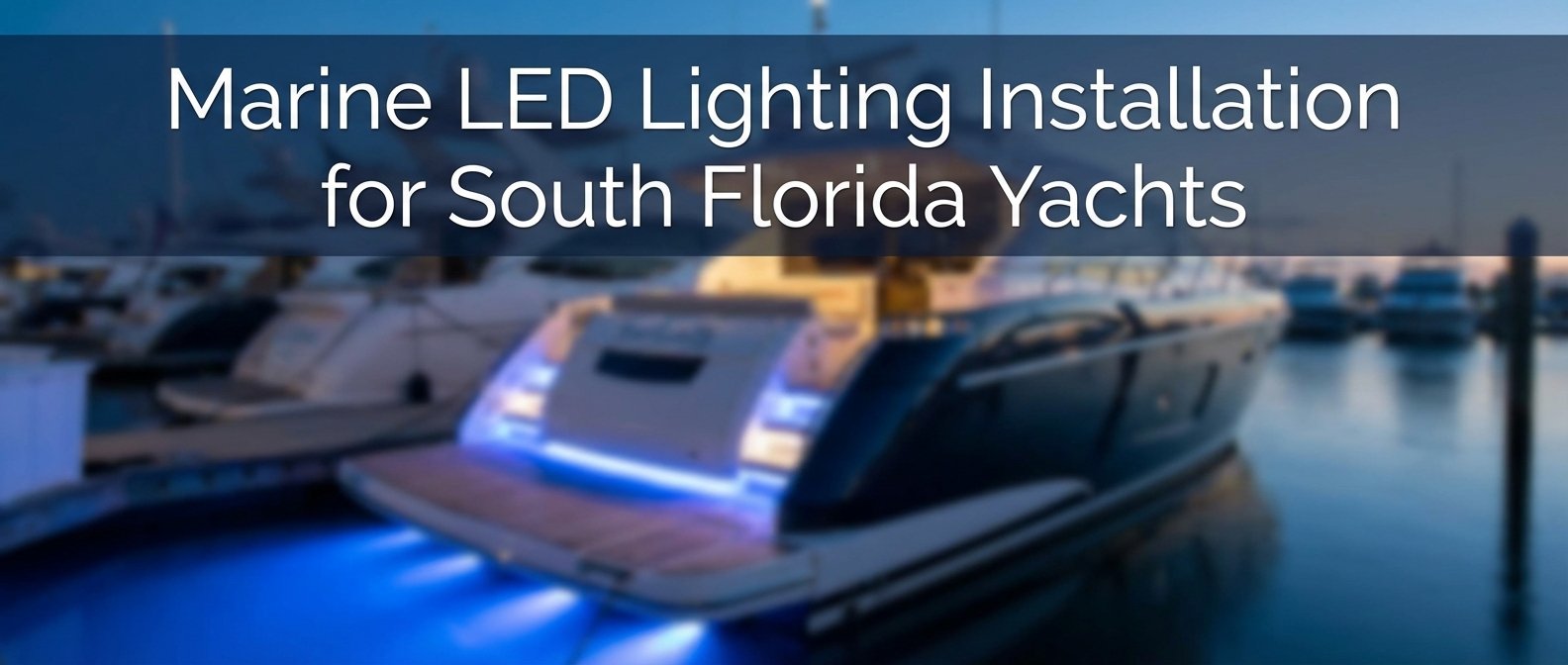
Modern marine LED lighting has revolutionized how yacht owners experience their vessels after sunset. Today’s LED systems offer unprecedented efficiency, durability, and aesthetic possibilities—but only when installed correctly. South Florida’s harsh saltwater environment demands professional installation techniques that account for corrosion resistance, proper waterproofing, and integration with existing marine electrical systems. Whether you’re upgrading a center console’s deck lighting or designing a complete illumination scheme for a mega yacht, understanding the technical requirements separates reliable installations from costly failures.
Understanding Marine-Grade LED Technology
Not all LED lights qualify as marine-grade, and this distinction matters significantly in saltwater environments. Marine led lighting must meet specific standards that typical automotive or residential LEDs cannot satisfy. The primary difference lies in construction materials, waterproofing integrity, and resistance to corrosive elements.
Marine LEDs require proper Ingress Protection (IP) ratings that indicate their resistance to water and dust intrusion. For South Florida applications, fixtures should meet IP67 or IP68 ratings, meaning they can withstand temporary or continuous submersion. Underwater led lights boat installations demand IP68 certification with specific depth ratings appropriate for their mounting locations.
Quality marine LED fixtures incorporate 316-grade stainless steel housings, sealed lens assemblies with UV-resistant polycarbonate, and potted circuitry that prevents moisture infiltration. The internal components should feature conformal coating—a protective chemical layer that guards against salt spray and humidity. These specifications aren’t marketing features; they’re essential requirements for longevity in marine environments.
Types of Marine LED Lighting Systems
Navigation and Safety Lighting
Federal regulations mandate specific navigation lights for vessels operating between sunset and sunrise. While replacing traditional incandescent navigation lights with LED equivalents seems straightforward, compliance requires attention to Coast Guard requirements. LED navigation lights must meet USCG COLREGS standards for visibility range, color specifications, and horizontal arc coverage.
Quality LED navigation lights draw significantly less amperage than incandescent predecessors—typically 0.5 to 2 amps versus 8 to 10 amps—extending battery life during overnight passages to the Bahamas. This efficiency proves particularly valuable for sailors crossing the Gulf Stream or making extended offshore runs where electrical management becomes critical.
Interior Cabin Lighting
Interior yacht lighting system installations offer opportunities for both functional illumination and aesthetic enhancement. Modern LED fixtures provide dimmable white light that adjusts from bright task lighting to subtle ambient glow. Color temperature selection matters: 3000K produces warm white light similar to halogen, while 4000-5000K offers neutral to cool white that enhances visibility for detailed tasks.
Boat led lights installation for cabins should incorporate proper dimming controls compatible with marine electrical systems. Not all LED fixtures work with traditional rheostat dimmers designed for incandescent bulbs. Pulse-width modulation (PWM) dimmers specifically designed for LEDs prevent flickering and ensure smooth transitions across the brightness spectrum.
Deck and Cockpit Illumination
Functional deck lighting enhances safety during night fishing, line handling, and docking operations. Strategically positioned LED spreader lights, hardtop downlights, and gunwale strips provide necessary visibility without creating excessive glare that impairs night vision. Red LED options preserve dark adaptation critical for offshore navigation watches.
Installation considerations include wire routing that protects against chafe, proper strain relief at connection points, and sealed junction boxes rated for the marine environment. Every penetration through deck or cabin structures represents a potential water intrusion point requiring proper sealant application and backing plates.
Underwater LED Systems
Underwater led lights boat installations create dramatic visual effects while attracting baitfish and providing illumination for swimming. These systems require through-hull installations with proper bedding compounds, bronze or stainless thru-hulls, and attention to hull thickness and material composition.
Thru-hull LED fixtures demand professional installation that ensures structural integrity and waterproof performance. Incorrect installation can create pathways for water intrusion, galvanic corrosion issues, or hull blistering. Proper placement considers running surface interference, transducer proximity, and optimal viewing angles from deck or cockpit areas.
Integration with Marine Electrical Systems
Professional marine led installation requires comprehensive understanding of vessel electrical architecture. Modern yachts increasingly incorporate NMEA 2000 networks that allow centralized control of lighting systems through multifunction displays or dedicated control panels. This integration enables scene programming, scheduled automation, and remote operation via smartphone applications.
Proper integration demands careful attention to voltage requirements. While most marine LEDs operate on 12V DC systems common in recreational vessels, larger yachts may utilize 24V or even 120V AC systems. Voltage drop calculations become essential on longer wire runs—inadequate wire gauge causes dimming, inefficiency, and potential fire hazards.
Circuit protection appropriate for LED loads differs from traditional incandescent protection. LEDs draw minimal current, requiring lower-rated fuses or breakers that still provide adequate fault protection. Panel organization should clearly label circuits for troubleshooting and maintenance accessibility.
South Florida Environmental Considerations
The marine environment from Stuart to Fort Lauderdale presents unique challenges for yacht lighting system installations. Salt air accelerates corrosion of improperly installed fixtures and connections. High humidity promotes condensation inside inadequately sealed components. Intense UV exposure degrades inferior plastics and loosens adhesive-mounted fixtures.
Storm preparation represents another critical consideration. Hurricane season requires removable or extremely secure installations that won’t become projectiles in severe weather. Proper mounting techniques using backing plates and through-bolting prove essential rather than reliance on adhesive mounting alone.
Regular maintenance schedules should include inspection of all lighting connections, testing of waterproof seals, and verification of mounting security. Annual preventive maintenance catches developing issues before they escalate into system failures or safety hazards.
Professional Installation vs. DIY Approaches
While marine LED products market themselves as simple upgrades, professional installation provides value that extends beyond basic fixture mounting. Factory-trained technicians understand proper wire sizing, terminal crimping techniques, heat shrink application, and sealant selection—skills that prevent premature failures.
Professional boat led lights installation includes proper documentation of circuit modifications, updated electrical schematics, and warranty protection that DIY installations forfeit. Insurance considerations also favor professional installations; many marine insurance policies require certified technicians for electrical system modifications.
NMEA-certified installers bring knowledge of industry standards, manufacturer specifications, and proven techniques specific to marine applications. This expertise proves particularly valuable for complex installations involving multiple lighting zones, automated control systems, and integration with existing electronics.
Design Considerations for Yacht Lighting
Effective yacht lighting system design balances aesthetic goals with functional requirements. Overlighting creates glare that impairs vision and wastes electrical capacity. Strategic placement provides necessary illumination while preserving night vision capability essential for safe navigation.
Layered lighting approaches combine ambient, task, and accent illumination for versatility. Dimmable controls allow adjustment based on specific activities—bright light for detailed work, moderate levels for entertaining, subdued illumination for overnight passages.
Color-changing RGB LED systems offer creative possibilities but require thoughtful implementation. While multicolor underwater lighting creates impressive visual effects at the dock, excessive color saturation can appear garish. Quality installations provide both full-spectrum color options and dedicated white light channels for functional use.
Cost Factors and Return on Investment
Professional marine led lighting installations represent significant investments with tangible returns. LED efficiency dramatically reduces electrical consumption—critical for vessels relying on battery banks during anchoring or extended cruising. Reduced amperage draw means less generator runtime, fuel consumption, and battery cycling.
LED longevity exceeds traditional incandescent or halogen fixtures by factors of ten or more. Quality marine LED fixtures rated for 50,000 hours provide years of service without bulb replacement—particularly valuable for hard-to-access locations like mast-mounted fixtures.
Enhanced vessel value represents another consideration. Modern LED lighting upgrades appeal to prospective buyers and demonstrate owner commitment to contemporary standards. Well-designed lighting systems differentiate listings in competitive yacht sales markets.
Regulatory Compliance and Standards
Marine electrical installations must comply with American Boat and Yacht Council (ABYC) standards that govern wiring methods, overcurrent protection, and grounding practices. These standards exist to prevent electrical fires, shock hazards, and corrosion-related failures common in marine environments.
Professional installers maintain current knowledge of ABYC E-11 standards covering AC and DC electrical systems. Compliance isn’t optional—it’s fundamental to safe, reliable installations that protect both vessels and occupants.
Navigation lighting modifications must preserve Coast Guard compliance for color specifications, visibility ranges, and placement requirements. Even LED upgrades require verification that replacement fixtures meet regulatory standards for the vessel’s size and operation type.
Frequently Asked Questions
How long do marine LED lights last?
Quality marine-grade LED fixtures typically provide 50,000 hours of operation—approximately 15-20 years of normal recreational use. However, longevity depends heavily on proper installation, adequate heat dissipation, and protection from environmental factors. Inferior products or improper installation significantly reduce service life.
Can I install marine LED lights myself?
While technically possible, professional installation provides significant advantages including proper waterproofing, correct wire sizing, ABYC compliance, warranty protection, and insurance considerations. Marine electrical work requires specialized knowledge beyond typical residential experience, particularly regarding corrosion prevention and marine-grade termination techniques.
What’s the difference between marine LEDs and automotive LEDs?
Marine LEDs feature higher IP ratings for waterproofing, corrosion-resistant materials like 316 stainless steel, conformal coating on circuitry, UV-resistant lens materials, and construction designed for constant moisture exposure. Automotive LEDs lack these specifications and fail rapidly in marine environments.
How much power do LED boat lights save?
LEDs typically consume 80-90% less power than equivalent incandescent fixtures. A traditional 25-watt cabin light draws approximately 2 amps at 12V, while a comparable LED fixture draws 0.3-0.5 amps. This efficiency extends battery capacity significantly during anchoring or overnight passages.
Do underwater LED lights attract fish?
Yes, underwater lighting attracts baitfish and plankton, which subsequently draw predator species. Green and blue wavelengths penetrate water most effectively and prove most attractive to marine life. However, lighting effectiveness varies by location, water clarity, and ambient conditions.
Transform Your Vessel with Professional LED Installation
Modern marine LED lighting technology offers South Florida yacht owners unprecedented opportunities to enhance safety, efficiency, and aesthetic appeal. However, the harsh saltwater environment demands professional installation that accounts for corrosion resistance, proper integration, and regulatory compliance.
At Marine Electronics Installers, our NMEA-certified technicians bring factory training and decades of combined experience to every lighting installation. We understand the specific challenges of South Florida boating conditions and employ proven techniques that ensure long-term reliability.
Whether you’re upgrading navigation lights, installing underwater illumination, or designing comprehensive lighting systems for a new yacht, professional guidance protects your investment and ensures optimal performance. Contact our Stuart office at (772) 634-6055 to discuss your marine lighting project. Our team at 7892 SW Jack James Dr, Stuart, FL, 34997 is ready to provide expert consultation and precision installation that transforms your vessel.