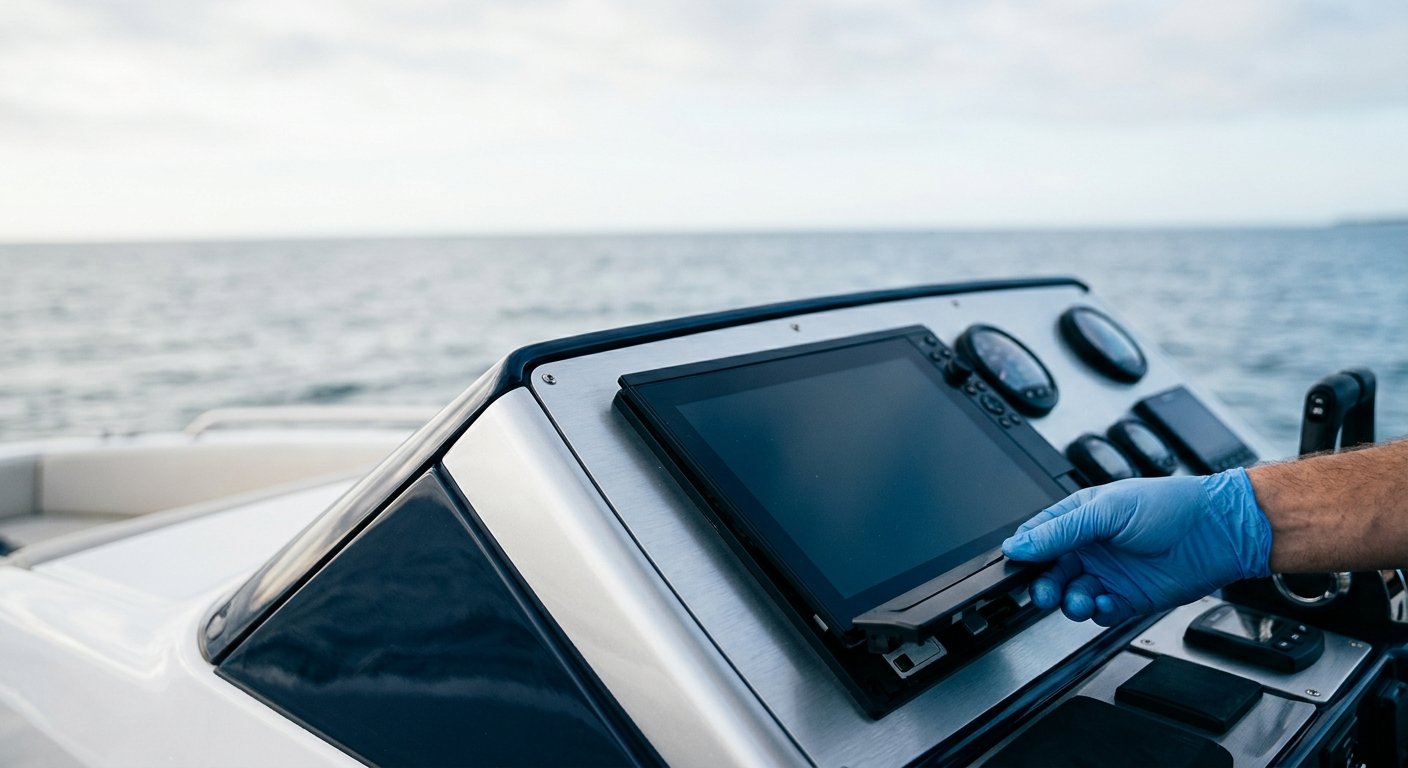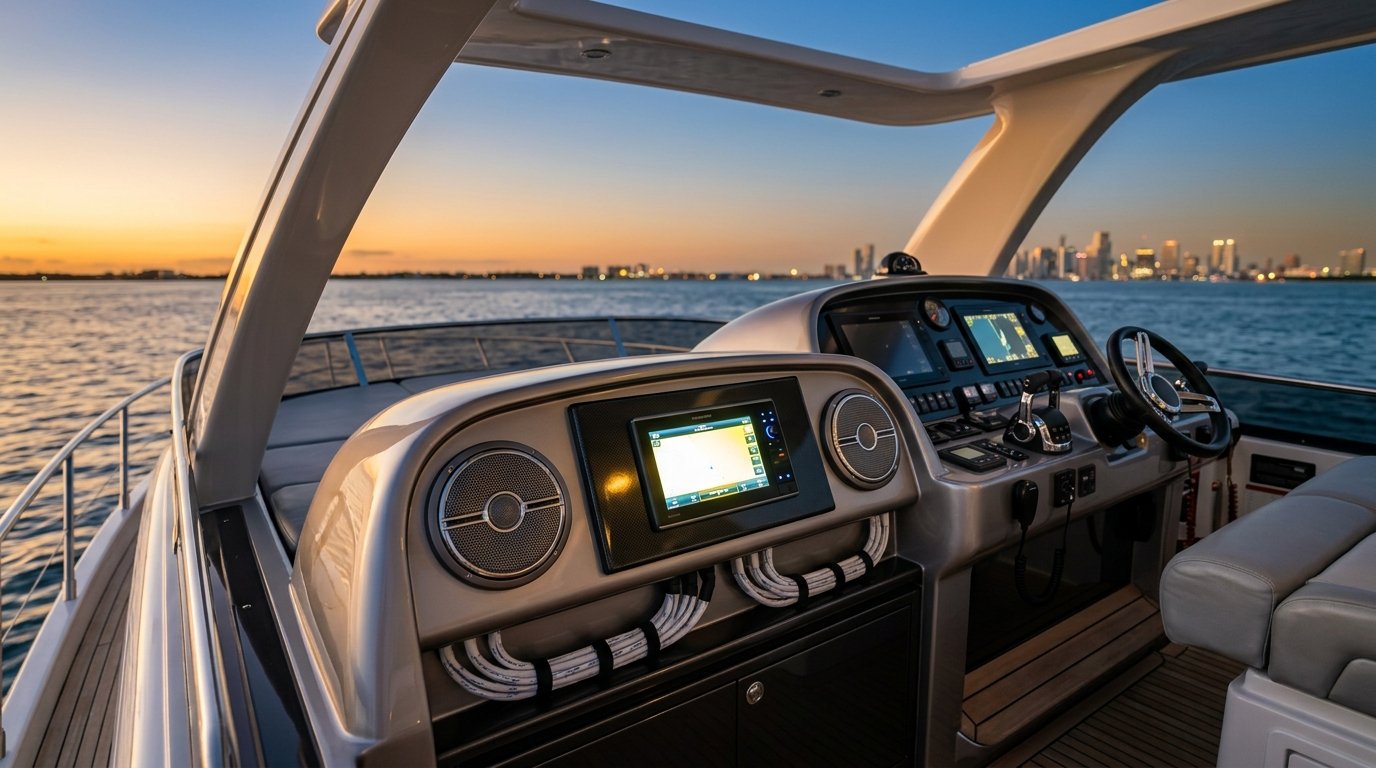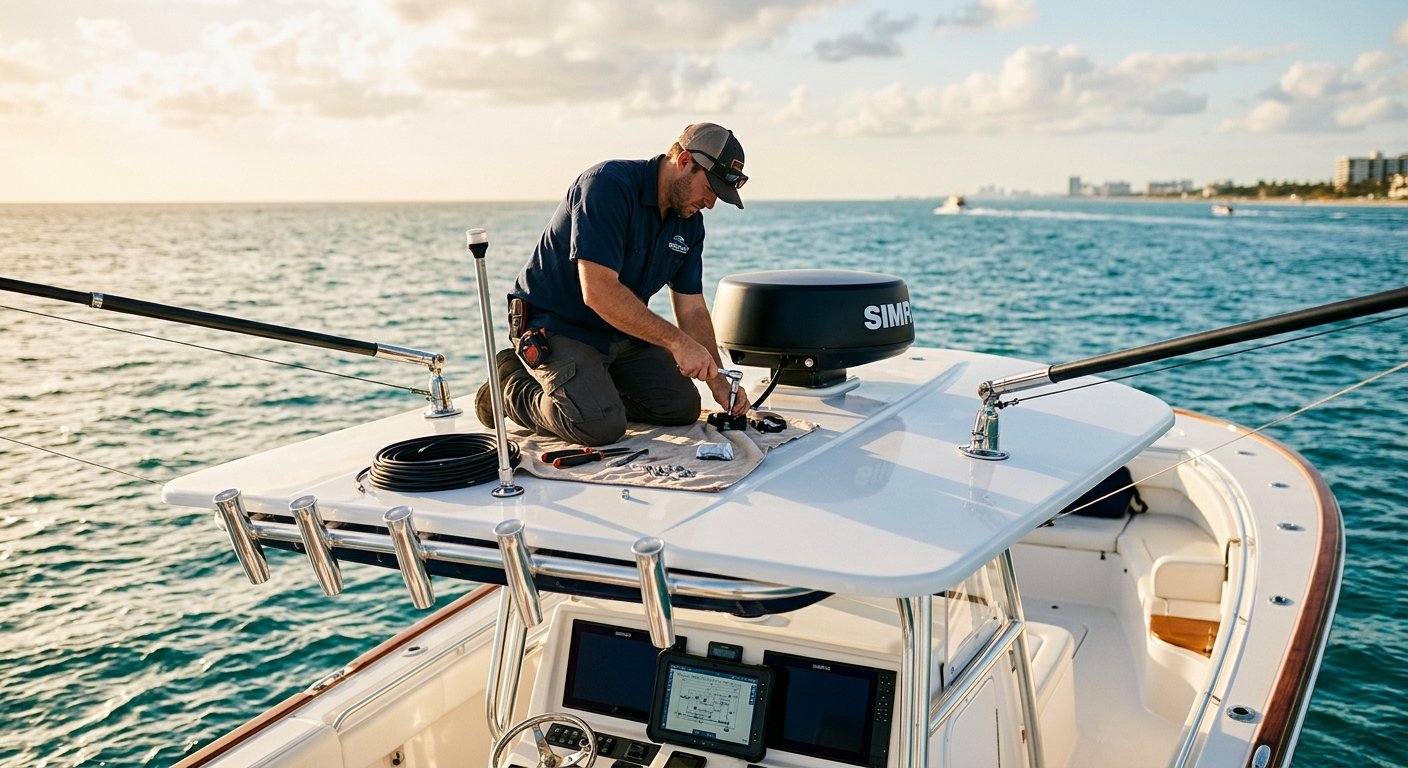
When a marine chartplotter fails, the right answer depends on the unit’s age, the nature of the fault, and your navigation requirements. Most modern chartplotters under five years old with isolated hardware faults—screen delamination, failed touchscreens, or corrupted software—are worth repairing. Older units with outdated cartography support, discontinued firmware, or failed internal GPS receivers typically cost less to replace than to restore to reliable operation.
- Age and parts availability are the first two factors to evaluate before committing to marine chartplotter repair.
- Outdated chart support and discontinued firmware often make repair a short-term fix rather than a long-term solution.
- South Florida offshore conditions—Gulf Stream crossings, Bahamas passages, and inlet navigation—demand fully functional, up-to-date navigation systems.
- A professional diagnostic by an NMEA-certified technician separates repairable faults from systemic failures before you spend money either way.
- Integration with your vessel’s NMEA 2000 network can influence whether repair or replacement better serves your overall electronics system.
Why the Fix-or-Replace Question Matters More Offshore
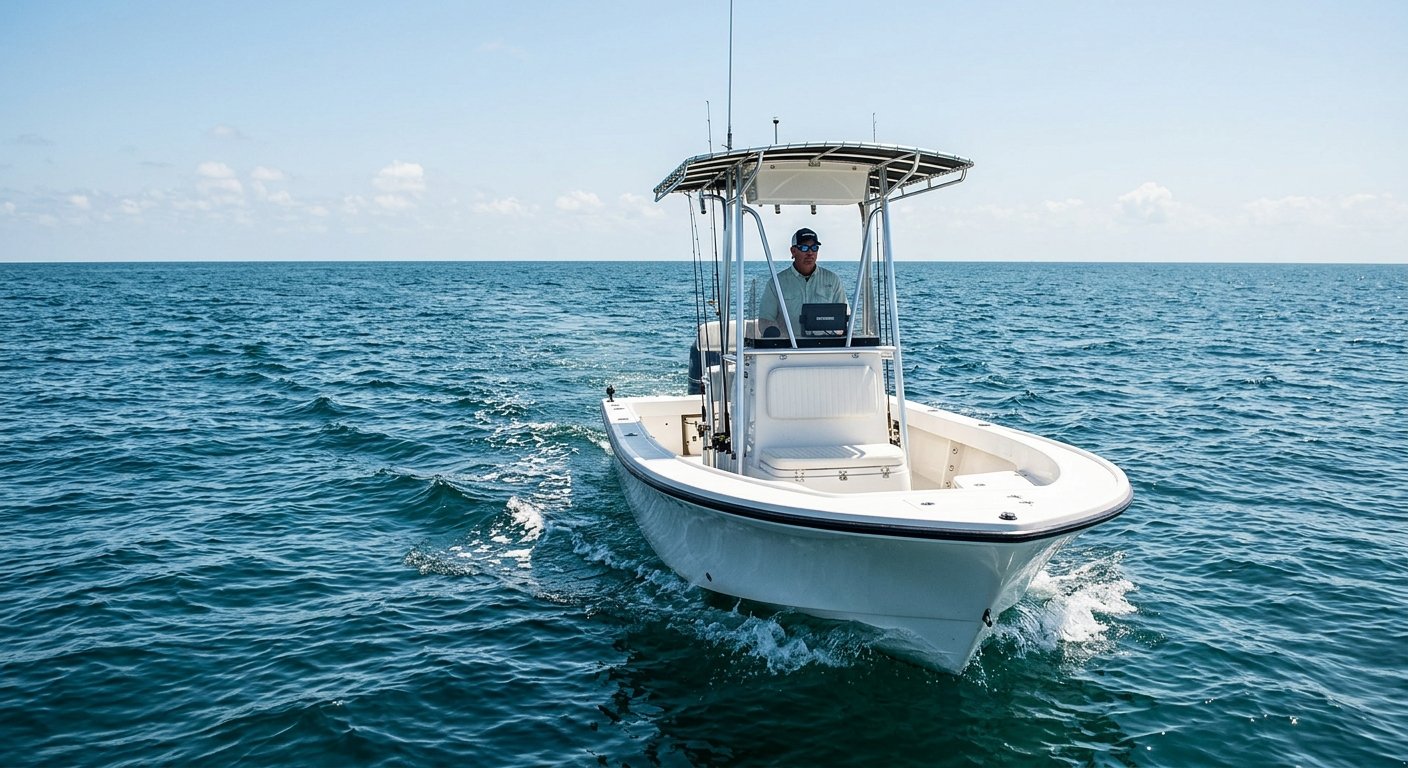
A flickering chartplotter in the driveway is an inconvenience. The same problem at the St. Lucie Inlet or forty miles offshore in the Gulf Stream is a safety event. South Florida boaters navigating from Stuart south to Fort Lauderdale encounter dense vessel traffic, shifting shoals, and ocean crossings where accurate, real-time navigation data is non-negotiable. The U.S. Coast Guard Navigation Center consistently identifies outdated or failed navigation equipment as a contributing factor in recreational boating groundings and collisions.
That context shapes how MEI approaches every boat electronics service inquiry. The goal isn’t to sell a repair or a replacement—it’s to restore the navigation reliability your vessel needs for the waters you actually boat on.
Common Chartplotter Failures and What They Signal
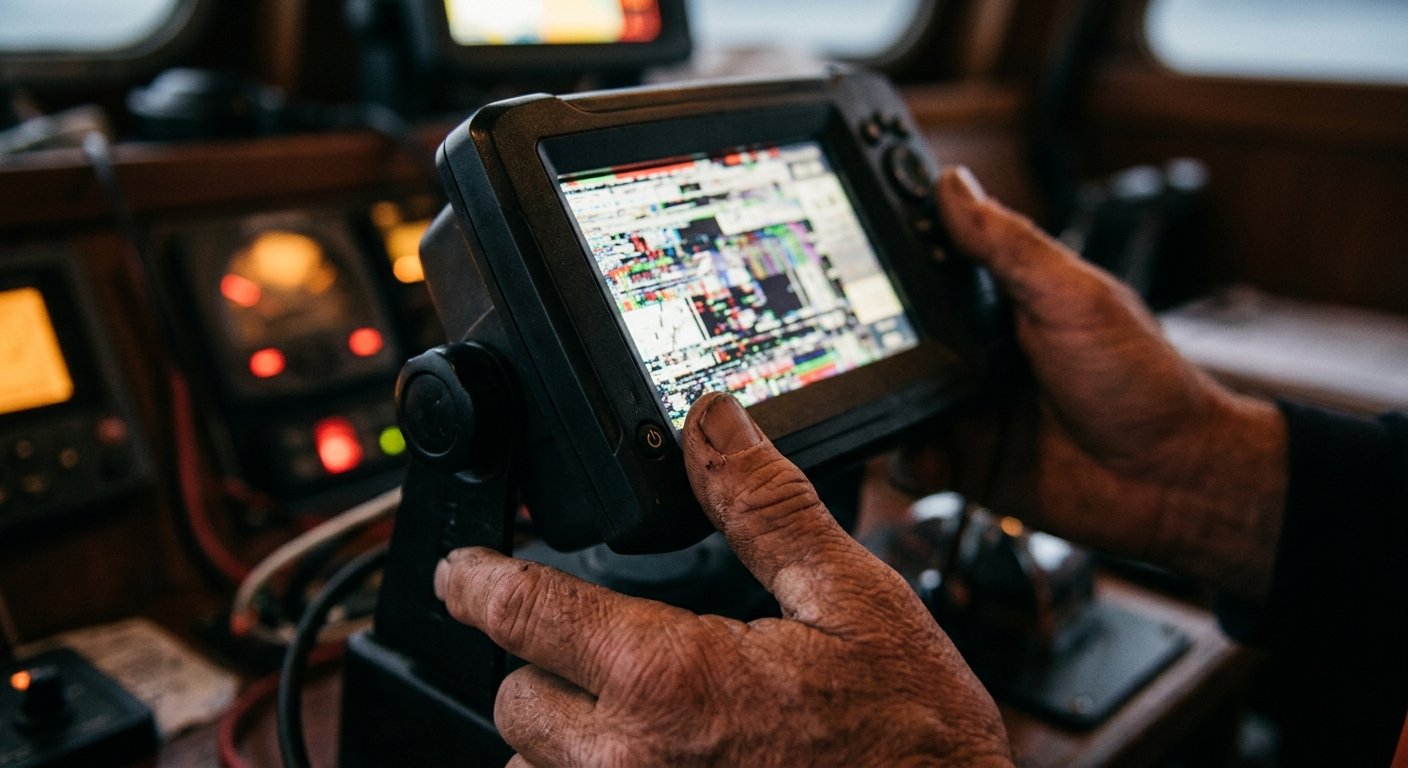
Not all failures are equal. Understanding the fault type is the starting point for any marine electronics repair decision.
Software and Firmware Faults
Frozen screens, erratic touch response, and loss of GPS lock after a power cycle are frequently software-related. If the manufacturer still supports the unit with current firmware, a factory reset or firmware reload often resolves the issue at minimal cost. MEI’s factory-trained technicians can perform this service and verify that chart data and waypoints are preserved before and after the process.
Hardware Faults
Delaminated displays, cracked screens, failed internal GPS antennas, and corroded connector pins are hardware problems. Repairability depends entirely on parts availability. For units still within their manufacturer support lifecycle—typically seven to ten years from production date—replacement screens and internal components are generally available. Outside that window, parts sourcing becomes the limiting factor.
Water Intrusion and Corrosion
South Florida’s saltwater environment is aggressive. Even IP67-rated chartplotters can develop seal failures over time, particularly when the unit has been exposed to pressure washing or repeated submersion beyond its rated depth. Internal corrosion typically causes irreversible damage to circuit boards. When a professional diagnostic reveals corrosion beyond the connector level, replacement is almost always the correct economic decision.
Water intrusion damage is often invisible from the outside. A chartplotter that appears physically intact but shows intermittent GPS loss or random reboots may have advanced internal corrosion. A professional diagnostic prevents you from investing in a repair that will fail again within months.
The Age Threshold: When Replacement Makes More Sense
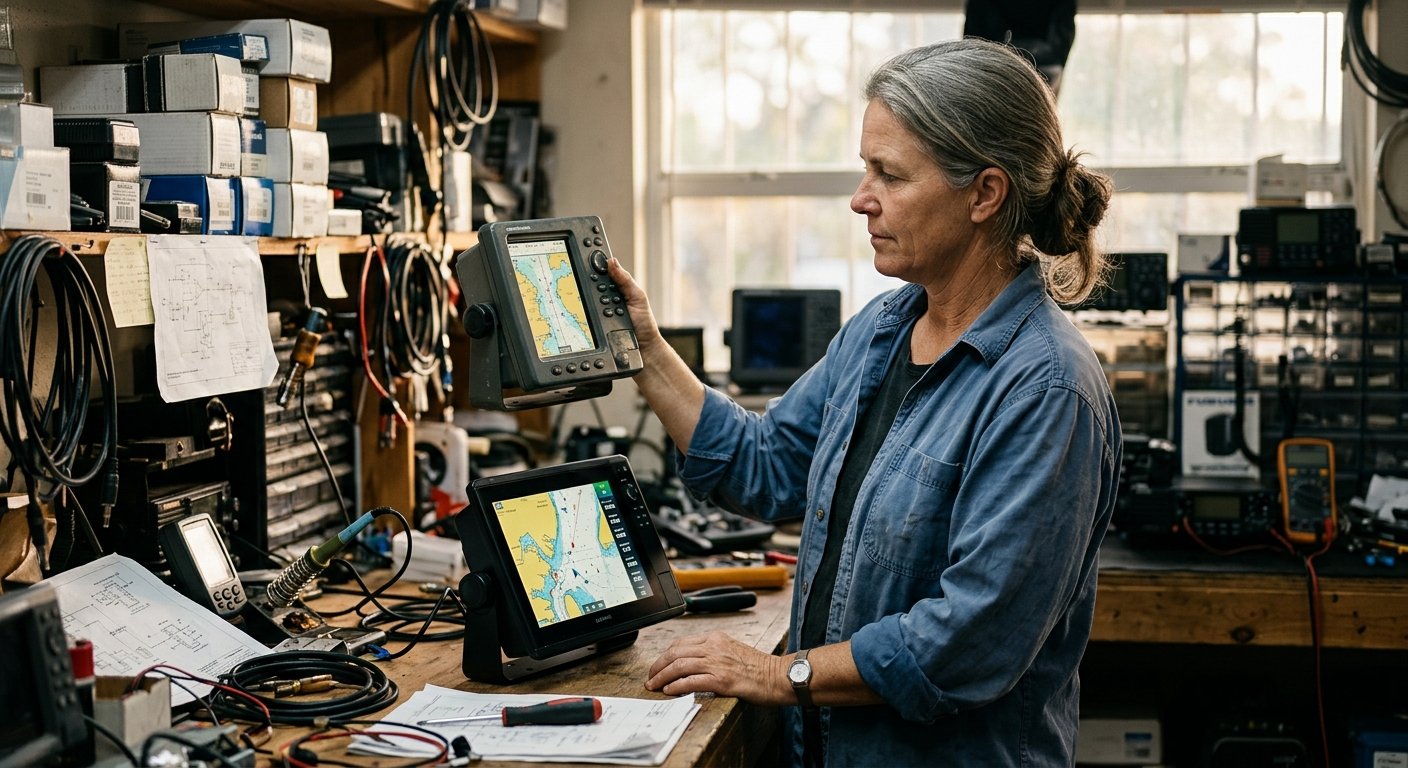
Marine chartplotter manufacturers follow product lifecycle policies that directly affect repair viability. Once a unit reaches end-of-life status, firmware updates stop, chart subscription support ends, and OEM parts availability declines. Operating an end-of-life chartplotter on an offshore or Bahamas-crossing vessel creates compounding risk: the hardware may function today but can no longer receive critical software patches or updated chart data.
The National Marine Electronics Association (NMEA) publishes interface standards that evolve over time. Older chartplotters built before NMEA 2000 became the dominant networking standard often cannot integrate cleanly with modern autopilots, AIS receivers, radar systems, and VHF radios. If your repair would return a functionally isolated unit to service—one that can’t share data across your vessel’s electronics network—replacement with a fully NMEA 2000-compatible unit delivers substantially more value.
| Factor | Repair Makes Sense | Replace Makes Sense |
|---|---|---|
| Unit age | Under 5-7 years | 7+ years or end-of-life |
| Fault type | Software, screen, connector | Internal corrosion, failed GPS module |
| Firmware support | Current updates available | Discontinued by manufacturer |
| NMEA 2000 compatibility | Fully network-compatible | Legacy protocol only |
| Chart subscription | Active platform supported | Platform discontinued |
| Parts availability | OEM parts in stock | No longer manufactured |
What a Professional Diagnostic Actually Covers
A DIY power cycle or factory reset addresses the symptom, not necessarily the cause. MEI’s boat electronics service process begins with a systematic diagnostic that evaluates the chartplotter as both a standalone unit and as a component within the vessel’s broader electronics architecture.
Power and Wiring Inspection
Voltage drop, incorrect fusing, and corroded terminal connections at the helm panel cause a significant percentage of chartplotter failures. These issues are inexpensive to correct and are often missed in DIY troubleshooting.
GPS Signal Verification
Internal and external GPS antenna performance is tested with a signal analyzer to distinguish between antenna faults, cable faults, and internal receiver failure—three different problems with three different cost profiles.
NMEA 2000 Network Health Check
The chartplotter’s communication with the vessel’s backbone is verified, including terminator resistance, node conflicts, and data bus load. A healthy network is essential for radar overlay, autopilot integration, and AIS display.
Display and Interface Testing
Touchscreen calibration, display brightness, and button response are tested against manufacturer specifications to determine whether hardware replacement is required.
Written Recommendation
MEI provides a clear repair-versus-replace recommendation with supporting rationale before any work proceeds, so the vessel owner makes an informed decision.
The Integration Argument for Replacement
Many South Florida boat owners arrive at a chartplotter failure and discover it’s the right moment to address the entire navigation station. Offshore fishermen running from Jupiter or Hobe Sound to the Bahamas benefit from a multifunction display that integrates radar, sonar, AIS, and autopilot on a single network. Mega yacht captains operating between West Palm Beach and Fort Lauderdale require redundant navigation displays with shared waypoint libraries.
A chartplotter failure is often the catalyst for a navigation system upgrade that delivers capabilities the original unit never had.
Modern multifunction displays with built-in CHIRP sonar, 4K chart rendering, and cloud-connected chart updates represent a meaningful capability leap over units from even five years ago. If repair cost approaches forty to sixty percent of a replacement unit’s price, the calculus typically favors replacement—especially when the new unit expands what your vessel’s navigation system can do. MEI’s marine electronics installation services cover complete helm station upgrades for vessels across the entire service area.
Before committing to any chartplotter repair, check whether your current chart subscription platform—Navionics, C-MAP, Garmin BlueChart—supports the unit. If the subscription has lapsed and the unit requires a legacy card format, the total cost of returning it to current chart accuracy may exceed replacement cost.
Protecting Your Investment: Installation Quality Matters
Whether you repair or replace, the quality of installation determines how long the next unit performs. Improper mounting without adequate ventilation, undersized wiring, missing waterproof connectors at the helm, and incorrect NMEA 2000 termination are the root causes of many premature failures MEI diagnoses. BoatUS Foundation navigation resources reinforce that properly installed and maintained navigation equipment is a cornerstone of recreational boating safety.
MEI’s NMEA-certified installation specialists follow manufacturer specifications and ABYC standards on every installation. The same technical discipline applies to the vessel’s broader electronics systems—from marine security cameras to boat speaker systems—ensuring that every component is correctly integrated and protected against South Florida’s saltwater environment.
Frequently Asked Questions
How do I know if my chartplotter is worth repairing?
Evaluate unit age, parts availability, and current manufacturer firmware support first. A unit under five to seven years old with an isolated fault—screen, software, or connector—is generally worth a professional diagnostic before deciding. If the unit is end-of-life or repair cost approaches replacement cost, replacement typically delivers better long-term value.
Can a marine electronics technician repair any brand of chartplotter?
Factory-trained technicians can diagnose and service most major chartplotter brands, including Garmin, Raymarine, Simrad, and Furuno. Repairability depends on parts availability from the manufacturer. MEI’s technicians are factory-trained on leading marine electronics brands and can advise whether OEM parts are available for your specific unit.
What causes chartplotters to fail in South Florida specifically?
Saltwater corrosion at connector pins and internal circuit boards is the primary cause, followed by heat-related seal failure and water intrusion from pressure washing. South Florida’s combination of high humidity, UV exposure, and salt air accelerates degradation in improperly sealed or incorrectly mounted units. Proper installation with marine-grade connectors and adequate ventilation significantly extends operational life.
Will repairing my chartplotter affect my NMEA 2000 network?
A properly executed repair should restore the unit to its original network performance. However, if the repair involves firmware changes or hardware component substitution, NMEA 2000 node addressing and network configuration should be verified afterward. MEI includes network health verification as part of every chartplotter service.
How long does a professional chartplotter diagnostic take?
Most diagnostic evaluations are completed in one to two hours aboard the vessel. MEI provides a written repair-versus-replace recommendation before any work proceeds, so vessel owners have a clear picture of options and costs before committing to either path.
Get a Professional Chartplotter Diagnostic
MEI’s NMEA-certified technicians serve boat and yacht owners from Stuart to Fort Lauderdale—contact us to schedule a diagnostic and get a clear answer on whether repair or replacement is the right call for your vessel.

About Marine Electronics Installers
Marine Electronics Installers (MEI) provides professional marine electronics installation and service for boat and yacht owners throughout South Florida, from Stuart to Fort Lauderdale. Specializing in NMEA-certified installations for vessels ranging from 25-foot center consoles to mega yachts, MEI combines factory training and technical expertise with deep knowledge of South Florida boating conditions—including offshore fishing, Bahamas crossings, and hurricane preparation. The company takes a consultative, educational approach that emphasizes safety, reliability, and proper installation techniques to protect substantial vessel investments. Visit marineelectronicinstallers.com →