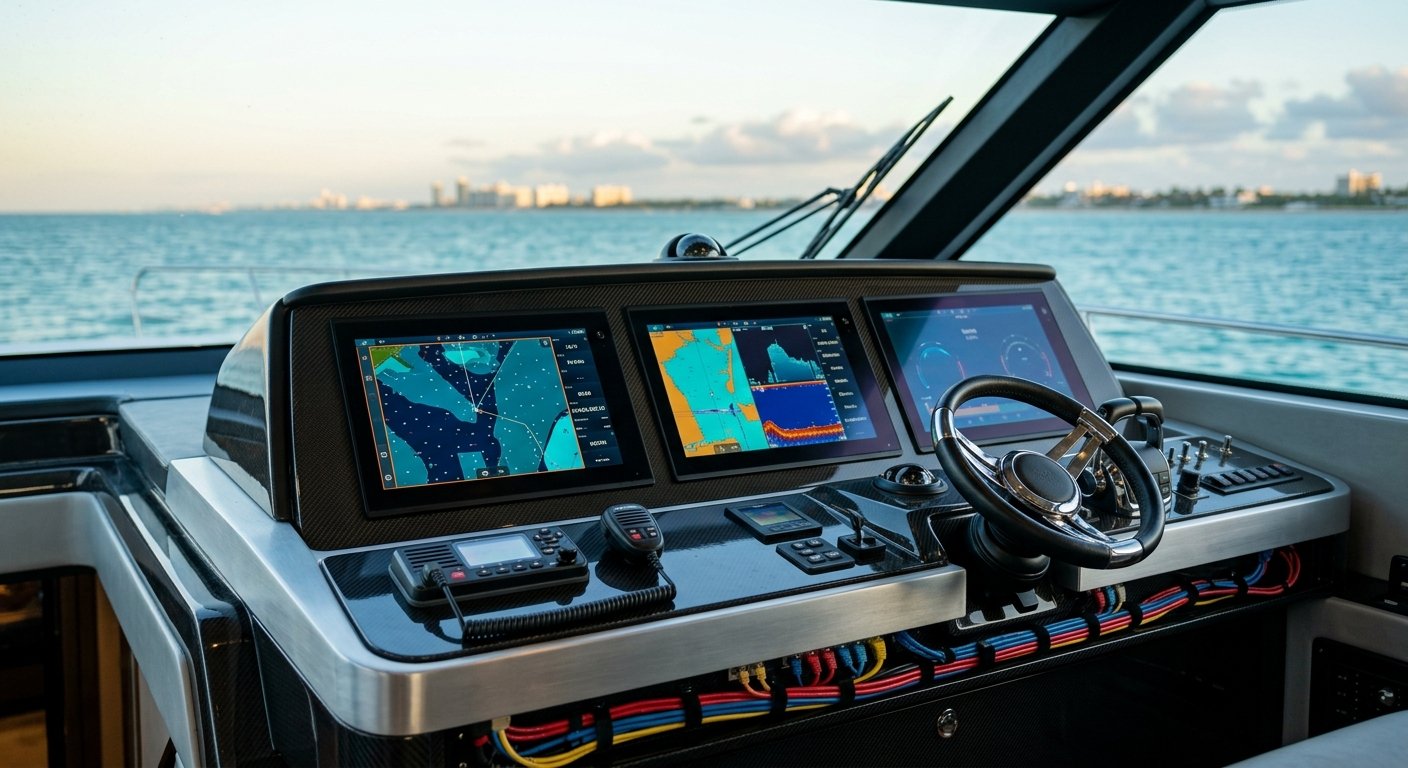
An NMEA 2000 backbone is a standardized digital communication network that connects all of a vessel’s electronic devices — chartplotters, VHF radios, depth sounders, AIS transponders, and engine monitors — into a single, integrated system. For boat owners in South Florida, a properly installed NMEA 2000 network transforms a collection of standalone instruments into a unified, safety-critical command center.
- NMEA 2000 uses a backbone-and-drop cable architecture that makes adding or removing devices simple without rewiring the entire system.
- Proper cable routing, terminator placement, and backbone sizing are the most common failure points in DIY installations.
- South Florida’s saltwater environment demands marine-grade connectors and IP67-rated or better components throughout.
- A certified installer protects your equipment warranties and ensures every device communicates reliably on the same network bus.
- Planning the backbone before purchasing any equipment saves time, money, and troubleshooting headaches.
What Is an NMEA 2000 Network?
NMEA 2000 — often abbreviated N2K — is an open-standard marine data communications protocol developed and maintained by the National Marine Electronics Association. It operates on a CAN bus architecture, meaning all devices share a single communication pathway and exchange data using standardized messages called Parameter Group Numbers (PGNs). When your chartplotter shows engine RPM, fuel consumption, and GPS position simultaneously, that’s NMEA 2000 at work.
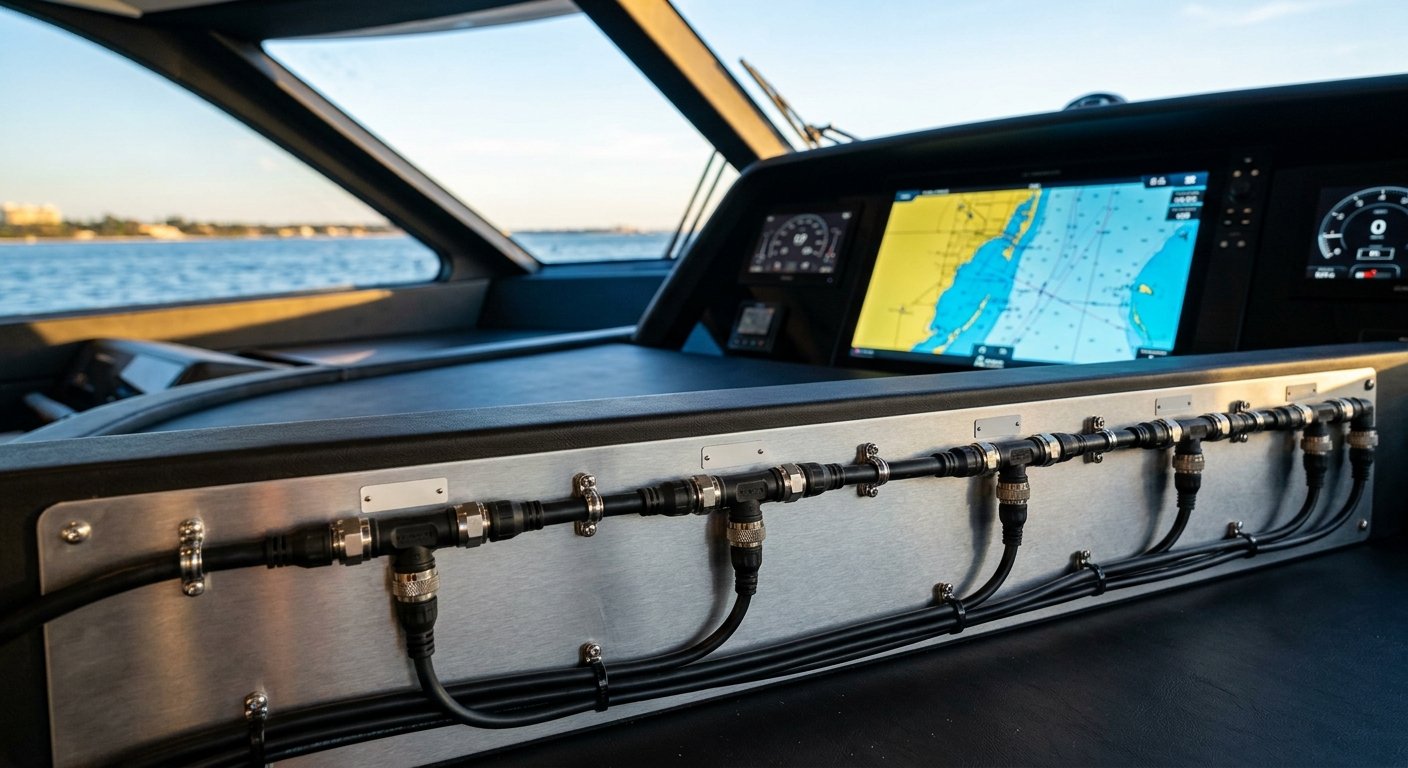
Think of the backbone as the spine of your vessel’s electronics nervous system. Every sensor, display, and instrument connects as a node — but none of them connect directly to each other. They each tap into the backbone via drop cables and T-connectors, sending and receiving data as packets across the shared network. This architecture makes the system expandable: adding a new autopilot or AIS transponder means plugging into an available T-connector, not rewiring your helm.
NMEA 2000 supports up to 50 devices on a single backbone segment, with a maximum cable run of 100 meters (approximately 328 feet) for the backbone itself. Individual drop cables from the backbone to each device must not exceed 6 meters. These specifications come directly from the NMEA 2000 standard and are not flexible — exceeding them causes data errors and intermittent device failures.
Planning Your NMEA 2000 Backbone
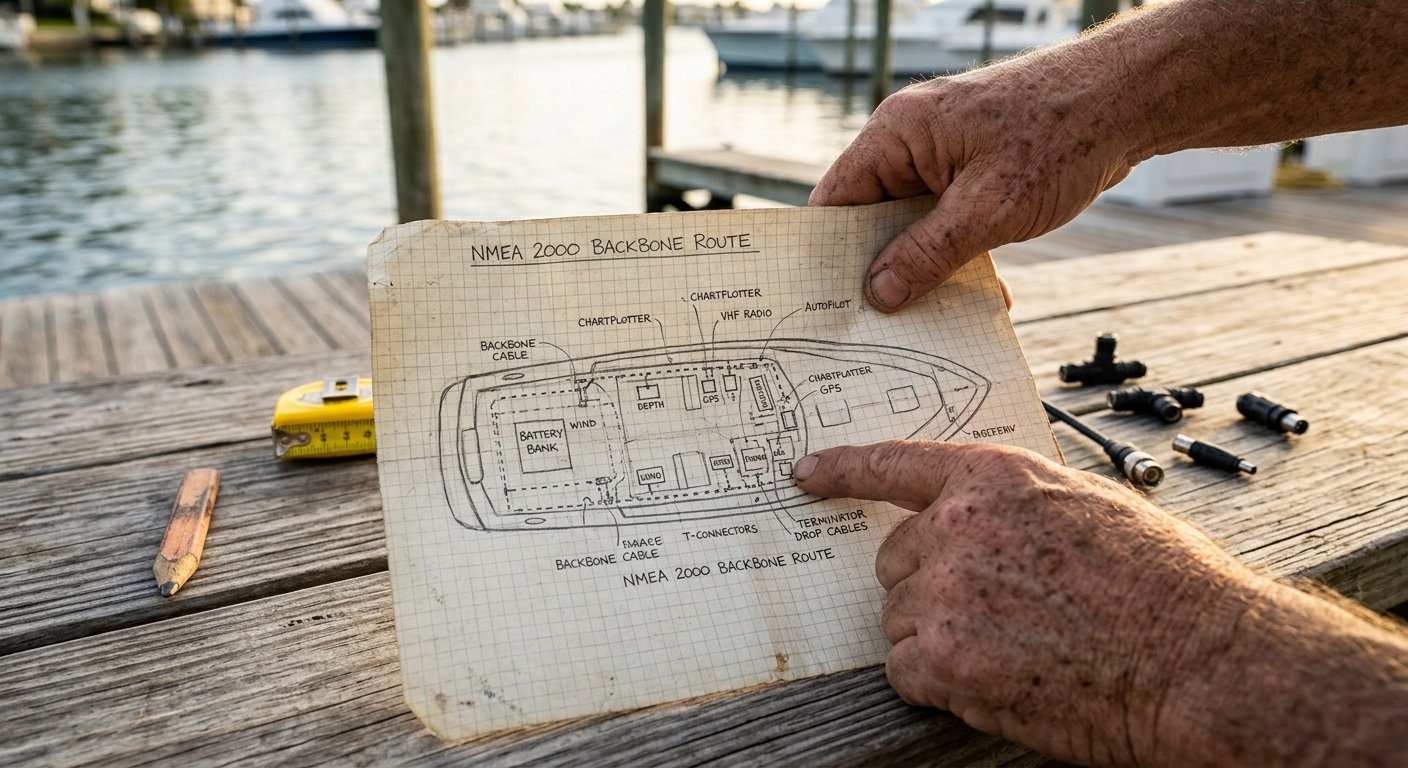
Before a single cable is pulled, thorough planning determines whether a marine electronics installation succeeds or becomes an expensive troubleshooting exercise. On a center console fishing out of Stuart or a sportfish heading across the Gulf Stream to the Bahamas, a network failure at sea is not an inconvenience — it’s a safety event.
Step 1: Audit Your Devices and Locations
Start by listing every device that will connect to the network. Common N2K devices include chartplotters, VHF radios with AIS, depth/sonar units, autopilot computers, engine bus gateways, fuel flow sensors, wind instruments, and satellite weather receivers. Map each device’s physical location aboard the vessel — helm station, engine room, transom, bow — and note how far each is from a planned backbone path.
Step 2: Choose Your Backbone Route
The backbone cable runs through the vessel from one terminating resistor to the other. The most effective route typically follows the vessel’s centerline, protected from direct bilge water exposure and high heat. On most center consoles and express cruisers in our service area, this means routing through the gunwale or below the console face, securing with UV-resistant cable clamps rated for marine environments.
Audit all N2K devices and their locations
List every device connecting to the network and measure the distance from each to your planned backbone route. This determines drop cable lengths and where T-connectors are positioned.
Select backbone cable gauge and connectors
N2K systems use either micro, mid, or maxi-format connectors depending on backbone current load. Most recreational vessels under 50 feet use micro-format (DeviceNet) connectors rated for the appropriate current draw of all connected devices combined.
Install terminators at both ends
Every NMEA 2000 backbone requires a 120-ohm terminating resistor at each physical end. Missing or misplaced terminators are the single most common cause of N2K network failures — devices drop off the bus randomly and data packets corrupt.
Power the backbone at one point
Power the backbone from a single, fused connection to your vessel’s 12V DC bus — never from multiple points. This prevents ground loop currents that cause erratic device behavior and data errors across the network.
Connect devices via drop cables and test each node
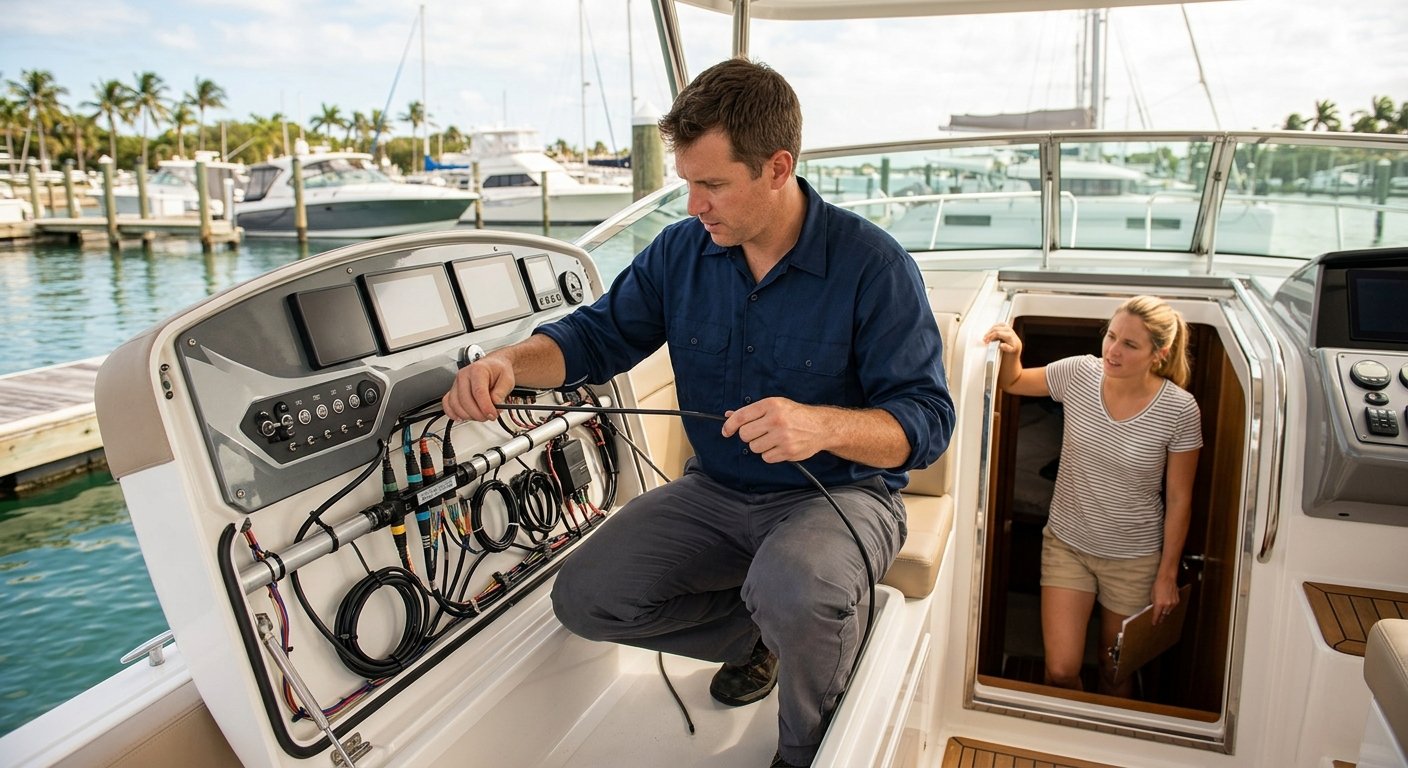
With the backbone secured and powered, connect devices one at a time using T-connectors and drop cables. Use a network diagnostic tool or a capable chartplotter to confirm each device appears on the network bus before proceeding to the next.
South Florida Saltwater Considerations
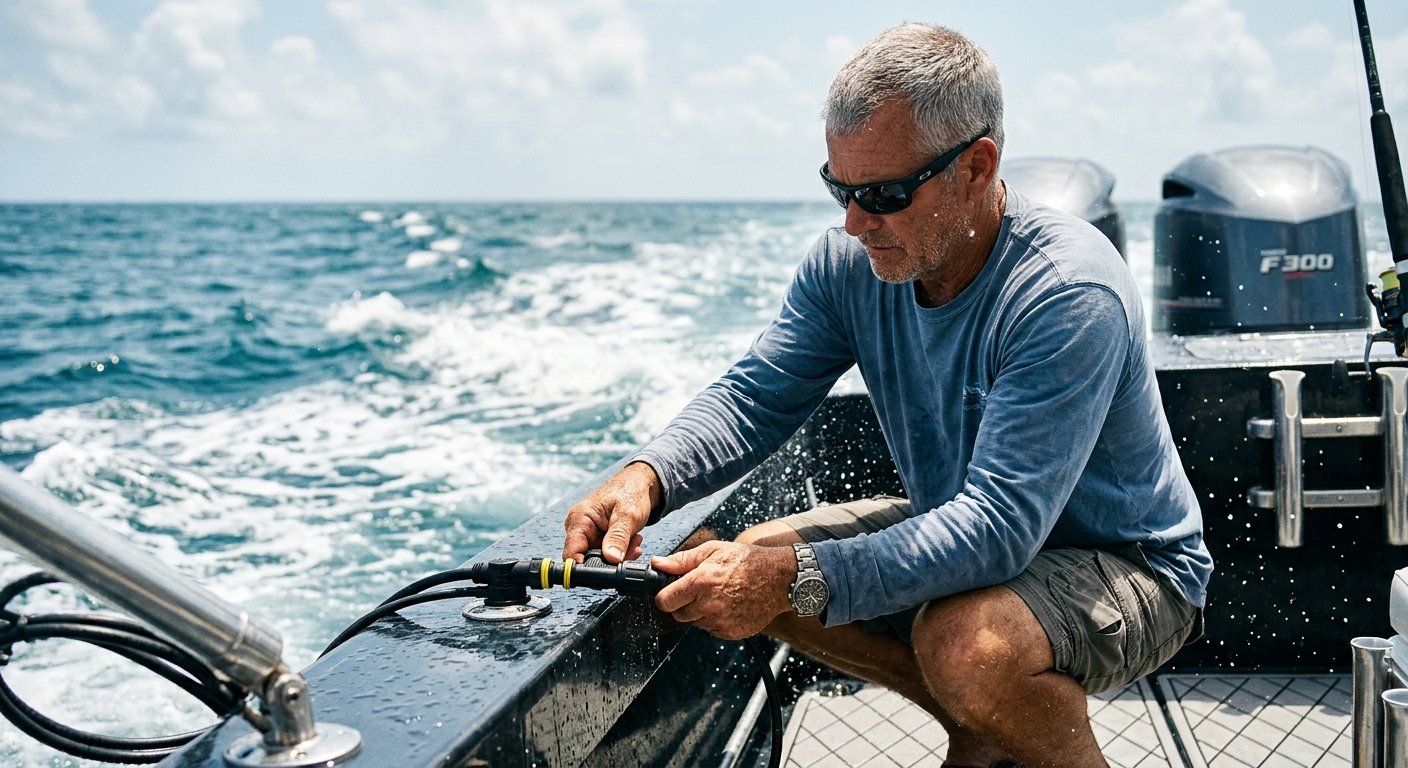
Running offshore from St. Lucie Inlet or crossing to the Bahamas puts electronics in one of the harshest operating environments on earth. Salt spray, humidity, and UV exposure degrade inferior components rapidly. Every connector on your NMEA 2000 backbone should carry at minimum an IP67 ingress protection rating — meaning it can be submerged in one meter of water for 30 minutes without water intrusion. Exposed connections in spray zones should use IP68-rated connectors where possible.
The BoatUS Foundation consistently identifies electrical failures and instrument outages as contributing factors in offshore incidents. This is particularly relevant for boaters running to the Bahamas or fishing 30-plus miles offshore, where a navigation system failure cannot be resolved by simply heading back to the dock. Proper connector sealing and cable management are not optional refinements — they are safety fundamentals.
Never use automotive or residential electrical connectors anywhere on an N2K network aboard a marine vessel. Marine-grade connectors are specifically designed to resist galvanic corrosion from saltwater exposure and the vibration inherent in boat operation. Using substandard connectors voids equipment warranties and creates intermittent failures that are extraordinarily difficult to diagnose later.
Backbone vs. Drop Cable: Understanding the Architecture
| Component | Backbone Cable | Drop Cable |
|---|---|---|
| Function | Carries network data and power the full length of the vessel | Connects individual devices to the backbone via T-connector |
| Maximum length | 100 meters per segment | 6 meters per drop |
| Terminators needed | Yes — one at each end | No |
| Current load | Carries cumulative load of all connected devices | Carries only that device’s draw |
| Can be extended | Yes, with a repeater for longer vessels | No — max 6 meters is a hard specification limit |
On larger vessels — sportfishers and motor yachts running from Palm Beach to Fort Lauderdale — the backbone may require a network repeater or a second backbone segment to reach the full length of the vessel. This is common on express yachts over 50 feet where devices span from the flybridge helm to the engine room and transom. An experienced marine network installation specialist will calculate total backbone length and device load before specifying components.
A properly built NMEA 2000 backbone is not just wiring — it’s the foundation your vessel’s safety depends on offshore.
Why Professional Installation Protects Your Investment
The practical value of working with an NMEA-certified installer extends well beyond the installation day. Factory-trained technicians understand how specific manufacturers implement N2K on their devices — including proprietary PGNs and configuration software that isn’t documented in consumer manuals. When a Garmin chartplotter needs to share depth data with a Simrad autopilot and a Furuno AIS transponder, the integration requires hands-on knowledge of each platform’s network behavior.
For boat owners investing tens of thousands of dollars in electronics, a properly documented installation also provides clarity during hurricane preparation. Knowing exactly what is installed, how it’s powered, and how it’s connected allows for faster, safer removal and reinstallation when named storms threaten South Florida. Our marine electronics installation service covers full network design and documentation for precisely this reason.
Integration with vessel audio and lighting systems is increasingly common on modern builds. NMEA 2000 networks can interface with boat speaker systems and LED lighting networks through gateway devices, creating a unified vessel management experience controlled from a single helm display. Getting that integration right from the start — rather than retrofitting it later — is both cleaner and more reliable.
Frequently Asked Questions
How many devices can I connect to an NMEA 2000 backbone?
The NMEA 2000 standard specifies a maximum of 50 devices (nodes) on a single backbone segment. Most recreational vessels connect far fewer, but each device counts — including engine gateways, sensors, and displays. If you’re approaching or exceeding this limit on a large yacht, a certified installer can segment the network using a repeater to expand capacity.
Do I need terminators if I only have a few devices?
Yes — always. Two 120-ohm terminating resistors, one at each physical end of the backbone, are required regardless of how many devices are connected. Without them, signal reflections corrupt data packets on the network bus, causing devices to drop out, display incorrect data, or fail to communicate entirely. There is no minimum device count that makes terminators optional.
Can I add devices to my NMEA 2000 network after it’s installed?
Yes, and this expandability is one of NMEA 2000’s primary advantages over proprietary wiring schemes. Adding a device typically requires a T-connector inserted at an appropriate point on the backbone and a drop cable run to the new device. The network recognizes new devices automatically. However, adding multiple high-draw devices may require upgrading the backbone power feed — something a professional should evaluate before the addition.
What’s the difference between NMEA 2000 and NMEA 0183?
NMEA 0183 is an older, single-talker/multiple-listener serial protocol where each device typically requires a dedicated wire run to every other device it communicates with. NMEA 2000 uses a shared bus architecture where all devices share a single backbone and communicate simultaneously using standardized PGN messages. N2K is faster, supports more devices, uses standardized connectors, and carries both data and power on the same cable — making it the current standard for modern marine electronics.
Why does my NMEA 2000 device keep dropping off the network?
Intermittent device dropouts on an N2K network usually trace to one of four causes: missing or incorrectly placed terminators, a drop cable exceeding the 6-meter limit, a corroded or improperly seated connector, or a power supply issue on the backbone itself. Diagnosing the root cause requires a network analyzer tool and systematic testing — this is not a problem that resolves by simply restarting devices. A certified marine electronics technician can identify and correct the fault efficiently.
Ready to Build a Reliable Marine Network?
MEI’s NMEA-certified installation specialists serve boat and yacht owners from Stuart to Fort Lauderdale — contact us to schedule a consultation for your vessel.

About Marine Electronics Installers
Marine Electronics Installers (MEI) provides professional marine electronics installation and service for boat and yacht owners throughout South Florida, from Stuart to Fort Lauderdale. Specializing in NMEA-certified installations for vessels ranging from 25-foot center consoles to mega yachts, MEI combines factory training and technical expertise with deep knowledge of South Florida boating conditions—including offshore fishing, Bahamas crossings, and hurricane preparation. The company takes a consultative, educational approach that emphasizes safety, reliability, and proper installation techniques to protect substantial vessel investments. Visit marineelectronicinstallers.com →