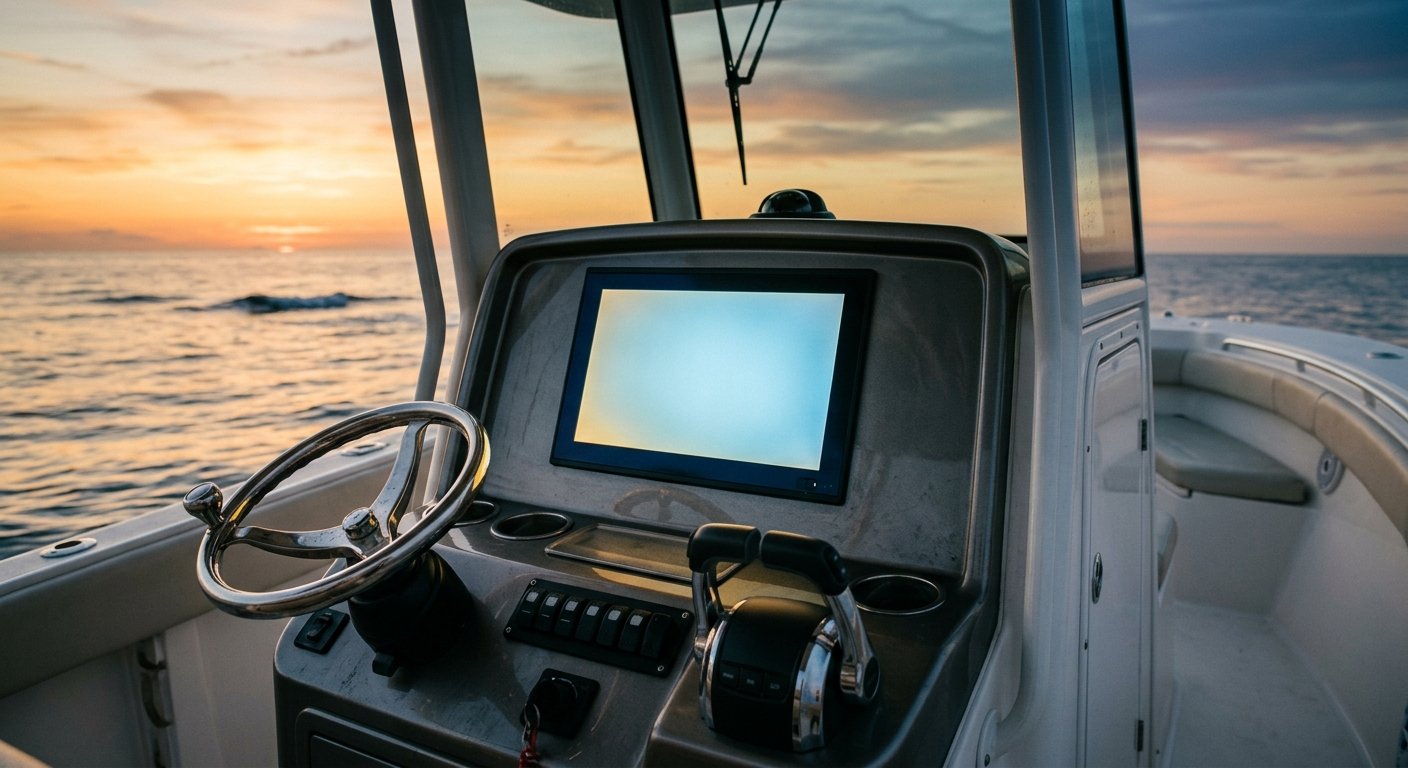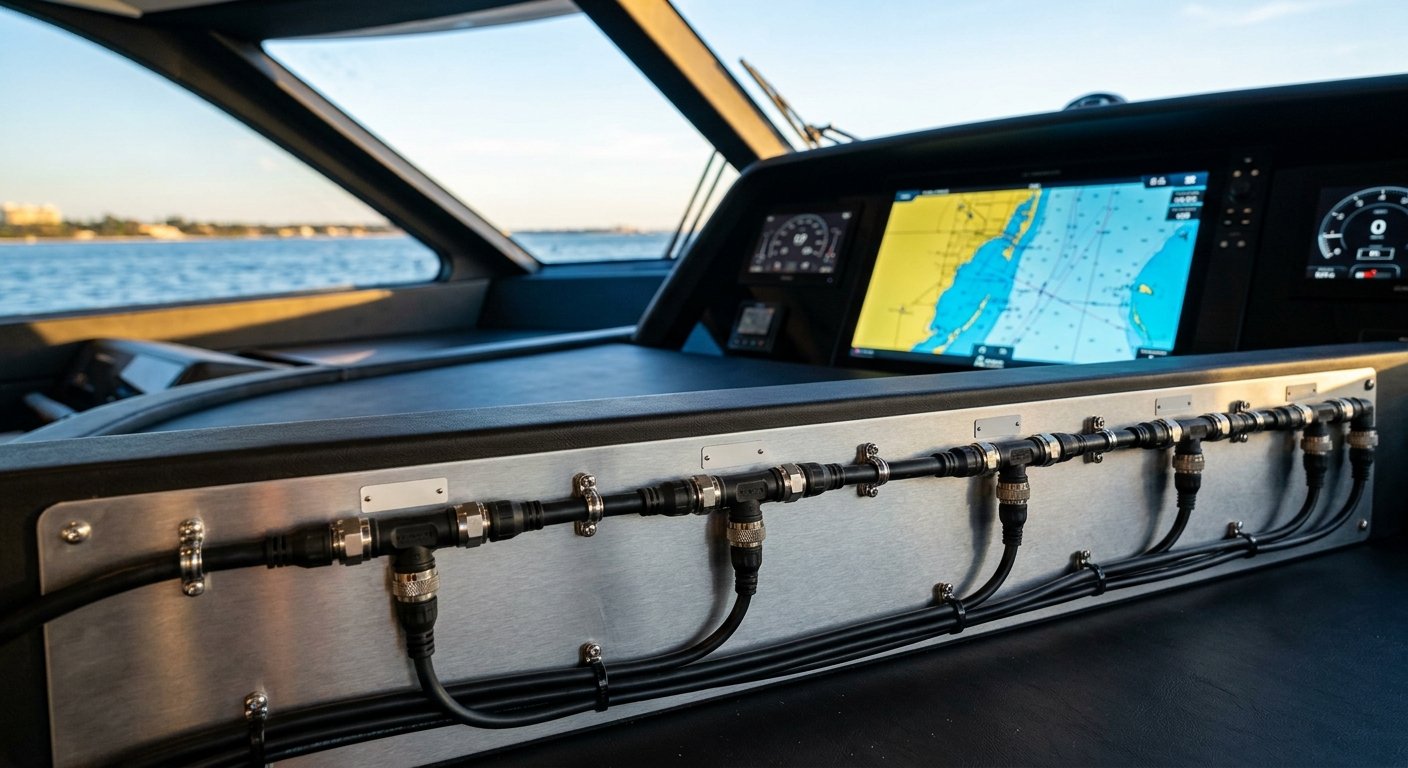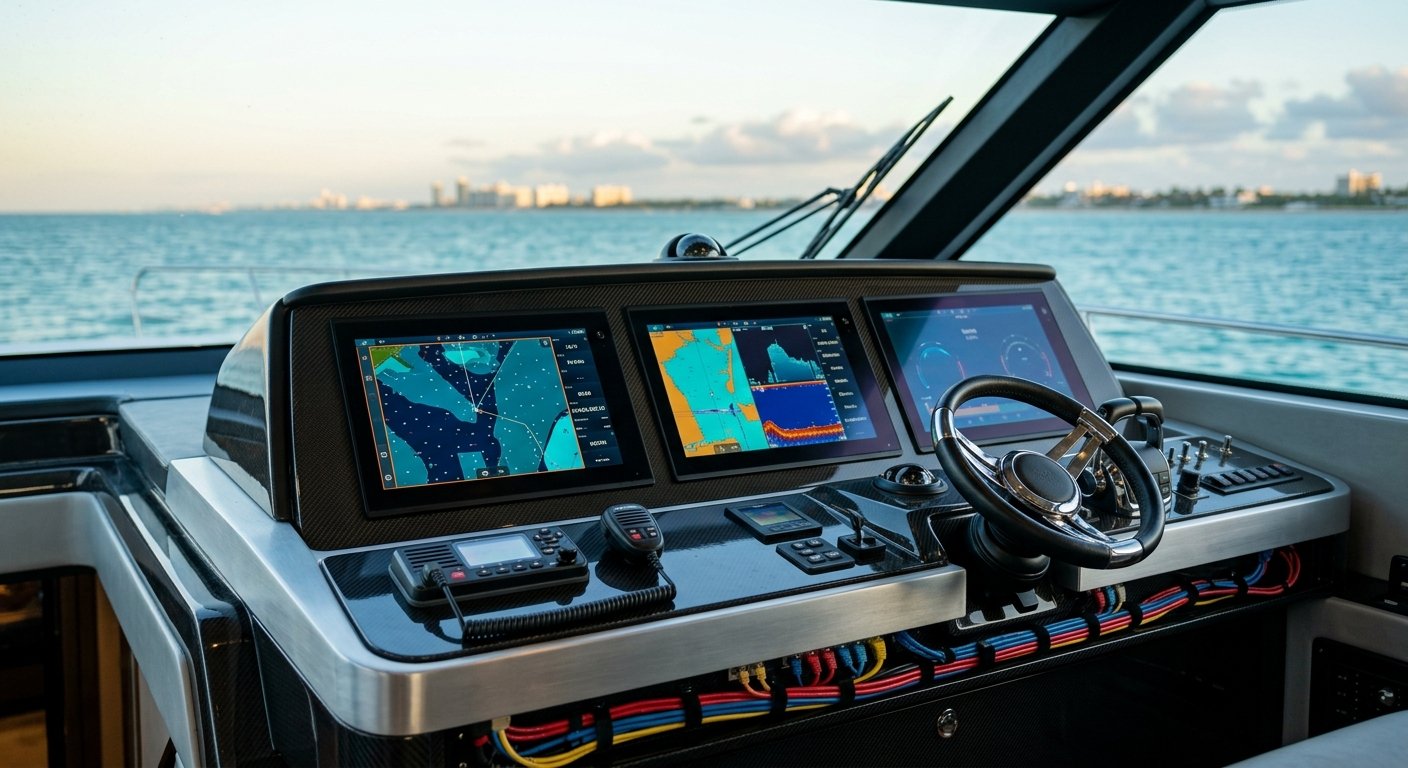
A chartplotter handles GPS navigation and chart display. A multifunction display (MFD) does all of that while integrating sonar, radar, autopilot, engine monitoring, and camera feeds through a NMEA 2000 network. For inshore day boating, a dedicated chartplotter is often enough. For offshore fishing, Gulf Stream crossings, or Bahamas passages, an MFD is usually the more capable and cost-effective long-term investment.
- A chartplotter navigates; an MFD orchestrates your entire onboard electronics ecosystem.
- MFDs connect to radar, sonar, autopilot, AIS, and engine gauges via NMEA 2000 networking—one screen for everything.
- For smaller center consoles on inshore or day trips, a quality dedicated chartplotter may be entirely sufficient.
- Screen brightness of 1,500 nits or above and IPX6/IPX7 water-resistance ratings are minimum specs for South Florida offshore use.
- Professional, NMEA-certified installation is essential—improperly built networks are a leading cause of intermittent marine electronics failures.
Understanding the difference between a marine chartplotter and a multifunction display (MFD) isn’t just a product comparison exercise. It’s a decision that affects navigation safety, system reliability, and the long-term value of your electronics investment.
Defining the Difference: Chartplotter vs. MFD
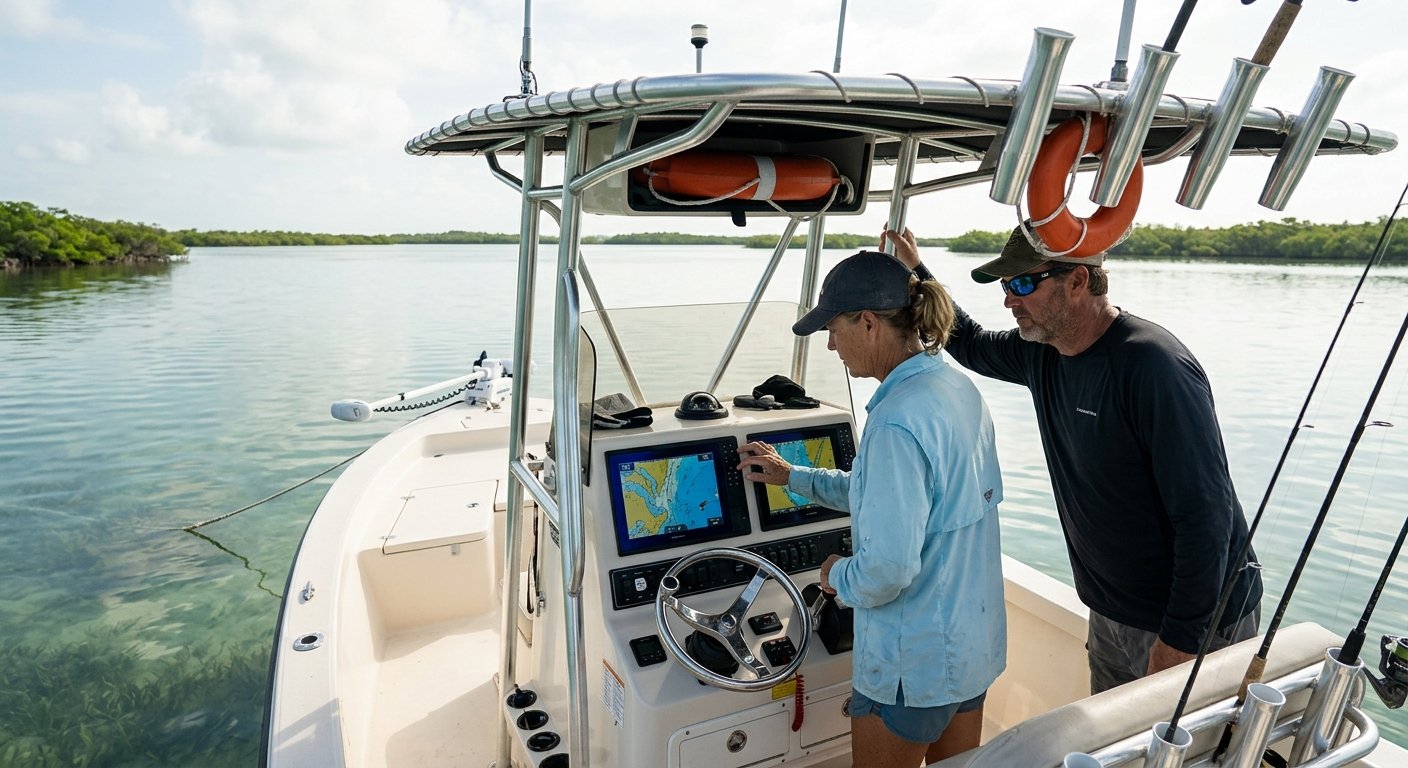
A marine chartplotter is a GPS-enabled navigation device that displays electronic charts, tracks your position, and helps you plot courses. It’s purpose-built for navigation. Entry-level and mid-tier chartplotters handle this job well, offering route planning, waypoints, AIS overlay, and chart updates. For a 25-foot center console running inshore or making short offshore runs, a quality chartplotter may be exactly what’s needed.
A multifunction display (MFD) is an integrated hub. It does everything a chartplotter does—but also combines sonar/fishfinder data, radar, engine monitoring, autopilot control, weather overlays, camera feeds, and more, all on a single screen or across networked displays. MFDs connect to onboard systems through NMEA 2000 networks, creating a unified electronics ecosystem where data flows seamlessly between devices.
A chartplotter navigates. An MFD orchestrates.
| Feature | Chartplotter | MFD |
|---|---|---|
| GPS & chart navigation | Yes | Yes |
| Sonar / fishfinder integration | No (standalone unit required) | Yes (built-in or networked) |
| Radar overlay | Limited / not typical | Yes |
| Engine monitoring | No | Yes via NMEA 2000 |
| Autopilot control | No | Yes |
| Multi-display networking | No | Yes |
| Best suited for | Inshore, day trips, tighter budgets | Offshore, cruising, complex vessels |
When a Dedicated Chartplotter Makes Sense
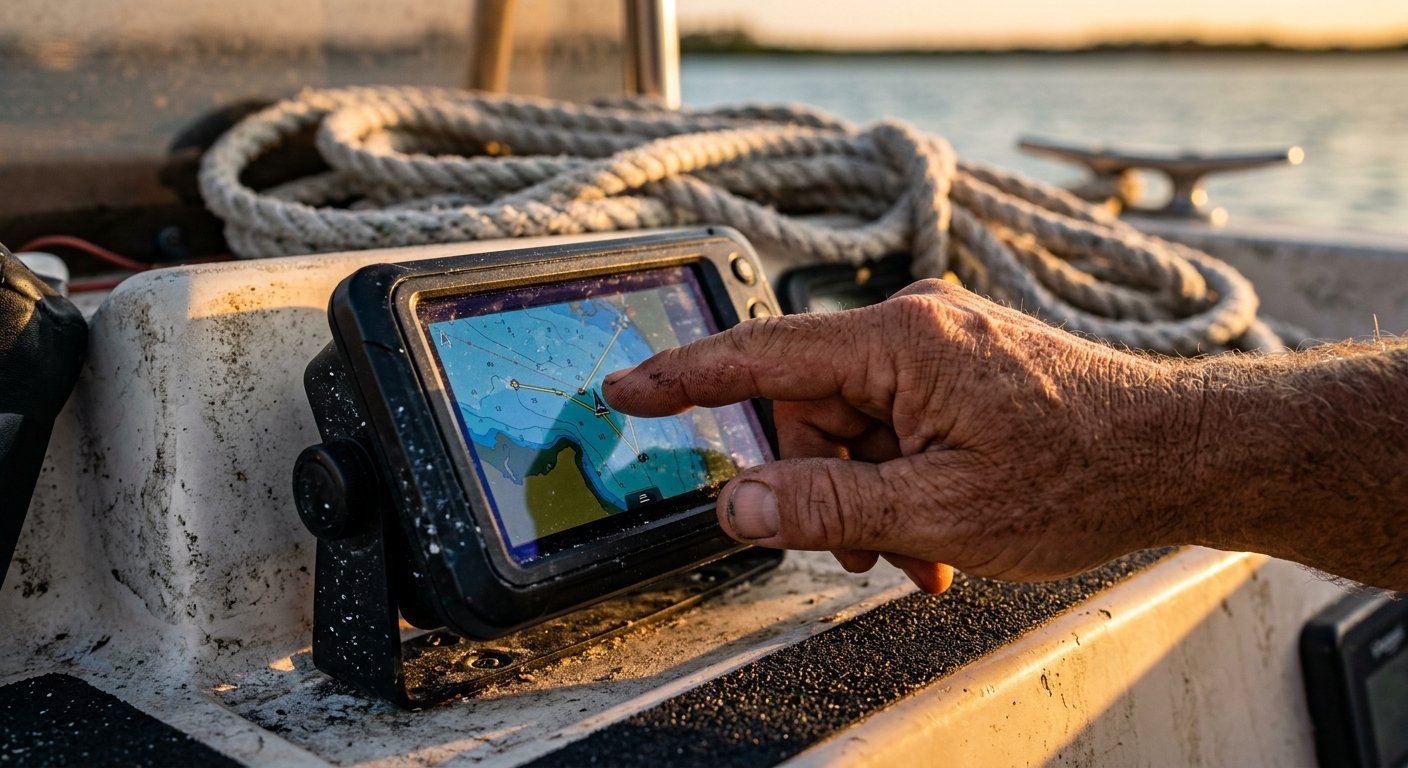
Not every boat needs the full power of an MFD. A dedicated chartplotter remains a strong choice when your vessel is a smaller center console or bay boat used primarily for inshore fishing or day trips, your electronics needs are straightforward, helm space is limited, or you already have separate standalone sonar units you’re satisfied with.
For boaters running out of Jupiter or Hobe Sound on weekend trips to the reef, a high-quality chartplotter paired with a standalone sonar can be entirely appropriate. The key is ensuring proper installation—even a standalone chartplotter needs correct antenna placement, appropriate power wiring, and chart card management to perform reliably.
If you’re working within a tighter budget but anticipate expanding your electronics later, ask a professional installer whether your helm’s current wiring and cutout dimensions can accommodate an MFD upgrade—protecting your initial investment down the road.
When an MFD Is the Right Investment
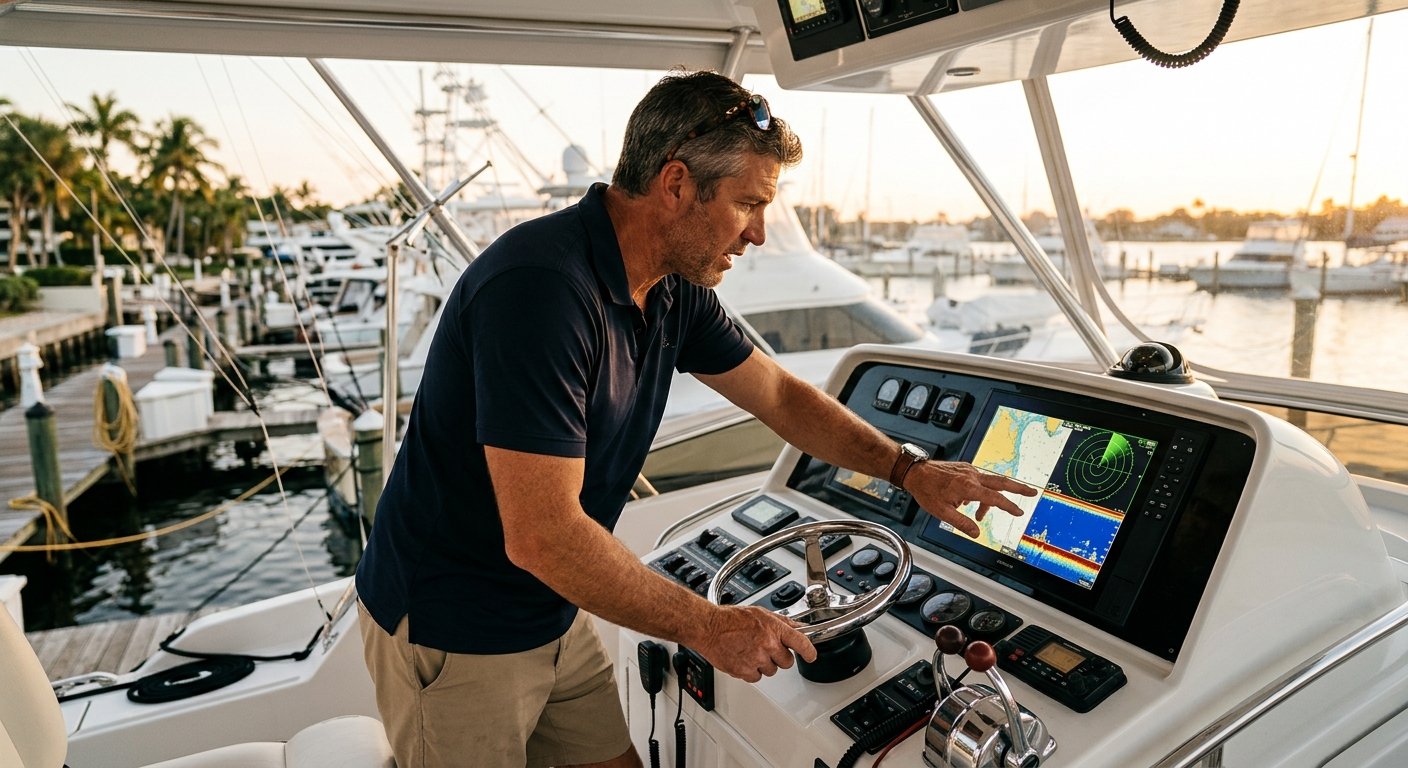
For serious offshore fishermen, Bahamas cruisers, and yacht owners throughout the Stuart to Fort Lauderdale corridor, an MFD is usually the more capable and cost-effective long-term choice.
Integrated System Performance
MFDs are designed to connect with every other electronic system on your vessel via NMEA 2000 networking. Your radar, sonar, autopilot, AIS, engine gauges, and even your VHF radio can feed data to a central display. When you’re 50 miles offshore in the Gulf Stream and conditions change, having radar and weather overlaid on your chart—on one screen—is a meaningful safety advantage.
According to the U.S. Coast Guard Navigation Center, integrated navigation systems that combine AIS, radar, and chart data significantly improve situational awareness for mariners, particularly in high-traffic and offshore environments. South Florida waters, including the busy shipping lanes off Fort Lauderdale and the Intracoastal near West Palm Beach, are exactly those environments.
Scalability as Your Needs Grow
An MFD network grows with you. Start with a single display; add a second helm station, a networked sonar, or a forward-looking sonar module later. Garmin marine installation platforms like the GPSMAP series, along with Furuno and Raymarine systems, all support multi-display networking that allows you to expand without replacing your core unit.
Fishing and Offshore Applications
For offshore fishermen targeting the canyons east of Stuart or making runs to the Bahamas, MFD-integrated sonar capabilities are transformative. Perspective Mode 3D sonar, side-scan imaging, and bottom-lock modes can be controlled directly from the MFD screen. Combining this with chart overlays and waypoint management from a single interface makes the fishing experience both more productive and safer.
NMEA 2000: Why Network Architecture Matters
Whether you choose a chartplotter or an MFD, the underlying network architecture determines how well your electronics will perform and integrate. NMEA 2000 is the current industry-standard communication protocol for marine electronics. Devices on a properly built NMEA 2000 network share data—GPS position, depth, engine data, wind speed, AIS targets—across all connected instruments simultaneously.
A poorly designed NMEA 2000 backbone causes exactly the kind of problems boat owners dread: intermittent data dropouts, false alarms, instrument conflicts, and troubleshooting headaches. The National Marine Electronics Association (NMEA) sets the certification standards that govern how devices communicate on these networks.
Incorrect network topology, undersized power drops, or improper termination create reliability problems that surface at the worst possible moments—offshore, in adverse conditions, far from help. Professional installation isn’t optional when you’re investing in a full MFD system.
Screen Size, IP Ratings, and Helm Design
Practical considerations matter as much as technical specifications. When evaluating displays for a South Florida vessel, the specs below are the ones that most directly affect day-to-day usability on the water.
Touch screens are intuitive but can be challenging with wet hands. Many top-tier MFDs offer both touch and physical keypad control, which is valuable in rough offshore conditions.
What a Professional Installation Actually Includes
The display unit itself is only part of the equation. Skipping professional installation frequently voids manufacturer warranties and introduces reliability issues that surface months later. Factory-trained technicians have hands-on experience with the specific installation requirements for each platform—knowledge that comes from certified training, not YouTube tutorials.
Helm mount & waterproofing
Cutout fabrication and mounting with proper sealing to protect the helm structure and display from water ingress.
Dedicated power wiring
Fused power runs to the vessel’s electrical panel, sized correctly for the display and connected devices.
GPS antenna placement
Optimal positioning to avoid interference from T-tops, arch structures, or other onboard antennas.
NMEA 2000 network construction
Backbone build or integration with the existing network, following NMEA certification standards throughout.
Transducer installation
Through-hull, in-hull, or transom-mount depending on hull type and application, for sonar-capable MFDs.
Configuration & sea trial
Full system configuration, device pairing, and on-water verification that every component works together as intended.
For boat owners considering a full electronics upgrade, MEI’s boat electronics service covers system design through final sea trial verification, ensuring every component works together as intended from day one.
Frequently Asked Questions
What is the main difference between a chartplotter and an MFD?
A chartplotter is a dedicated GPS navigation device that displays electronic charts and tracks vessel position. A multifunction display (MFD) combines chartplotter functionality with sonar, radar, engine monitoring, autopilot, and other systems on a single integrated display, typically connected through a NMEA 2000 network.
Is an MFD worth the extra cost for a center console?
For center consoles used primarily for offshore fishing or Bahamas crossings, an MFD typically offers better long-term value because it consolidates multiple devices and allows for system expansion. For strictly inshore or recreational day boating, a quality dedicated chartplotter may be sufficient. A professional consultation with a marine electronics installer can help determine the right fit for your specific vessel and use patterns.
Does NMEA 2000 certification matter for installation?
Yes. NMEA 2000 certification confirms that devices meet industry communication standards and that the installation follows correct network design principles. Improperly built NMEA 2000 networks are a leading cause of intermittent marine electronics failures. Working with NMEA-certified installation specialists ensures your network is built correctly from the start.
What Garmin marine products work best for South Florida offshore conditions?
Garmin’s GPSMAP series MFDs are widely used in South Florida’s offshore fishing and cruising community. Models like the GPSMAP 923xsv and 1243xsv offer integrated sonar, network connectivity, and bright displays suitable for South Florida’s sunlit helm environments. The right model depends on vessel size, helm layout, and intended applications—factors best evaluated during a professional site assessment.
Can I upgrade from a chartplotter to an MFD later?
In most cases, yes—though it depends on your existing wiring, helm cutout dimensions, and network infrastructure. A factory-trained marine electronics technician can assess what’s reusable versus what needs to be replaced, helping you plan a phased upgrade that protects your initial investment.
Making the Right Choice for Your Vessel
The chartplotter-versus-MFD decision isn’t one-size-fits-all. It depends on your vessel size, how and where you boat, how integrated you want your systems to be, and your long-term electronics goals. What’s consistent across every scenario is this: the quality of the installation determines how well the technology performs.
South Florida’s offshore environment—Gulf Stream crossings, busy inlets like St. Lucie and Lake Worth, and multi-day Bahamas passages—demands electronics that work reliably under real conditions. The BoatUS Foundation’s electronic navigation guidance reinforces that properly installed, properly configured systems are fundamental to safe offshore navigation.
Ready to Choose the Right Display for Your Boat?
MEI’s NMEA-certified specialists serve boat and yacht owners from Stuart to Fort Lauderdale—including Palm Beach, West Palm Beach, Jupiter, and Hobe Sound—covering system design through final sea trial verification. Schedule a consultation at 7892 SW Jack James Dr, Stuart, FL 34997.

About Marine Electronics Installers
Marine Electronics Installers (MEI) provides professional marine electronics installation and service for boat and yacht owners throughout South Florida, from Stuart to Fort Lauderdale. Specializing in NMEA-certified installations for vessels ranging from 25-foot center consoles to mega yachts, MEI combines factory training and technical expertise with deep knowledge of South Florida boating conditions—including offshore fishing, Bahamas crossings, and hurricane preparation. The company takes a consultative, educational approach that emphasizes safety, reliability, and proper installation techniques to protect substantial vessel investments. Visit marineelectronicinstallers.com →