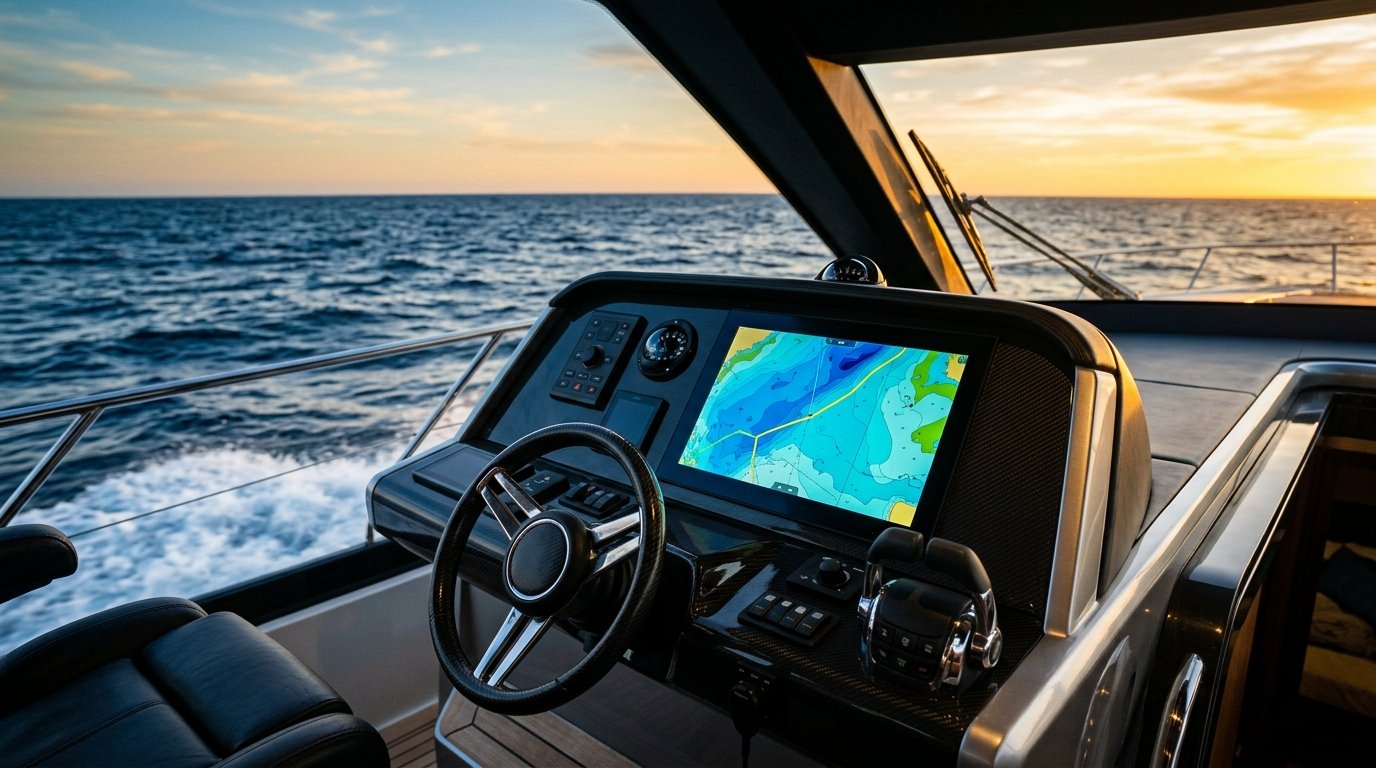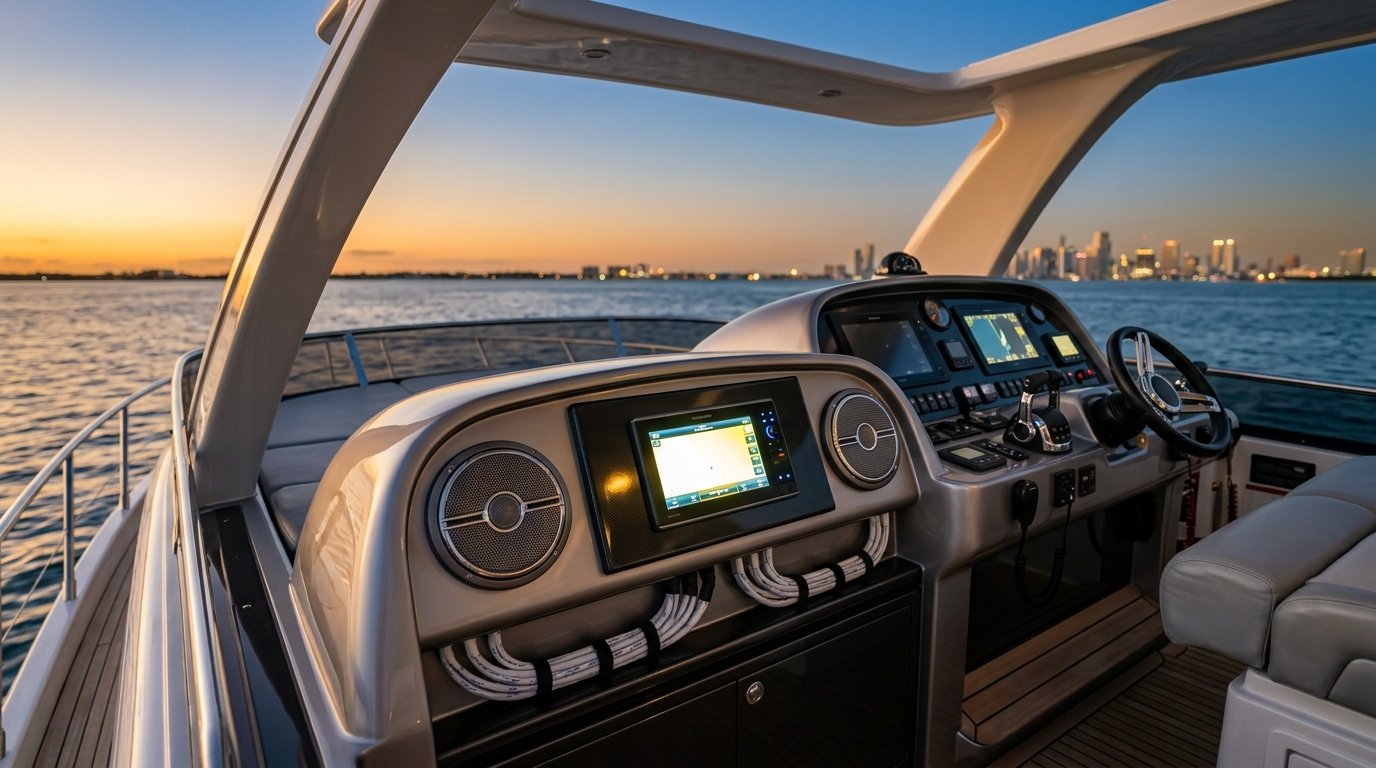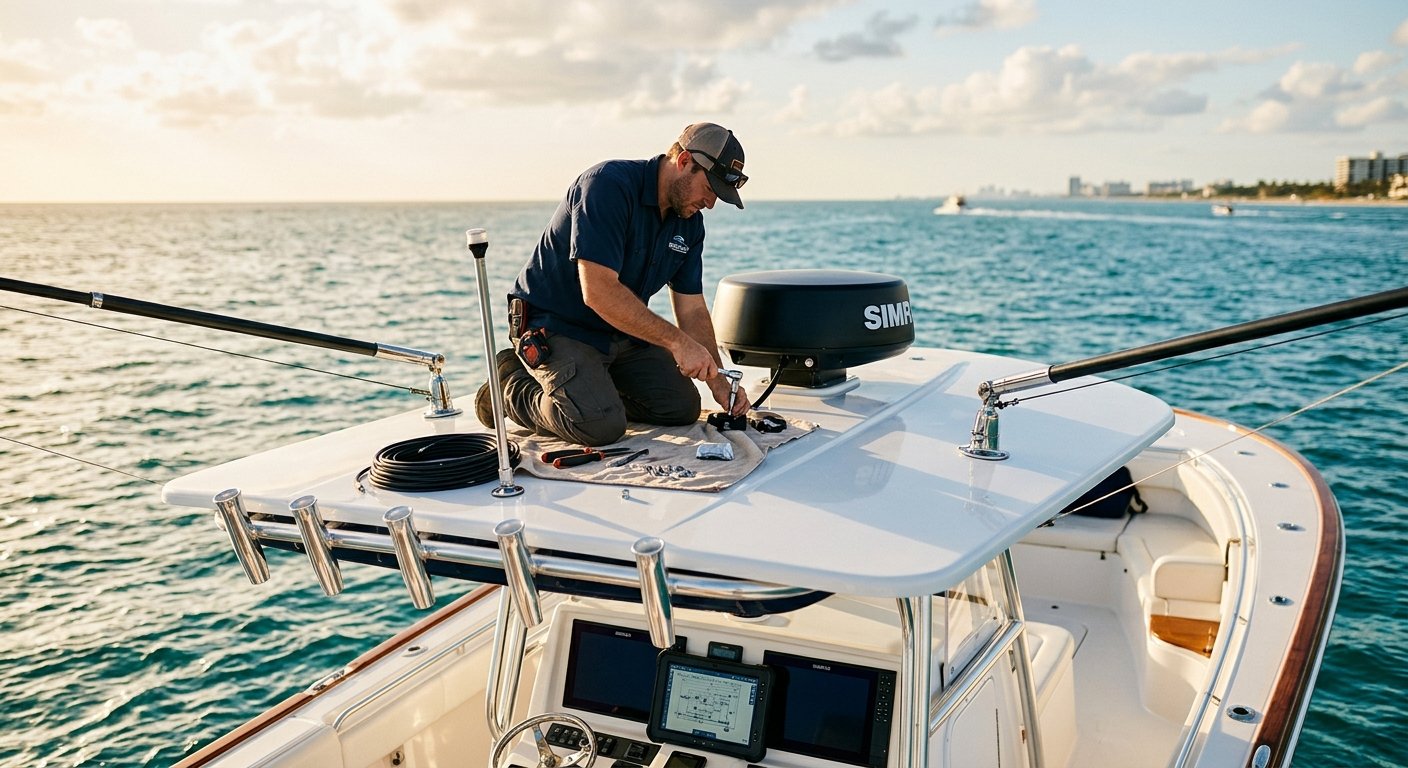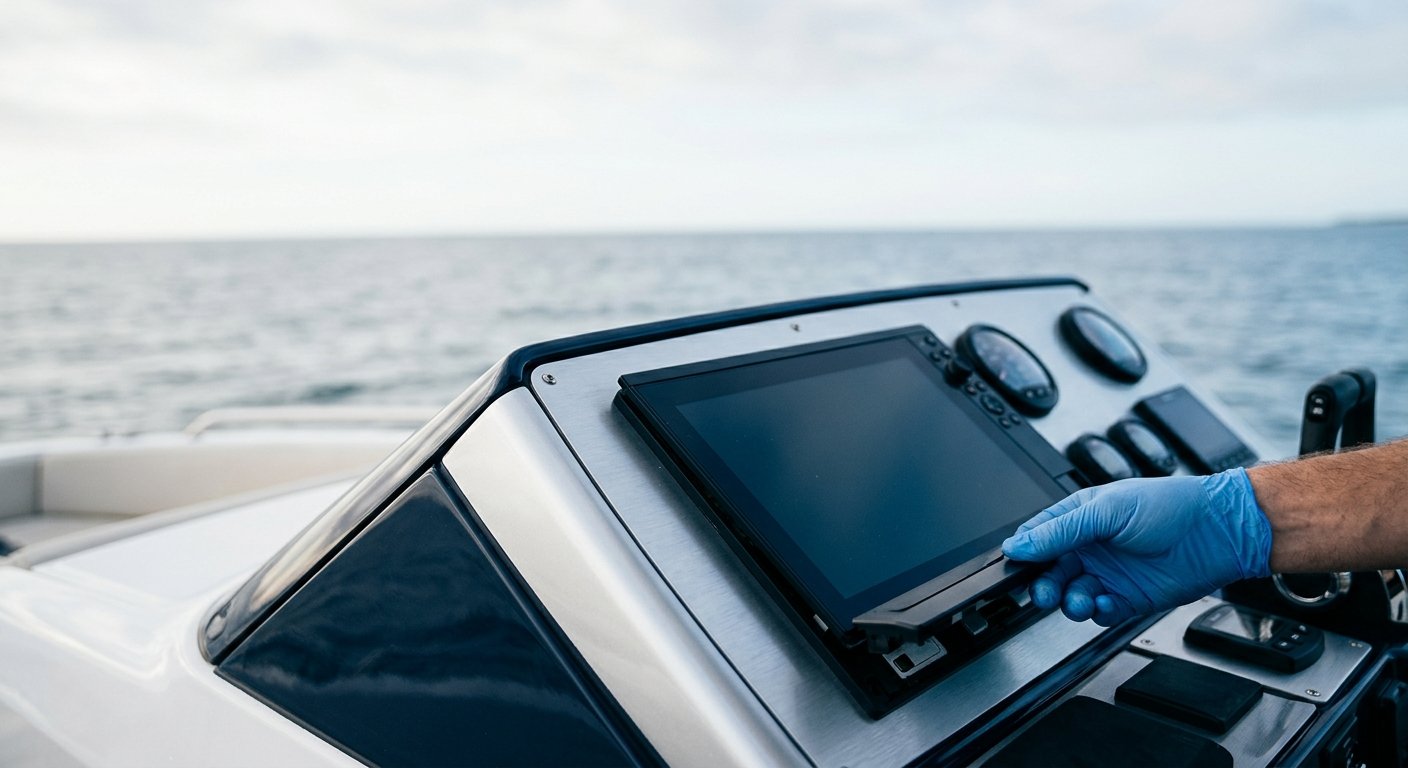
Picture this: you’re 40 miles offshore, somewhere between the Gulf Stream and the Bahamas Bank, and your autopilot is fighting your chartplotter’s course recommendations because the two systems aren’t properly communicating. It’s not a catastrophic failure — but it’s the kind of integration gap that turns a comfortable passage into an exhausting one. Proper yacht autopilot integration isn’t just about convenience. It’s foundational to safe, reliable offshore navigation.
This guide covers how modern autopilot systems work within a networked marine electronics architecture, what proper NMEA 2000 integration actually requires, and why the installation quality matters as much as the equipment itself.
How Autopilot Fits Into a Networked Marine Electronics System
An autopilot doesn’t operate in isolation. On a properly configured vessel, it’s one node in a broader marine electronics network — exchanging data continuously with GPS receivers, chartplotters, wind instruments, depth sounders, and radar. The protocol that makes this possible on most modern vessels is NMEA 2000, an industry standard that allows marine devices from different manufacturers to share real-time data across a single backbone cable.
When autopilot integration is done correctly, here’s what that network enables:
- The autopilot receives GPS course-over-ground data and maintains heading adjustments automatically
- Chartplotter route waypoints are sent directly to the autopilot without manual re-entry
- Wind data from instruments can optimize sail trim or shift heading in response to apparent wind angle
- AIS vessel traffic data informs the helm display and, in some systems, triggers autopilot alerts
- Engine data from the network provides context for course corrections at different throttle settings
For offshore fishing trips out of Stuart or Jupiter Inlet, or for Bahamas crossings departing from Fort Lauderdale or Palm Beach, this level of integration isn’t a luxury feature — it’s what separates a boat that performs predictably at sea from one that demands constant manual intervention.
Understanding NMEA 2000 Network Architecture
A properly installed NMEA 2000 network consists of a backbone cable running through the vessel with drop cables connecting each device. Power is supplied to the network through a power tap, and the backbone is terminated at both ends with 120-ohm resistors. Get any of this wrong — undersized backbone, missing termination, too many devices on a single segment — and you’ll experience intermittent data dropout, false alarms, or complete loss of autopilot GPS input at the worst possible moment.
Key technical considerations for NMEA 2000 network design include:
- Backbone sizing: Mini, mid, and micro cable types have different current-carrying capacities. Larger vessels require appropriately rated cable to support power-hungry devices like radar and VHF.
- Network load calculation: Each NMEA 2000 device draws a defined load equivalent (LEN). Total network load should not exceed the power tap’s rated capacity.
- Drop cable lengths: Drops should not exceed 6 meters from backbone to device. Excessive drop lengths degrade signal integrity.
- Termination: Both ends of the backbone must be properly terminated. A missing terminator is one of the most common causes of NMEA 2000 network instability.
For vessels ranging from 25-foot center consoles to larger yachts, the network architecture differs significantly. MEI’s NMEA-certified installation specialists design each network based on the specific vessel layout, device complement, and intended use — whether that’s day fishing offshore from Hobe Sound or extended bluewater passages.
Autopilot System Components and Integration Points
A modern autopilot installation involves several interdependent components, each with specific placement and calibration requirements.
Autopilot Computer (ACU)
The autopilot computer is the brain of the system, processing sensor inputs and sending commands to the drive unit. It must be mounted in a dry, ventilated location away from excessive heat. Placement affects response time and cable management.
Heading Sensor and Rate of Turn Gyro
Heading accuracy is foundational to autopilot performance. Modern systems use a 9-axis solid-state compass that measures heading, pitch, and roll simultaneously. Correct placement — away from magnetic interference sources like speakers, engine alternators, and steel components — is critical. A heading sensor improperly located near a subwoofer or engine room bulkhead will exhibit consistent heading errors that no amount of calibration will fully correct.
Drive Unit
The drive unit interfaces with the vessel’s steering system — whether hydraulic, mechanical, or electric. Selecting the correct drive type and ensuring proper installation geometry is essential for responsive, reliable steering. An undersized or incorrectly mounted drive unit introduces lag and wear that degrades autopilot performance over time.
Rudder Feedback Unit
The rudder feedback unit tells the autopilot computer exactly where the rudder is at any given moment, enabling precise closed-loop control. It must be installed with correct mechanical linkage and calibrated to match actual rudder travel limits.
Integration with Garmin and Other Systems
Many South Florida boaters choose Garmin marine navigation systems for their intuitive interface and strong NMEA 2000 compatibility. MEI’s factory-trained technicians are experienced with Garmin autopilot integration, including configuring heading sensors, calibrating the autopilot response curves, and establishing seamless chartplotter-to-autopilot route following. The same integration principles apply across major brands — proper network configuration is what determines whether the system works as a unified whole.
Calibration: The Step Most DIY Installations Skip
Installing the hardware is only half the job. A properly calibrated autopilot requires sea trials — actual time on the water, adjusting the autopilot’s response parameters (rudder gain, counter-rudder, trim) to match how the specific vessel handles. A 38-foot sportfisher behaves very differently from a 55-foot trawler. Factory default settings will rarely be optimal for either.
The calibration process includes:
- Compass deviation compensation (typically a slow 360-degree turn at low speed)
- Rudder feedback calibration (mapping actual rudder deflection to the sensor output)
- Sea trial tuning of rudder gain and response to match the vessel’s steering dynamics
- Verification that NMEA 2000 data sources are correctly prioritized when multiple GPS sources are present
Skipping or shortcutting calibration results in an autopilot that wanders, overcorrects, or fails to maintain course in a seaway — particularly problematic in the Gulf Stream conditions common on passages from the Palm Beach or Fort Lauderdale area toward the Bahamas.
Marine Installation Standards and Corrosion Management
South Florida’s saltwater environment is demanding on marine electronics. All wiring terminations should use tinned marine-grade wire, heat-shrink adhesive-lined connectors, and corrosion inhibitor on all connections. NMEA 2000 connectors exposed to spray or moisture should carry at minimum an IP67 waterproof rating. The American Boat and Yacht Council (ABYC) publishes electrical installation standards that represent the industry benchmark for marine wiring practices — standards that MEI follows on every installation.
For vessels kept in saltwater slips from Stuart to Fort Lauderdale, junction boxes should be sealed, cable runs protected with conduit where exposed, and all penetrations through bulkheads properly sealed against moisture intrusion. These aren’t optional refinements — they’re the difference between an autopilot system that performs reliably for years and one that fails on its first long offshore run.
When to Upgrade Your Autopilot System
Autopilot technology has evolved significantly over the past several years. If your current system predates modern NMEA 2000 integration, lacks a solid-state heading sensor, or struggles to maintain course in anything beyond light conditions, an upgrade is worth serious consideration — particularly if you’re planning offshore passages or extended cruising.
Signs that an autopilot upgrade or network integration review may be warranted:
- Chartplotter and autopilot require separate destination entry rather than synchronized route following
- Heading sensor uses older fluxgate compass technology prone to magnetic interference
- System lacks integration with AIS, depth, or wind data
- Intermittent autopilot disengagement or erratic steering behavior
- NMEA 0183 serial connections rather than NMEA 2000 network backbone
Frequently Asked Questions
What is NMEA 2000 and why does it matter for autopilot integration?
NMEA 2000 is a communication standard that allows marine electronics devices to share data on a single network backbone. For autopilot integration, it enables the autopilot to receive GPS position, chartplotter waypoints, and sensor data automatically — eliminating manual data entry and enabling true system-wide coordination.
Can an autopilot be added to any vessel?
Most power vessels with hydraulic or mechanical steering can accommodate an autopilot installation, but compatibility depends on the steering system type, available space for components, and the vessel’s overall electrical capacity. A professional assessment is the right starting point before selecting equipment.
How long does a professional autopilot installation take?
Installation time varies with vessel size and complexity. A straightforward installation on a center console or express cruiser may take one to two days. A full integration project on a larger yacht — including NMEA 2000 network design, multiple sensor installations, and sea trial calibration — typically requires more time. MEI provides a detailed scope of work before beginning any project.
Why is professional installation important for autopilot systems?
Autopilot systems directly affect vessel safety and steering control. Improper installation of drive units, heading sensors, or network wiring can cause dangerous steering behavior or system failure offshore. NMEA-certified installation ensures the system is designed, installed, and calibrated to perform reliably in real South Florida sea conditions.
Does autopilot integration work with Garmin chartplotters?
Yes. Garmin marine systems are designed for strong NMEA 2000 integration, and compatible autopilot systems can receive route and waypoint data directly from a Garmin chartplotter. Proper configuration and network setup are required to ensure all devices communicate correctly — this is part of what MEI’s factory-trained technicians verify during every installation.
Professional Yacht Autopilot Integration in South Florida
From Stuart to Fort Lauderdale, MEI’s licensed and insured team brings NMEA-certified expertise and factory training to every autopilot integration project — whether it’s a single-axis system on a 28-foot center console or a full network installation on a large offshore yacht. If you’re planning a Bahamas crossing, stepping up to a new vessel, or simply tired of a system that doesn’t perform the way it should, we’re ready to help you get it right.
Contact Marine Electronics Installers at (772) 634-6055 or visit us at 7892 SW Jack James Dr, Stuart, FL 34997 to schedule a consultation. You can also explore our full range of marine electronics installation services to learn how MEI approaches complete vessel system integration.