Modern marine radar systems represent one of the most significant safety investments you can make for your vessel, yet their effectiveness depends entirely on proper installation and configuration. A poorly installed radar creates dangerous blind spots, false targets, and system conflicts that compromise your safety offshore. For South Florida boaters navigating congested waterways, unpredictable weather cells, and challenging crossings to the Bahamas, understanding radar technology and installation requirements isn’t optional—it’s essential.
This comprehensive guide explains what boat owners need to know about marine radar installation, from technology selection through NMEA 2000 integration and professional mounting considerations specific to South Florida’s marine environment.
Understanding Modern Marine Radar Technology
Today’s marine radar systems have evolved significantly from rotating magnetron technology. Two primary radar types dominate the market in 2026, each with distinct advantages for different vessel profiles and boating applications.
Pulse Compression Radar
Pulse compression radar delivers exceptional target detection and separation at all ranges. These systems transmit longer pulses at lower power levels compared to traditional magnetron radars, then compress the returned signal to achieve superior resolution. The technology excels at distinguishing multiple targets in close proximity—critical when navigating crowded areas like the St. Lucie Inlet or approaching Fort Lauderdale’s busy harbor.
Pulse compression radars offer consistent performance throughout their lifespan without the degradation associated with magnetron tubes. Most systems provide a 10-15 year operational life without major component replacement, representing excellent long-term value despite higher initial costs.
Solid-State Doppler Radar
Solid-state Doppler radar represents the latest advancement in marine radar technology. These systems use frequency-modulated continuous wave (FMCW) transmission rather than pulsed energy, enabling instant-on operation without warm-up periods and significantly reduced power consumption.
The Doppler capability identifies target motion direction and speed, automatically highlighting approaching vessels and weather systems. For offshore fishermen running to the Gulf Stream or cruisers making Bahamas crossings, this technology provides exceptional situational awareness by distinguishing stationary targets from moving threats.
Solid-state radars generate minimal electromagnetic interference, eliminating the RF noise that can affect VHF radio communication and other electronics—a common problem with older magnetron systems on vessels with tightly integrated electronics packages.
Radar Range and Power Selection
Selecting appropriate radar power and range capacity depends on your vessel size, typical operating environment, and navigation requirements. More power doesn’t automatically mean better performance if the installation doesn’t match your actual needs.
For vessels under 35 feet operating primarily in coastal waters and making occasional Bahamas runs, a 24-48 nautical mile range radar with 3-4kW output provides excellent performance. These compact systems deliver reliable target detection for navigation and weather avoidance without overwhelming smaller vessels with excessive equipment.
Vessels between 35-55 feet benefit from 48-72 nautical mile systems with 4-6kW output. This configuration handles extended offshore passages, provides early warning of weather development, and maintains target detection in rough sea conditions common when crossing the Gulf Stream.
Larger sportfishing boats and yachts over 55 feet should consider 96+ nautical mile range systems with 12-25kW output. These powerful radars maintain performance in challenging sea states, detect distant weather cells hours before arrival, and provide the extended range necessary for serious offshore operations.
Critical Mounting Considerations
Radar antenna mounting location directly impacts system performance, safety, and longevity. Professional marine radar installation requires careful analysis of each vessel’s specific characteristics and operational profile.
Height and Horizon Distance
Radar operates on line-of-sight principles, making mounting height a critical performance factor. The relationship between antenna height and radar horizon follows a predictable formula: radar horizon in nautical miles equals approximately 1.17 times the square root of antenna height in feet.
A radar mounted 16 feet above waterline achieves roughly a 4.7 nautical mile horizon, while a 25-foot mounting height extends this to approximately 5.9 nautical miles. For small target detection like navigational markers or vessels in rough seas, these differences significantly impact your situational awareness.
However, mounting height alone doesn’t determine optimal placement. Excessive height on smaller vessels creates stability concerns and exposes equipment to more severe motion in seaways, potentially degrading image quality and accelerating mechanical wear.
Interference Zones and Blind Spots
Radar antennas must maintain clear line-of-sight in all directions to function properly. Towers, T-tops, hardtops, outriggers, and fishing equipment create radar shadows that eliminate target detection in specific areas around your vessel.
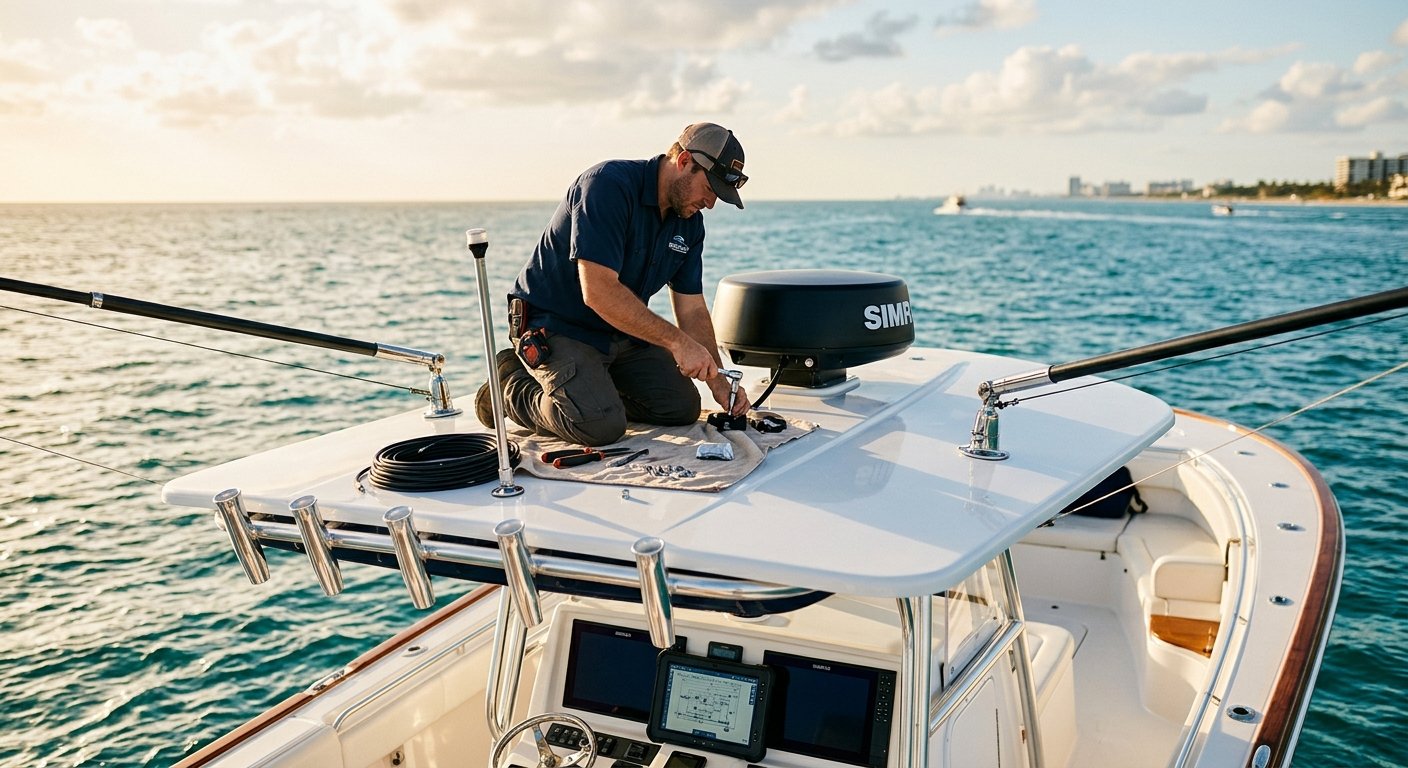
Professional boat radar installation requires detailed analysis of your vessel’s superstructure to minimize these blind spots. On center consoles with T-tops, mounting the radar above the structure provides 360-degree coverage. Flybridge vessels typically require mast or arch mounting above antennas, outriggers, and other equipment.
Equally important is maintaining separation from transmitting antennas including VHF, satellite communications, and cellular boosters. Most manufacturers specify minimum separation distances of 3-6 feet between radar antennas and other transmitting equipment to prevent interference and potential damage to sensitive electronics.
Physical Mounting Integrity
South Florida’s marine environment subjects radar mounts to extreme forces from wind, wave shock, and vibration. Proper marine electronics installation requires mounting systems engineered for these loads, not improvised brackets or undersized hardware.
Professional installations use marine-grade stainless steel or aluminum mounting hardware with appropriate backing plates to distribute loads across larger structural areas. All penetrations through fiberglass, hardtops, or towers must be properly sealed with marine-grade sealants to prevent water intrusion and subsequent delamination.
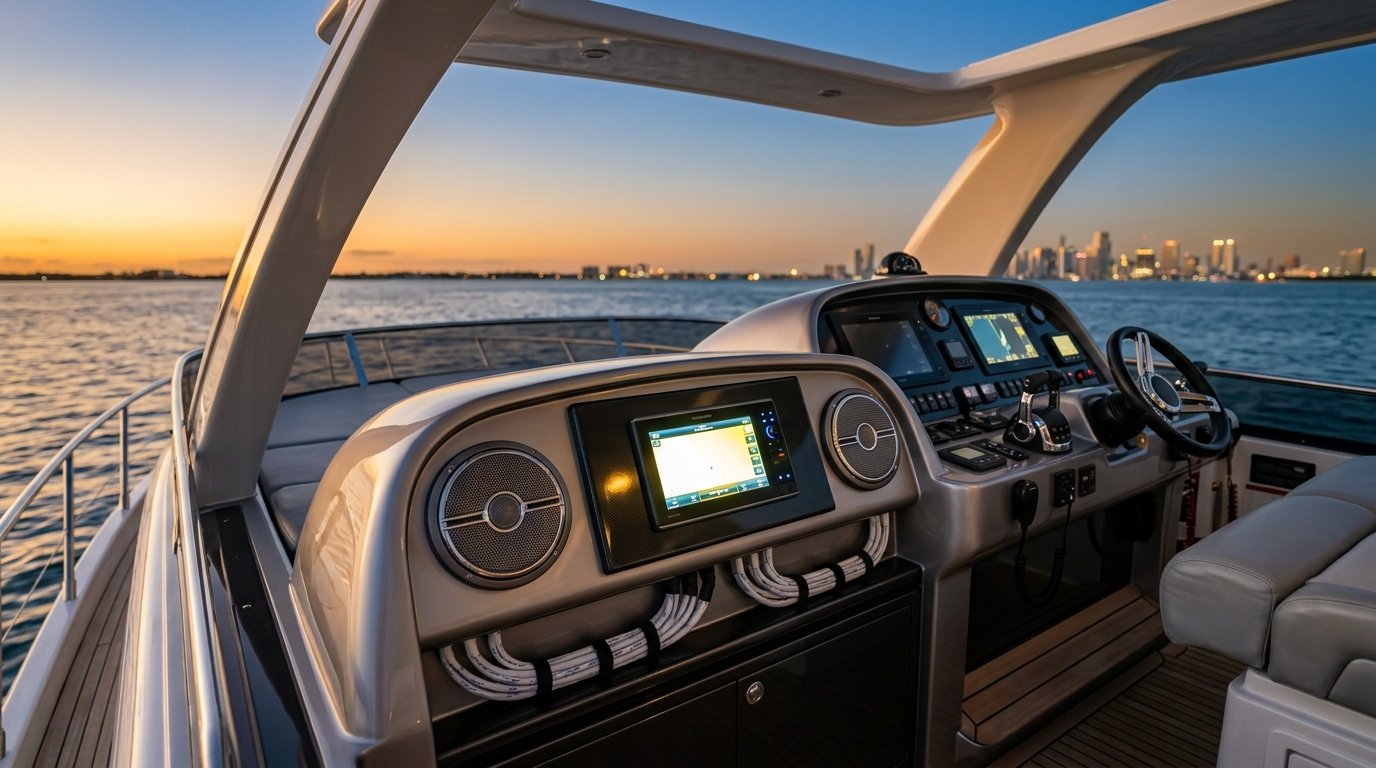
Radar cable runs from antenna to display require careful routing to prevent chafe, minimize bends exceeding manufacturer specifications, and maintain separation from high-current cables that can induce interference. Most modern radars use ethernet connections, but proper cable selection and installation technique remain critical for reliable performance.
NMEA 2000 Network Integration
Contemporary marine radar systems integrate with vessel electronics through NMEA 2000 and NMEA OneNet networks, enabling data sharing between radar, chartplotters, autopilots, AIS systems, and other connected devices. Proper network design ensures reliable communication and system-wide functionality.
A properly configured NMEA 2000 network allows your radar to overlay targets directly on electronic charts, provide radar data to autopilot systems for collision avoidance maneuvering, and correlate AIS vessel identifications with radar targets. This integration transforms individual electronics into a comprehensive navigation system.
However, network integration requires expertise in backbone design, power distribution, termination resistors, and device addressing. NMEA certified installers understand these requirements and configure networks that maintain stability even with multiple high-bandwidth devices transmitting simultaneously.
Common integration issues include improper backbone length causing voltage drop, missing termination resistors creating communication errors, and inadequate power supplies unable to support full system loads. These problems manifest as intermittent device failures, frozen displays, and lost functionality—often under critical operating conditions.
Garmin Marine Installation Considerations
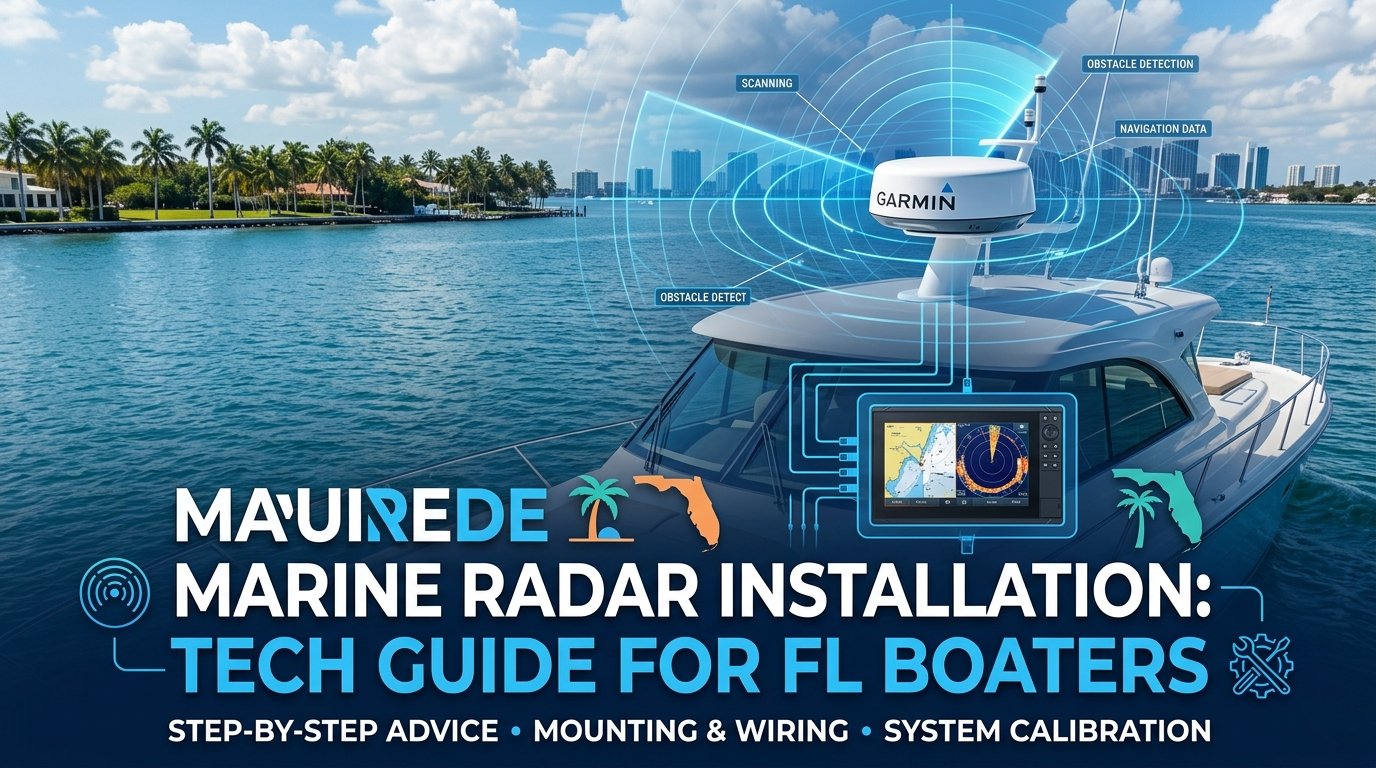
Garmin dominates the recreational marine electronics market in 2026, with their GMR Fantom and xHD radar series representing popular choices for South Florida boaters. These systems offer excellent performance when properly installed, but require specific configuration for optimal results.
Garmin radars integrate seamlessly with their GPSMAP and ECHOMAP chartplotter series through ethernet connections. The systems support advanced features including MotionScope Doppler highlighting, Auto Bird Mode for fishing applications, and Dynamic Sea Filter that adjusts for wave clutter in real-time.
Professional Garmin marine installation ensures proper network configuration to enable these advanced features. Factory-trained technicians understand software compatibility requirements, firmware update procedures, and calibration settings that optimize performance for South Florida operating conditions.
Garmin systems also support wireless connectivity for tablet and smartphone integration, but this functionality requires proper network security configuration to prevent unauthorized access while maintaining convenient operation for authorized users.
Display Configuration and Optimization
Installing radar hardware represents only half of effective marine radar installation. Proper display configuration and user training ensure you extract maximum value from your investment.
Professional installations include detailed configuration of gain, sea clutter, rain clutter, and interference rejection settings appropriate for South Florida waters. These parameters require adjustment based on sea conditions, weather, and target types you’re trying to detect.
Guard zones should be configured to alert you of targets entering specified ranges and bearings around your vessel. For offshore operation, a long-range guard zone provides early warning of approaching weather or vessels. Near shore, close-range guard zones help prevent collisions with other boats, channel markers, and fixed structures.
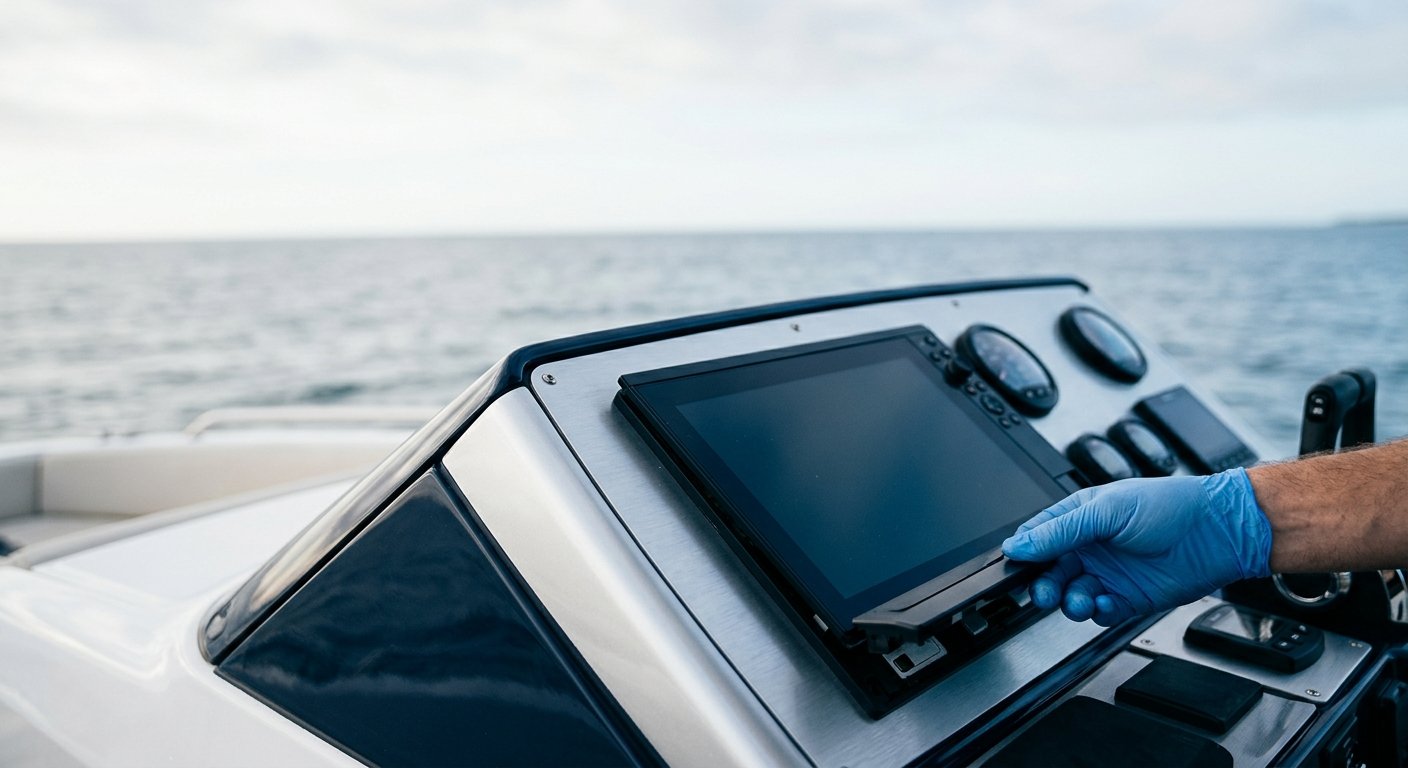
Display overlay alignment between radar and chartplotter requires careful calibration to ensure accuracy. Misaligned overlays create dangerous navigation errors where radar targets don’t correspond to their actual positions on electronic charts.
Maintenance and Hurricane Preparation
Marine radar systems require minimal ongoing maintenance, but specific steps protect your investment and ensure reliable operation when needed.
Regular inspection of mounting hardware, cable connections, and antenna condition should occur quarterly. Salt accumulation, UV degradation of cable jackets, and corrosion of connectors can compromise performance before obvious failures occur.
For hurricane preparation, radar antennas represent significant windage and should be removed or secured if your vessel remains in the water during storm events. Most modern radars feature quick-disconnect mounting systems that allow removal in minutes with basic tools.
Radar antennas stored ashore must be protected from physical damage and moisture intrusion. Proper storage in climate-controlled environments extends component life and prevents corrosion of internal electronics.
Common Installation Mistakes to Avoid
Improper yacht electronics installation creates numerous problems that compromise safety and require expensive corrections. Understanding common mistakes helps boat owners make informed decisions about professional installation.
Undersized or improperly located mounting bases represent the most frequent error. Mounting a powerful radar to an undersized arch or tower creates vibration that degrades image quality and accelerates mechanical failure. Professional installations evaluate structural capacity and add reinforcement when necessary.
Incorrect cable types cause intermittent failures that prove difficult to diagnose. Using standard ethernet cables instead of marine-rated cables leads to corrosion and connection failures from moisture intrusion. Marine-grade cables with proper shielding and environmental sealing ensure reliable long-term performance.
Skipping professional calibration and configuration produces radar systems that technically function but don’t deliver optimal performance. Improper settings reduce detection range, increase false targets, and create operator frustration that leads to the radar being turned off—eliminating its safety benefits entirely.
Why Professional Installation Matters
While some boat electronics lend themselves to owner installation, marine radar systems demand professional expertise for safety-critical reasons. Improper installation doesn’t just waste money—it creates dangerous situations where you believe equipment is functioning properly when it actually provides incomplete or inaccurate information.
NMEA certified installers bring factory training, specialized tools, and experience with diverse vessel types to every installation. They understand manufacturer specifications, industry best practices, and safety standards that ensure your radar performs reliably when conditions deteriorate and you need it most.
Professional boat navigation systems installation includes thorough testing under actual operating conditions, user training on system capabilities and limitations, and documentation of configuration settings for future reference. This comprehensive approach transforms electronics purchases into integrated safety systems.
Frequently Asked Questions
How much does professional marine radar installation cost?
Installation costs vary based on vessel size, radar system complexity, and required modifications. Professional marine electronics installation typically ranges from $500-2000 for straightforward installations, with complex yacht electronics installation requiring additional investment. This includes proper mounting, network integration, calibration, and user training.
Can I install marine radar myself?
While technically possible for experienced individuals, radar installation requires specialized knowledge of NMEA networks, RF interference, structural mounting requirements, and safety considerations. Improper installation can damage expensive equipment, create dangerous blind spots, and void manufacturer warranties. Professional installation ensures optimal performance and safety.
How do I choose between different radar brands?
Radar selection should consider your existing electronics ecosystem, vessel type, and operational requirements. Garmin, Furuno, Raymarine, and Simrad all produce excellent systems with different integration capabilities and feature sets. A qualified marine electronics Stuart FL installer can recommend options appropriate for your specific needs and ensure compatibility with existing equipment.
What’s the difference between 3G and 4G radar?
These marketing terms from specific manufacturers generally refer to pulse compression radar technology generations. Newer generations typically offer improved target separation, faster refresh rates, and enhanced processing capabilities. However, actual performance depends on proper installation and configuration rather than generation number alone.
How often should radar systems be serviced?
Modern solid-state and pulse compression radars require minimal maintenance beyond quarterly visual inspections and annual professional system checks. Older magnetron-based systems may require tube replacement every 2000-4000 hours of operation. Professional annual inspections identify potential issues before they cause failures.
Partner With NMEA Certified Professionals
Marine Electronics Installer specializes in professional boat radar installation and complete yacht electronics installation throughout South Florida. Our NMEA certified technicians bring factory training and decades of combined experience to every installation, ensuring your radar system delivers the performance and reliability your safety depends on.
Whether you’re upgrading navigation systems on your center console or outfitting a new yacht with comprehensive electronics, we provide consultative guidance to select appropriate equipment and expert installation that maximizes your investment value.
Contact Marine Electronics Installer at (772) 634-6055 or visit our Stuart facility at 7892 SW Jack James Dr, Stuart, FL, 34997 to discuss your marine radar installation needs. We serve boat owners from Stuart to Fort Lauderdale with the technical expertise and customer service that’s made us South Florida’s trusted source for boat electronics Fort Lauderdale to the Treasure Coast.